John Alexander Thomas, Barthel Anna, Wind Johanna, Rizzi Nikolas, Schöllhorn Wolfgang Immanuel
Department of Training and Movement Science, Institute of Sport Science, Johannes Gutenberg-University, Mainz, Germany.
Front Behav Neurosci. 2022 Feb 25;16:816334. doi: 10.3389/fnbeh.2022.816334. eCollection 2022.
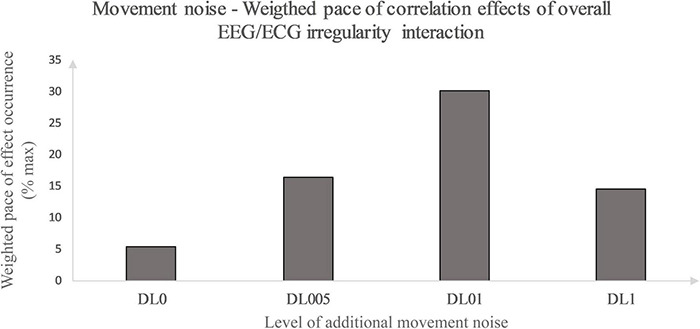
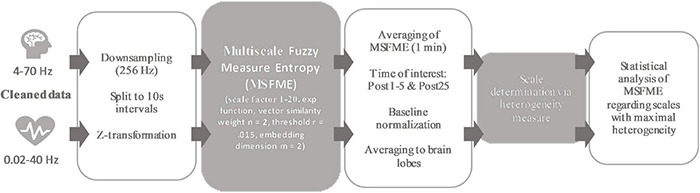
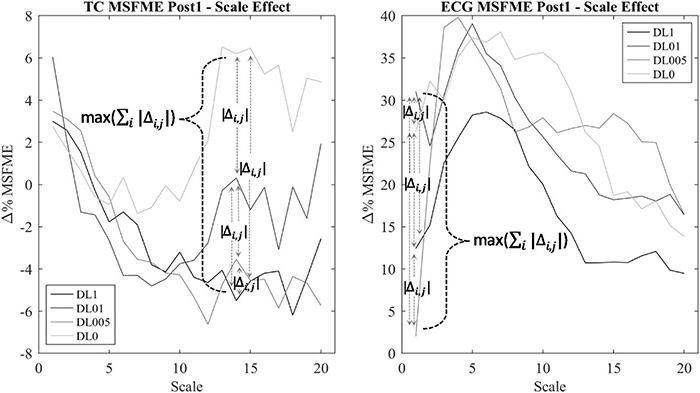
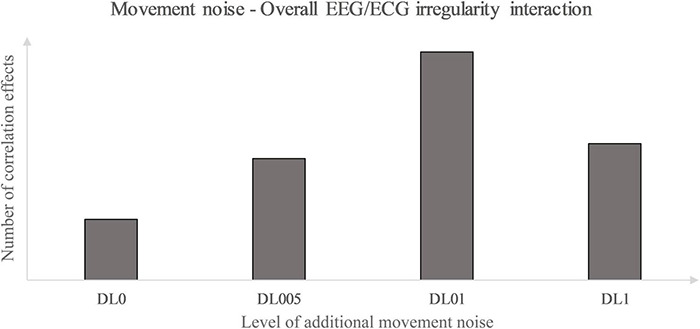
In search of more detailed explanations for body-mind interactions in physical activity, neural and physiological effects, especially regarding more strenuous sports activities, increasingly attract interest. Little is known about the underlying manifold (neuro-)physiological impacts induced by different motor learning approaches. The various influences on brain or cardiac function are usually studied separately and modeled linearly. Limitations of these models have recently led to a rapidly growing application of nonlinear models. This study aimed to investigate the acute effects of various sequences of rope skipping on irregularity of the electrocardiography (ECG) and electroencephalography (EEG) signals as well as their interaction and whether these depend on different levels of active movement noise, within the framework of differential learning theory. Thirty-two males were randomly and equally distributed to one of four rope skipping conditions with similar cardiovascular but varying coordinative demand. ECG and EEG were measured simultaneously at rest before and immediately after rope skipping for 25 mins. Signal irregularity of ECG and EEG was calculated via the multiscale fuzzy measure entropy (MSFME). Statistically significant ECG and EEG brain area specific changes in MSFME were found with different pace of occurrence depending on the level of active movement noise of the particular rope skipping condition. Interaction analysis of ECG and EEG MSFME specifically revealed an involvement of the frontal, central, and parietal lobe in the interplay with the heart. In addition, the number of interaction effects indicated an inverted U-shaped trend presenting the interaction level of ECG and EEG MSFME dependent on the level of active movement noise. In summary, conducting rope skipping with varying degrees of movement variation appears to affect the irregularity of cardiac and brain signals and their interaction during the recovery phase differently. These findings provide enough incentives to foster further constructive nonlinear research in exercise-recovery relationship and to reconsider the philosophy of classical endurance training.
为了更详细地解释体育活动中身心的相互作用,神经和生理效应,尤其是关于更剧烈的体育活动,越来越受到关注。对于不同运动学习方法所引发的潜在多种(神经)生理影响,人们了解甚少。对大脑或心脏功能的各种影响通常是分别研究并进行线性建模的。这些模型的局限性最近导致非线性模型的应用迅速增加。本研究旨在探讨在差异学习理论框架内,不同跳绳序列对心电图(ECG)和脑电图(EEG)信号不规则性的急性影响及其相互作用,以及这些是否取决于不同水平的主动运动噪声。32名男性被随机且平均分配到四种跳绳条件之一,这些条件具有相似的心血管需求但协调需求不同。在跳绳25分钟前的休息状态以及跳绳结束后立即同时测量ECG和EEG。通过多尺度模糊测度熵(MSFME)计算ECG和EEG的信号不规则性。发现MSFME中ECG和EEG脑区特定的变化具有统计学意义,其出现的速度取决于特定跳绳条件下的主动运动噪声水平。ECG和EEG MSFME的相互作用分析特别揭示了额叶、中央叶和顶叶在与心脏相互作用中的参与。此外,相互作用效应的数量呈现出倒U形趋势,表明ECG和EEG MSFME的相互作用水平取决于主动运动噪声水平。总之,进行不同程度运动变化的跳绳似乎会在恢复阶段不同程度地影响心脏和大脑信号的不规则性及其相互作用。这些发现为促进运动与恢复关系中进一步的建设性非线性研究以及重新审视经典耐力训练理念提供了充分的动力。