Sannö Axel, Ander Mats, Ågren Erik, Troell Karin
Department of Clinical Sciences, Swedish University of Agricultural Sciences, Uppsala, Sweden.
Department of Pathology and Wildlife Diseases, National Veterinary Institute, Uppsala, Sweden.
Curr Res Parasitol Vector Borne Dis. 2021 Nov 15;1:100060. doi: 10.1016/j.crpvbd.2021.100060. eCollection 2021.
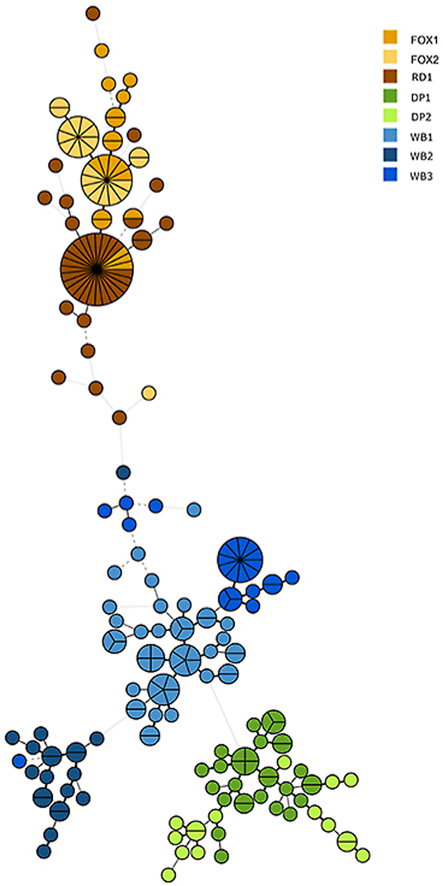
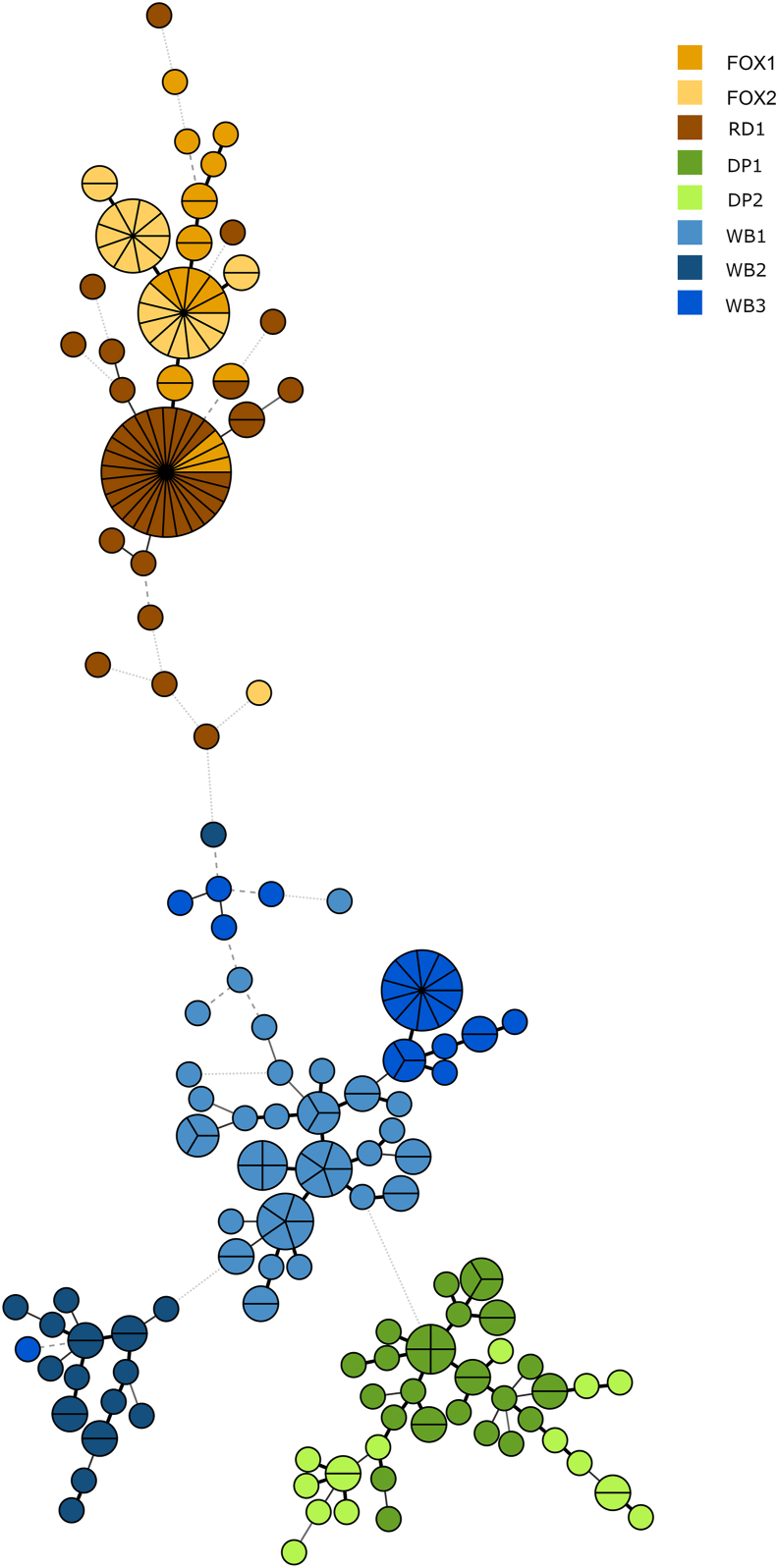
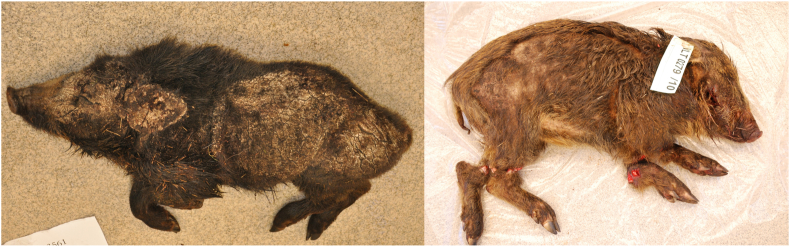
Sarcoptic mange caused by has been present in the Swedish red fox () population since the 1970s. The disease has been described in other Swedish wildlife species, but not in the wild boar, , until 2009. Single cases of sarcoptic mange have been diagnosed the last years in the expanding population of wild boar. This study aims to describe the histopathological lesions found on mangy wild boar and compare, by molecular methods, mites from wild boar cases with mites from mangy red foxes, raccoon dogs, and domestic pigs. Mangy wild boar with focal alopecia and clinical signs of pruritis were reported or submitted from various areas in southern Sweden to the National Veterinary Institute, Uppsala. The examined skin samples of wild boar infected with showed limited gross skin lesions, except for cases with severe exudative dermatitis. Histopathology of the affected wild boar skin samples showed an eosinophilic dermatitis with a variable hyperkeratosis and often low number of mites present. To study the relationship of mites isolated from different host species, a population genetics investigation was performed based on microsatellite markers. In total, 225 individual mites from eight individuals of four different host species; red fox (48 mites), wild boar (80 mites), domestic pig (48 mites) and raccoon dog (43 mites), were included in the study. In the phylogenetic analysis, all mites isolated from wild boar clustered together even though they originate from different geographical regions in Sweden. Mites from each individual host showed high similarity. The results indicate that wild boar mites differ from mites both from the red fox, raccoon dog, and domestic pig.
自20世纪70年代以来,由疥螨引起的疥癣病就一直存在于瑞典赤狐(Vulpes vulpes)种群中。这种疾病在瑞典的其他野生动物物种中也有记载,但直到2009年才在野猪(Sus scrofa)中发现。在过去几年中,在不断扩大的野猪种群中诊断出了单例疥癣病病例。本研究旨在描述患疥癣病野猪的组织病理学病变,并通过分子方法比较野猪病例中的螨虫与患疥癣病的赤狐、貉和家猪的螨虫。患有局部脱毛和瘙痒临床症状的患疥癣病野猪从瑞典南部的各个地区被报告或提交到乌普萨拉的国家兽医研究所。除了患有严重渗出性皮炎的病例外,感染疥螨的野猪的皮肤样本检查显示肉眼可见的皮肤病变有限。受影响的野猪皮肤样本的组织病理学显示为嗜酸性皮炎,伴有不同程度的角化过度,且通常存在的螨虫数量较少。为了研究从不同宿主物种分离出的疥螨之间的关系,基于微卫星标记进行了种群遗传学调查。该研究共纳入了来自四种不同宿主物种的八个个体的225只个体螨虫;赤狐(48只螨虫)、野猪(80只螨虫)、家猪(48只螨虫)和貉(43只螨虫)。在系统发育分析中,所有从野猪分离出的螨虫聚集在一起,尽管它们来自瑞典的不同地理区域。来自每个个体宿主的螨虫显示出高度相似性。结果表明,野猪的螨虫与赤狐、貉和家猪的螨虫不同。