Department of Veterinary Science, University of Turin, Largo Braccini 2, 10095, Grugliasco, Italy.
Department of Evolutionary Biology and Environmental Studies, University of Zurich, Zurich, Switzerland.
Parasit Vectors. 2021 Mar 20;14(1):171. doi: 10.1186/s13071-021-04673-x.
In Spain, sarcoptic mange was first described in native wildlife in 1987 in Cazorla Natural Park, causing the death of nearly 95% of the local native population of Iberian ibex (Capra pyrenaica). Since then, additional outbreaks have been identified in several populations of ibex and other wild ungulate species throughout the country. Although the first epizootic outbreak in wildlife was attributed to the introduction of an infected herd of domestic goats, the origin and the cause of its persistence remain unclear. The main aims of this study are to understand (i) the number of Sarcoptes scabiei "strains" circulating in wild ruminant populations in Spain, and (ii) the molecular epidemiological relationships between S. scabiei and its hosts.
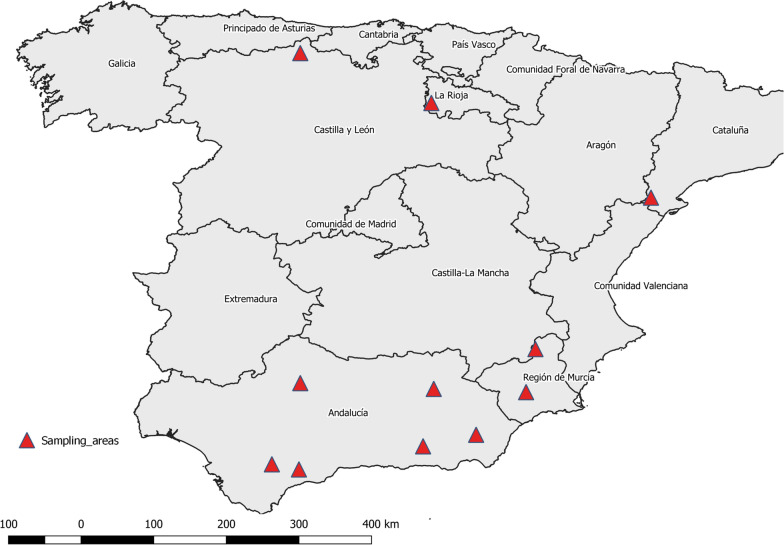
Ten Sarcoptes microsatellite markers were used to characterize the genetic structure of 266 mites obtained from skin scrapings of 121 mangy wild ruminants between 2011 and 2019 from 11 areas in Spain.
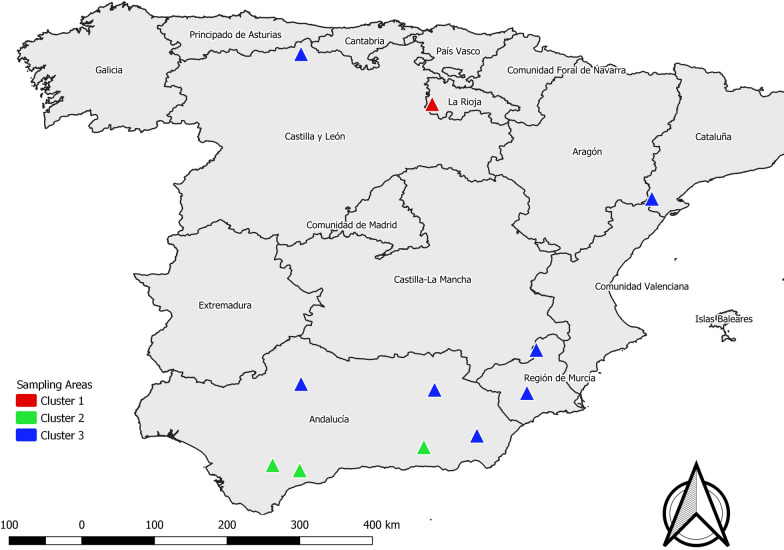
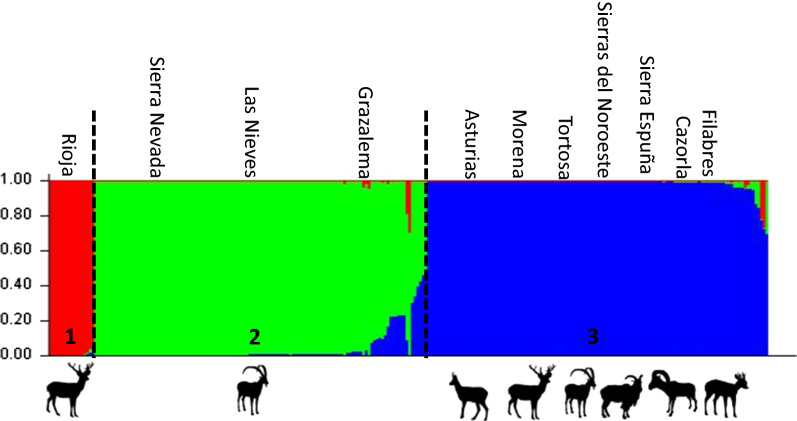
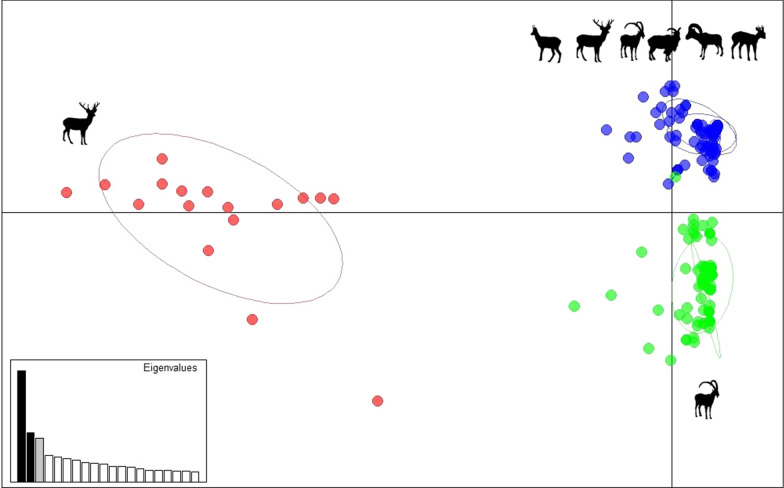
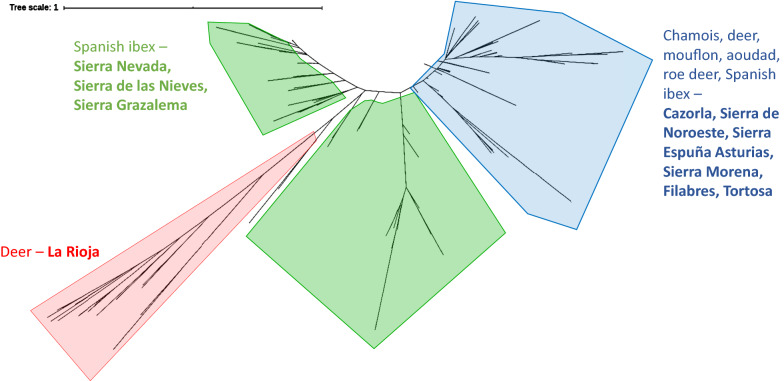
Seventy-three different alleles and 37 private alleles were detected. The results of this study show the existence of three genetic strains of S. scabiei in the wild ruminant populations investigated. While two genetic clusters of S. scabiei were host- and geography-related, one cluster included multi-host mites deriving from geographically distant populations.
The molecular epidemiological study of S. scabiei in wild ruminants in Spain indicates that the spreading and persistence of the parasite may be conditioned by host species community composition and the permissiveness of each host population/community to the circulation of individual "strains," among other factors. Wildlife-livestock interactions and the role of human-driven introduction or trade of wild and domestic animals should be better investigated to prevent further spread of sarcoptic mange in as yet unaffected natural areas of the Iberian Peninsula.
1987 年,在西班牙的卡索拉自然公园首次发现了当地野生伊比利亚野山羊(Capra pyrenaica)身上患有疥螨病,导致当地近 95%的伊比利亚野山羊死亡。此后,在全国范围内的其他几个伊比利亚野山羊和其他野生有蹄类动物种群中也发现了额外的疫情。尽管野生动物中的第一次流行疫情归因于引进了受感染的一群家养山羊,但该病的起源及其持续存在的原因仍不清楚。本研究的主要目的是了解:(i)在西班牙的野生反刍动物种群中循环的疥螨“菌株”数量;(ii)疥螨与其宿主之间的分子流行病学关系。
本研究使用 10 个疥螨微卫星标记来描述 2011 年至 2019 年期间从西班牙 11 个地区的 121 只患有疥螨病的野生反刍动物的皮肤刮片中获得的 266 只螨虫的遗传结构。
检测到 73 个不同的等位基因和 37 个特有等位基因。本研究结果表明,在所研究的野生反刍动物种群中存在三种遗传菌株的疥螨。虽然两个遗传簇与宿主和地理位置有关,但一个簇包括来自地理位置遥远的种群的多宿主螨虫。
对西班牙野生反刍动物疥螨的分子流行病学研究表明,寄生虫的传播和持续存在可能受到宿主物种群落组成以及每个宿主种群/群落对个体“菌株”传播的宽容度等因素的影响。应该更好地调查野生动物与牲畜的相互作用以及人类驱动的野生动物和家养动物的引入或贸易的作用,以防止疥螨病在伊比利亚半岛尚未受影响的自然地区进一步传播。