Center of Clinical Laboratory Medicine, the Zhejiang Provincial People's Hospital, People's Hospital of Hangzhou Medical College, Zhejiang, China.
Department of Clinical Laboratory, Wenzhou Hospital of Traditional Chinese Medicine Affiliated to Zhejiang Chinese Medical University, Wenzhou, China.
J Clin Lab Anal. 2022 Apr;36(4):e24329. doi: 10.1002/jcla.24329. Epub 2022 Mar 13.
Mycoplasma hominis is the smallest prokaryotic microorganism with no cell wall, high pleomorphism, and slower reproduction than bacteria. It is difficult for clinical technicians to find M. hominis through the negative Gram staining of specimens. Therefore, it is likely to miss detection in routine clinical smear etiological examination. M. hominis is generally considered to be a common colonizing bacterium in urogenital tract with low pathogenicity, and it is usually difficult to invade submucosal tissue and enter the bloodstream.
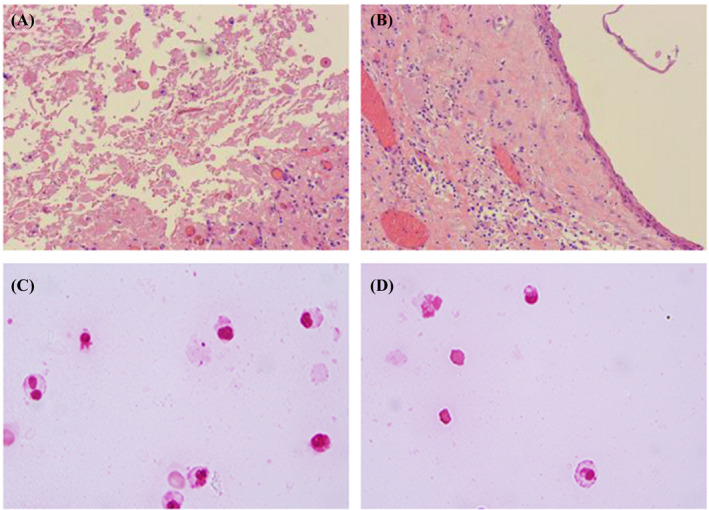
The abscesses of the patient were examined histopathologically, and the pus in the abscesses was extracted for etiological examination. MALDI-TOF MS was used to identify and confirmed the pathogens in the specimens. The commercial Mycoplasma isolation, culture, and drug sensitivity kit was used to determine antibiotic susceptibility.
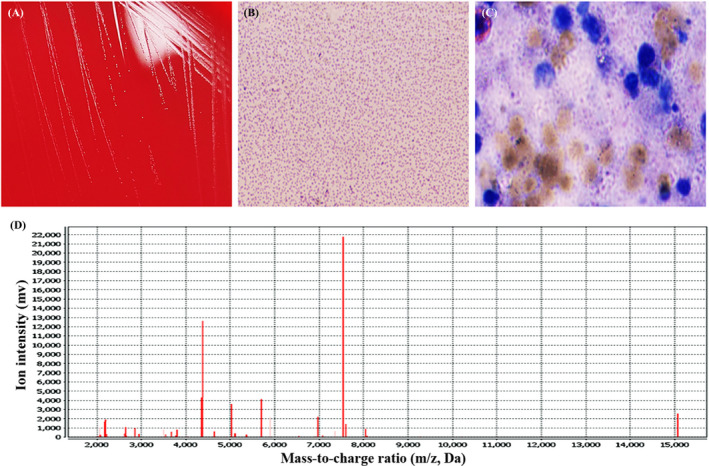
No pathogens were found after pathological and smear microscopic examination of the puncture fluid from the sacrococcygeal and pelvic abscesses. Until 48 h later, small, translucent, and gray-white colonies were observed in the blood plate culture results. The laboratory physician ultimately determined that the pathogen was M. hominis by MALDI-TOF MS.
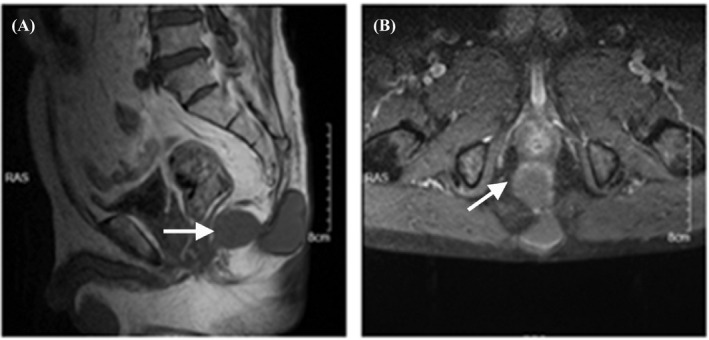
We report a case of extra-urogenital cystic abscesses infected by M. hominis, in order to improve clinicians' comprehensive understanding of the pathogenicity of Mycoplasma. In addition, the clinical laboratory technician should pay attention to the role of Wright-Giemsa staining of puncture fluid smear in the preliminary detection and the application of MALDI-TOF MS in identification of uncommon pathogenic microorganisms.
人型支原体是最小的无细胞壁原核微生物,具有高度多形性,繁殖速度比细菌慢。临床技术人员很难通过标本的负革兰染色发现人型支原体。因此,在常规临床涂片病因检查中很可能会漏检。人型支原体通常被认为是泌尿生殖道中的一种常见定植菌,其致病性较低,通常难以侵犯黏膜下组织并进入血液。
对患者的脓肿进行组织病理学检查,从脓肿中提取脓液进行病因检查。MALDI-TOF MS 用于鉴定和确认标本中的病原体。使用商业的支原体分离、培养和药敏试剂盒来确定抗生素敏感性。
对骶尾部和盆腔脓肿的穿刺液进行病理和涂片显微镜检查后,未发现病原体。直到 48 小时后,血平板培养结果中才出现小而透明、灰白色的菌落。实验室医生最终通过 MALDI-TOF MS 确定病原体为人型支原体。
我们报告了一例人型支原体感染的非泌尿生殖系统囊性脓肿病例,旨在提高临床医生对支原体致病性的全面认识。此外,临床实验室技术人员应注意穿刺液涂片瑞氏染色在初步检测中的作用,以及 MALDI-TOF MS 在鉴定罕见病原体中的应用。