Walker Susan H
Faculty of Health, Education, Medicine and Social Care, Anglia Ruskin University, Bishop Hall Lane, Chelmsford, CM1 1SQ, UK.
Contracept Reprod Med. 2022 Mar 14;7(1):3. doi: 10.1186/s40834-022-00169-w.
This paper looks at how contraceptive prescribing by General Practices in England was affected by the COVID-19pandemic and lockdown. It compares English prescribing data in April - June 2019, the year before COVID19, and April-June 2020, the first three months of 'lockdown'.
DESIGN & SETTING: This paper is based on retrospective analysis of the English Prescribing Dataset which reports monthly on prescribed items from English General Practices. Data on all forms of prescribed contraceptive methods were extracted using BNF codes, and total quantities tabulated by method. To reach the total number of months of contraception provided, total quantities were divided or multiplied according the frequency with which the method is taken per month or the numbers of months of contraception provided.
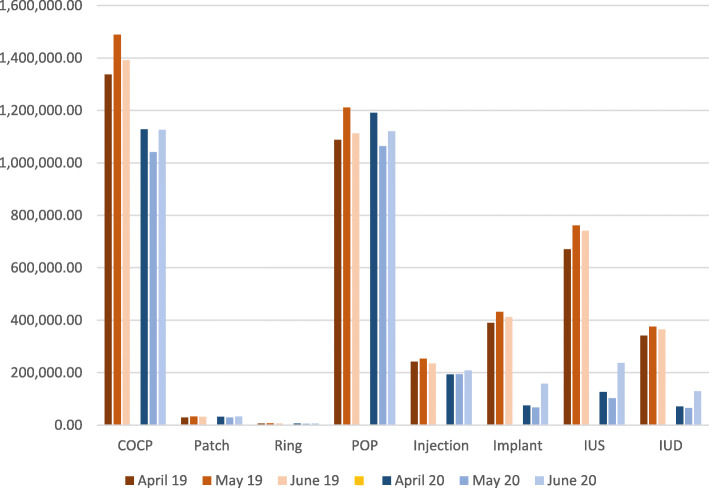
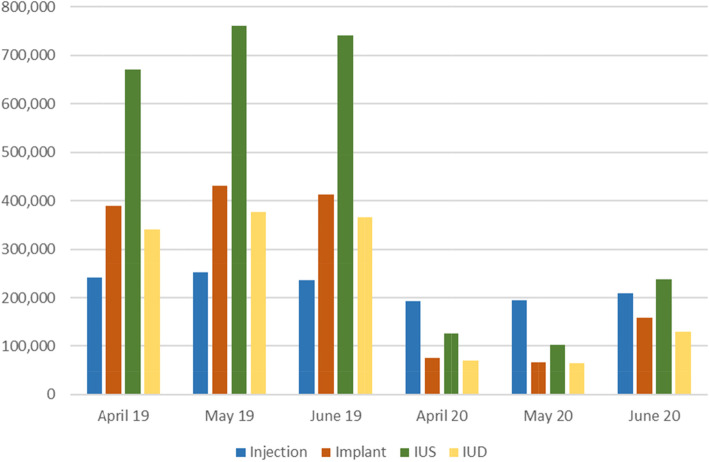
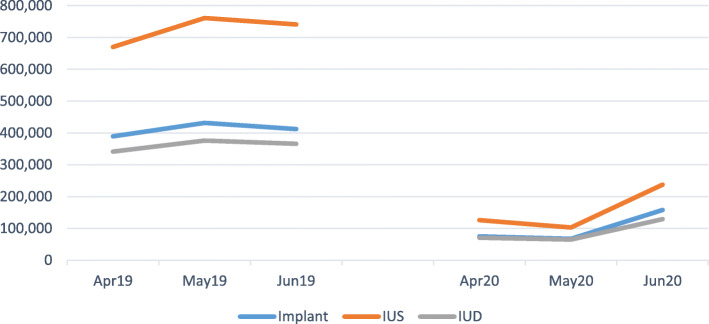
Prescription of the combined oral contraceptive pill reduced by 22% during the period of lockdown compared to the same three months in 2019. Prescriptions of Progestogen-Only pills remained stable. Prescription of long-acting methods reduced, with the greatest reductions in implants (76% reduction from pre-lockdown levels), intra-uterine systems (79% reduction from pre-lockdown levels) and intrauterine devices (76% reduction from pre-lockdown levels).
The disruption of face-to-face contraceptive consultations in General Practice during a COVID-19 'lockdown' has resulted in a reduction in oestrogen -containing methods compared to progestogen-only methods, which require less face-to-face monitoring. Implant and intrauterine contraceptive device prescription reduced by three quarters over the first three months of lockdown, which has the potential to result in a rise in unintended pregnancies.
本文探讨了英国全科医疗中避孕药具的处方开具情况如何受到新冠疫情及封锁措施的影响。它比较了2019年(新冠疫情前一年)4月至6月以及2020年4月至6月(封锁的前三个月)英国的处方数据。
本文基于对英国处方数据集的回顾性分析,该数据集每月报告英国全科医疗开出的处方项目。使用英国国家处方集(BNF)代码提取所有形式的处方避孕方法的数据,并按方法列出总量。为得出提供的避孕总月数,根据每月服用该方法的频率或提供的避孕月数对总量进行除法或乘法运算。
与2019年相同的三个月相比,封锁期间复方口服避孕药的处方量减少了22%。仅含孕激素避孕药的处方量保持稳定。长效避孕方法的处方量减少,其中植入剂(比封锁前水平降低76%)、宫内节育系统(比封锁前水平降低79%)和宫内节育器(比封锁前水平降低76%)的减少幅度最大。
在新冠疫情“封锁”期间,全科医疗中面对面避孕咨询的中断导致与仅含孕激素的方法相比,含雌激素方法的使用减少,后者需要的面对面监测较少。在封锁的前三个月,植入剂和宫内节育器的处方量减少了四分之三,这有可能导致意外怀孕的增加。