Department of Oral Medicine, Foshan Stomatological Hospital, Medical College of Foshan University, Foshan, China.
Department of Stomatology, The Second Xiangya Hospital, Central South University, Changsha, China.
Cancer Sci. 2022 Sep;113(9):2962-2973. doi: 10.1111/cas.15332. Epub 2022 Jul 15.
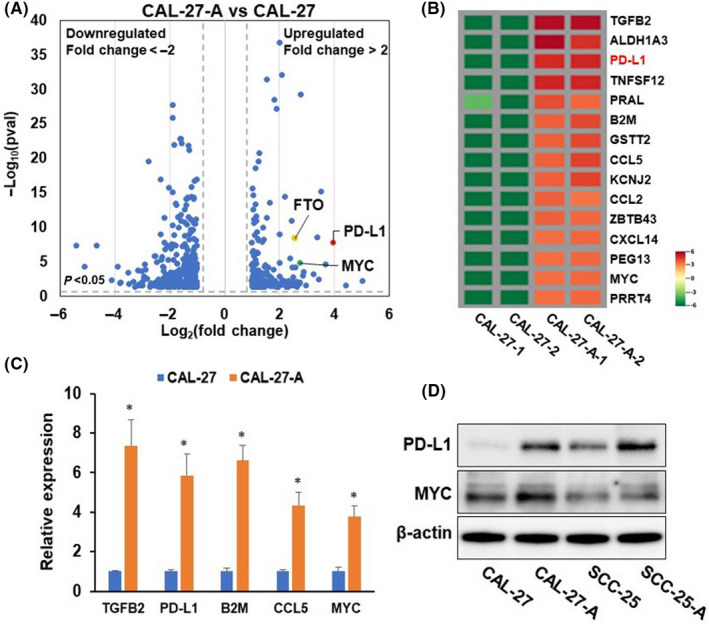
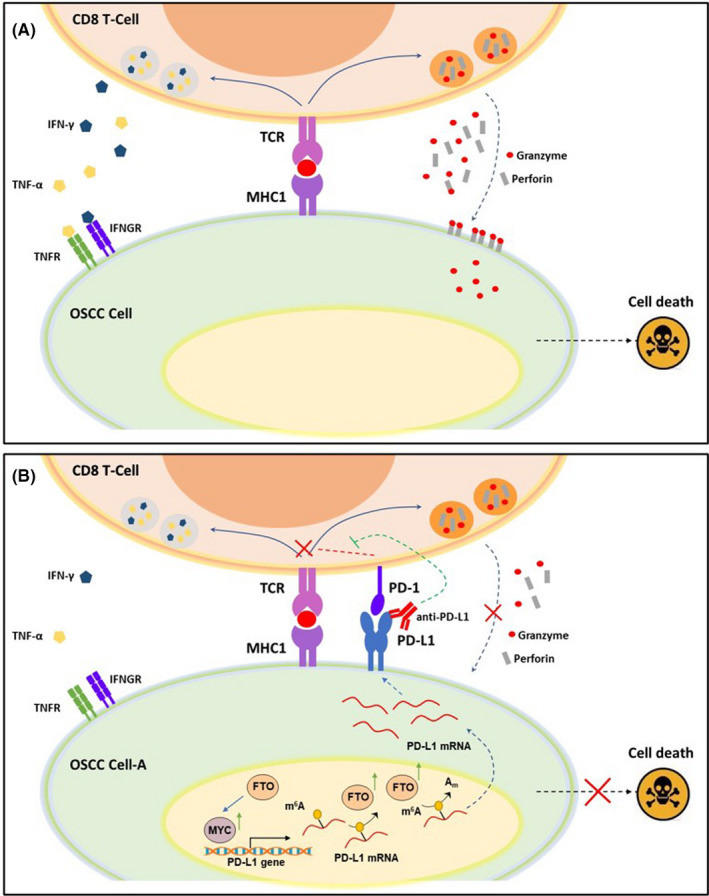
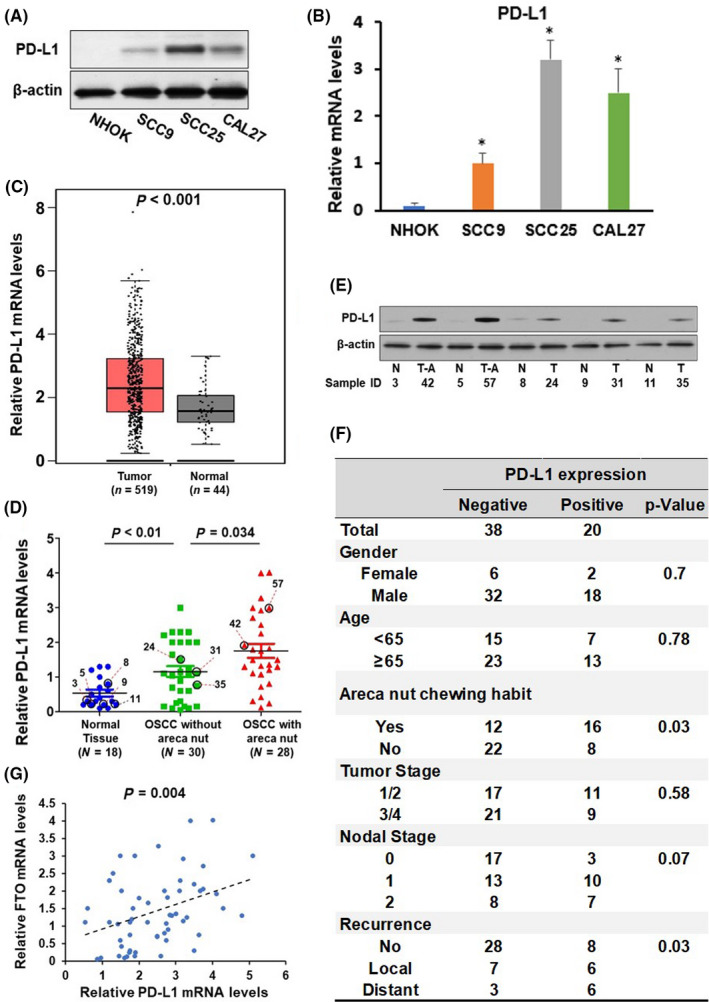
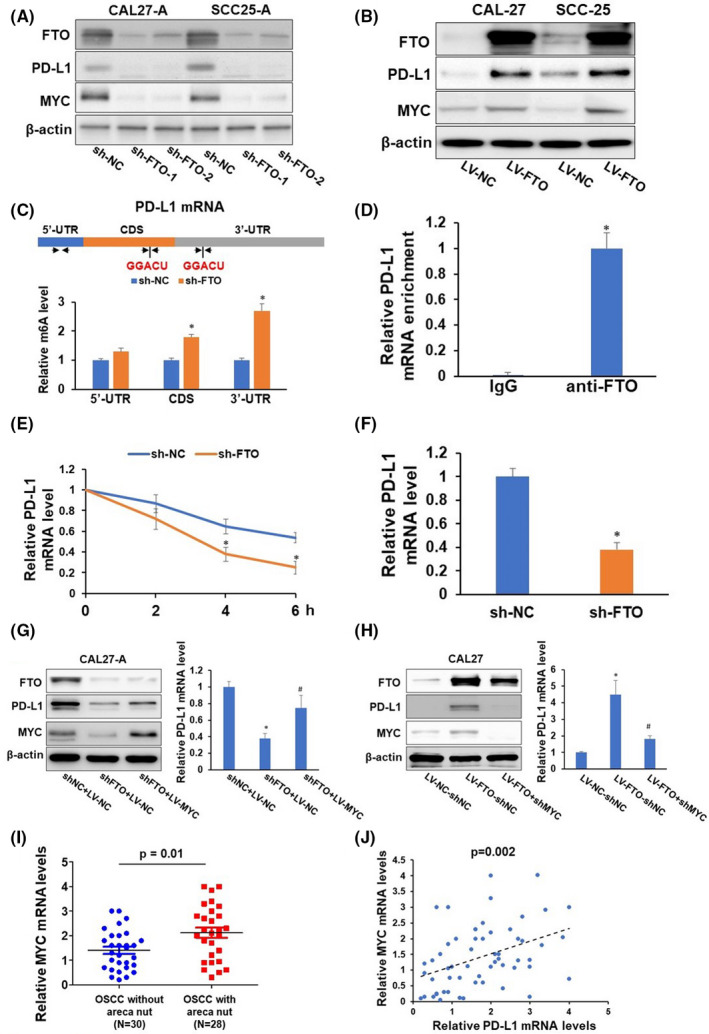
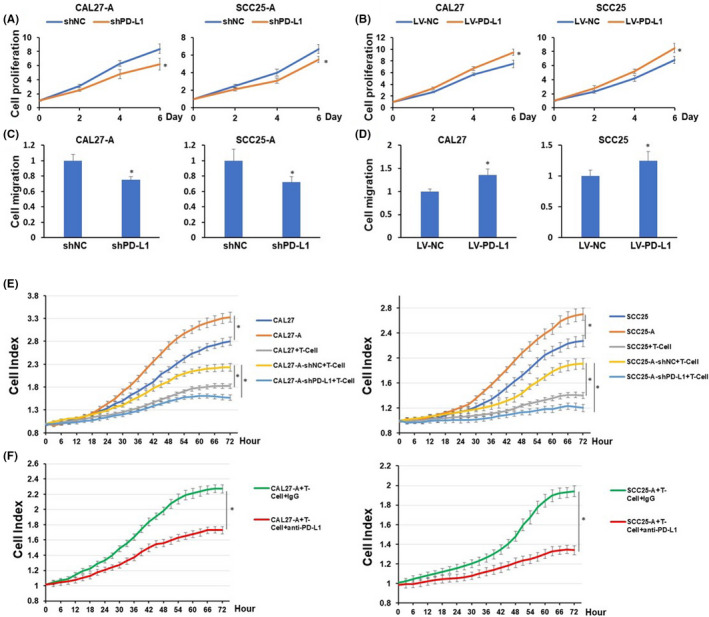
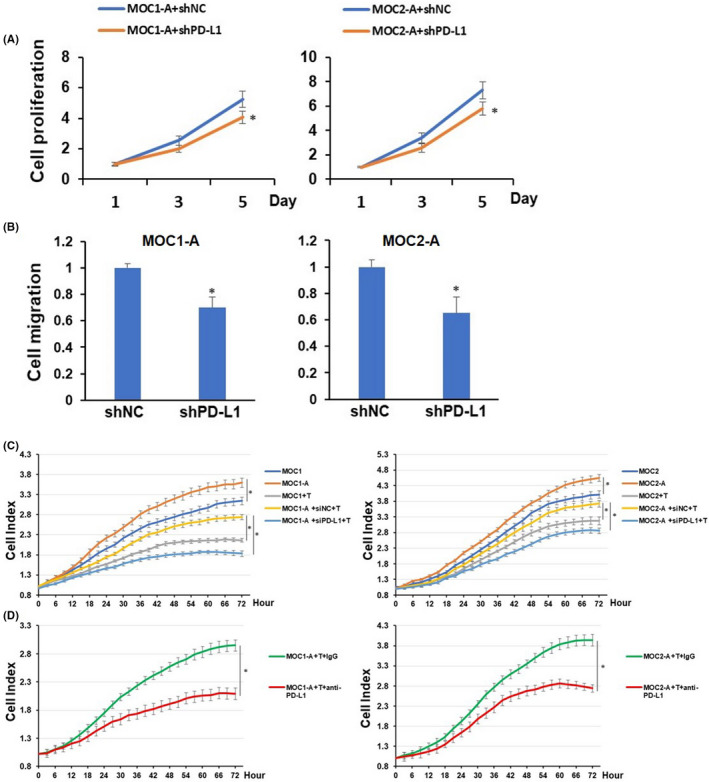
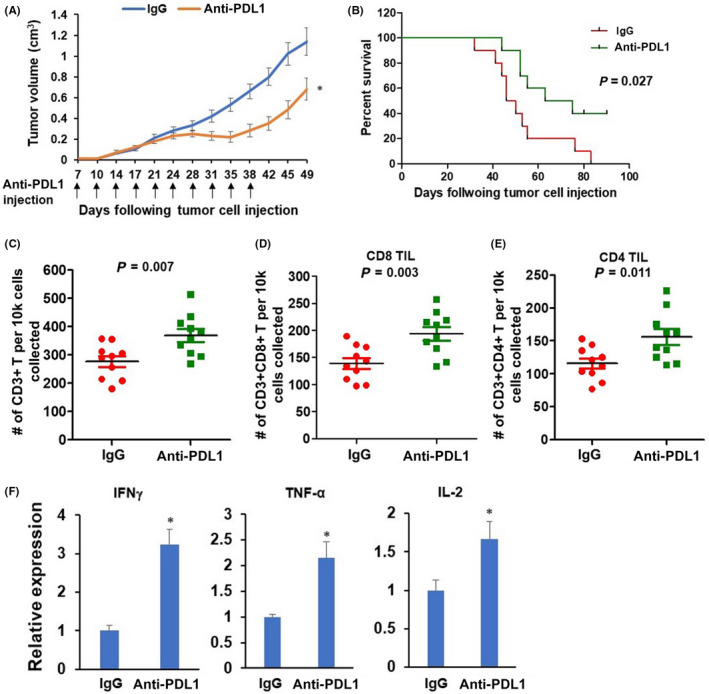
The high prevalence of oral squamous cell carcinoma (OSCC) in South Asia is associated with habitual areca nut chewing. Arecoline, a primary active carcinogen within areca nut extract, is known to promote OSCC pathological development. Dysregulation of N6-methyladenosine (m6A) modification has begun to emerge as a significant contributor to cancer development and progression. However, the biological effects and molecular mechanisms of m6A modification in arecoline-promoted OSCC malignance remain elusive. We reveal that chronic arecoline exposure substantially induces upregulation of fat mass and obesity-associated protein (FTO), MYC, and programmed cell death-ligand 1 (PD-L1) in OSCC cells. Moreover, upregulation of PD-L1 is observed in OSCC cell lines and tissues and is associated with areca nut chewing in OSCC patients. We also demonstrate that arecoline-induced FTO promotes the stability and expression levels of PD-L1 transcripts through mediating m6A modification and MYC activity, respectively. PD-L1 upregulation confers superior cell proliferation, migration, and resistance to T-cell killing to OSCC cells. Blockage of PD-L1 by administration of anti-PD-L1 antibody shrinks tumor size and improves mouse survival by elevating T-cell-mediated tumor cell killing. Therefore, targeting PD-L1 might be a potential therapeutic strategy for treating PD-L1-positive OSCC patients, especially those with habitual areca nut chewing.
口腔鳞状细胞癌(OSCC)在南亚的高患病率与习惯性槟榔咀嚼有关。槟榔提取物中的主要活性致癌物槟榔碱,已知可促进 OSCC 病理发展。N6-甲基腺苷(m6A)修饰的失调已开始成为癌症发展和进展的重要贡献者。然而,m6A 修饰在槟榔碱促进的 OSCC 恶性中的生物学效应和分子机制仍不清楚。我们揭示慢性槟榔碱暴露可显著诱导 OSCC 细胞中脂肪质量和肥胖相关蛋白(FTO)、MYC 和程序性细胞死亡配体 1(PD-L1)的上调。此外,在 OSCC 细胞系和组织中观察到 PD-L1 的上调,并且与 OSCC 患者的槟榔咀嚼有关。我们还证明,槟榔碱诱导的 FTO 通过分别介导 m6A 修饰和 MYC 活性来促进 PD-L1 转录物的稳定性和表达水平。PD-L1 的上调赋予 OSCC 细胞更高的细胞增殖、迁移和对 T 细胞杀伤的抗性。通过施用抗 PD-L1 抗体阻断 PD-L1,可通过提高 T 细胞介导的肿瘤细胞杀伤来缩小肿瘤大小并提高小鼠存活率。因此,靶向 PD-L1 可能是治疗 PD-L1 阳性 OSCC 患者的一种潜在治疗策略,特别是那些有习惯性槟榔咀嚼的患者。