Department of Translational Neuroscience, Osaka City University Graduate School of Medicine, Osaka 545-8585, Japan.
Department of Clinical Gene Therapy, Graduate School of Medicine, Osaka University, Suita 565-0871, Japan.
Proc Natl Acad Sci U S A. 2022 Mar 22;119(12):e2117723119. doi: 10.1073/pnas.2117723119. Epub 2022 Mar 15.
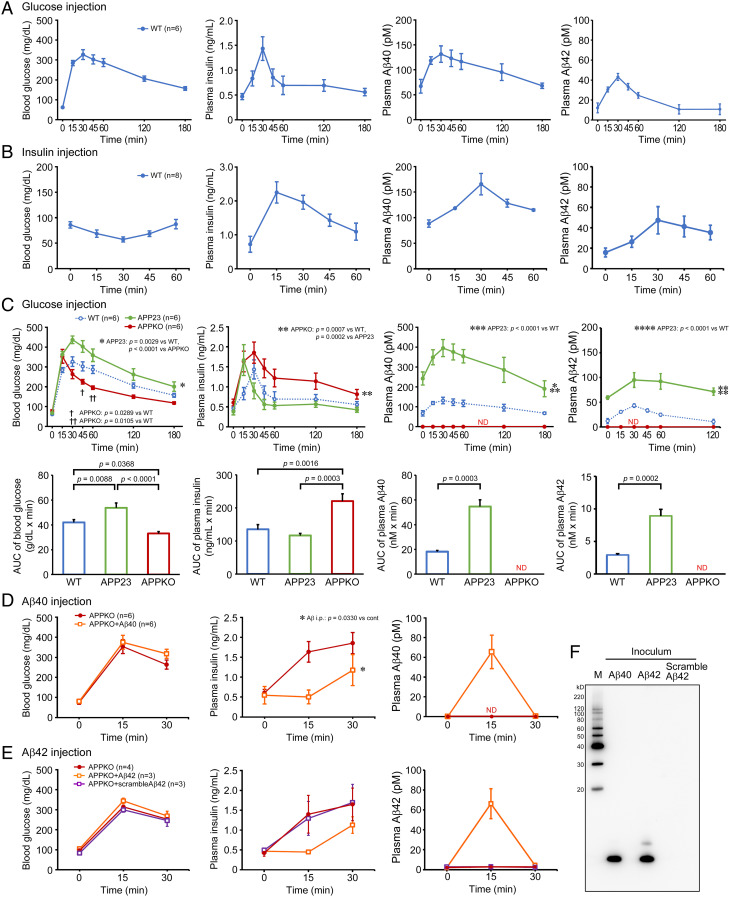
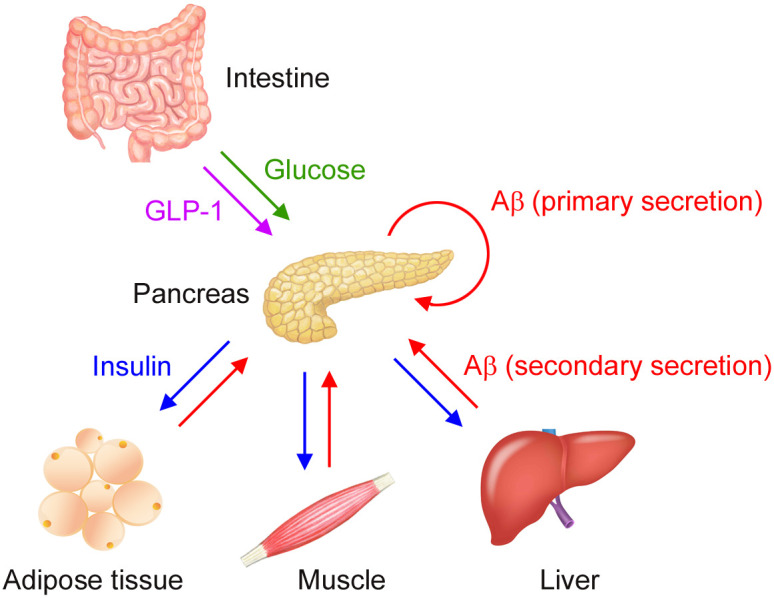
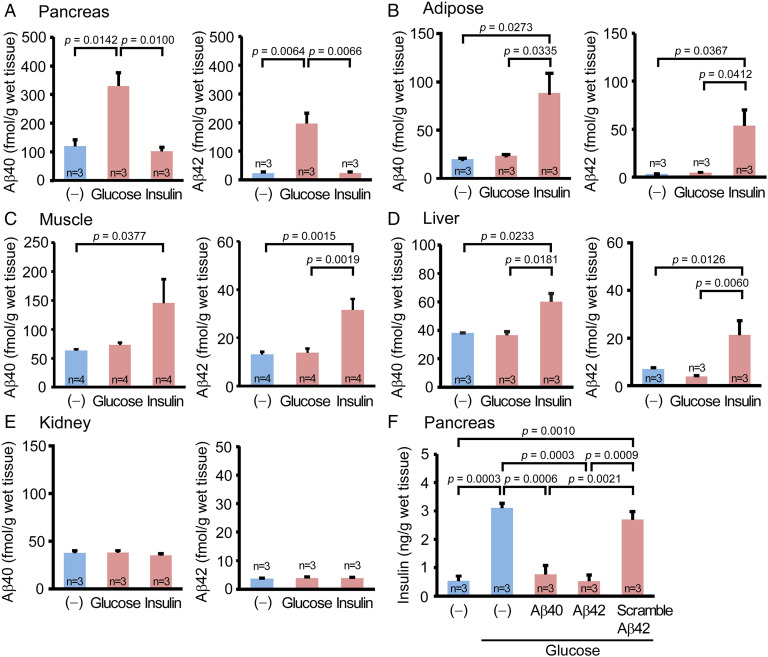
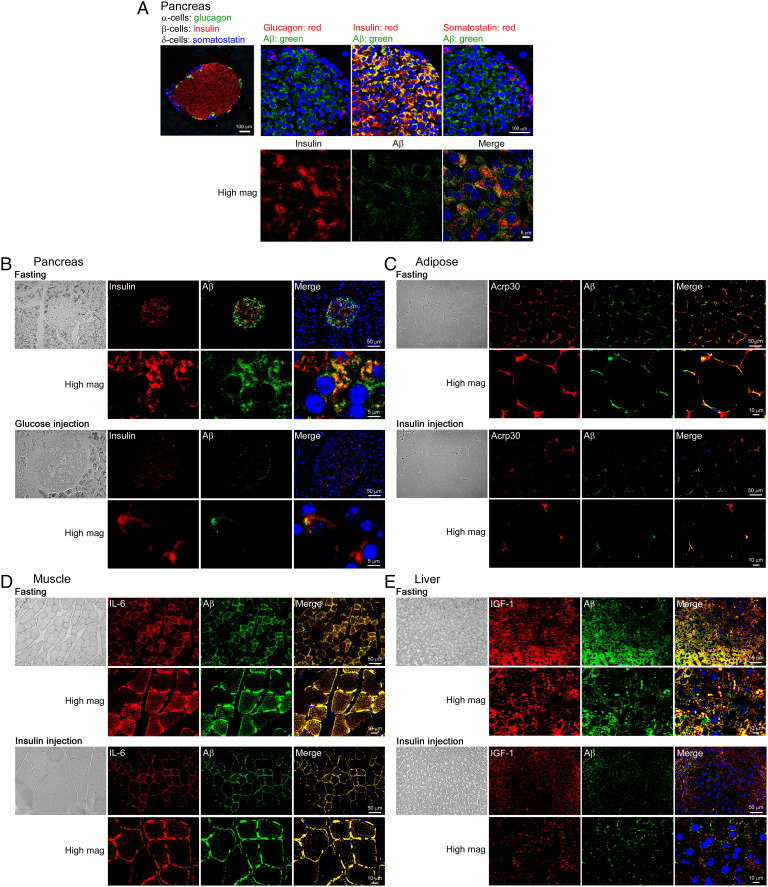
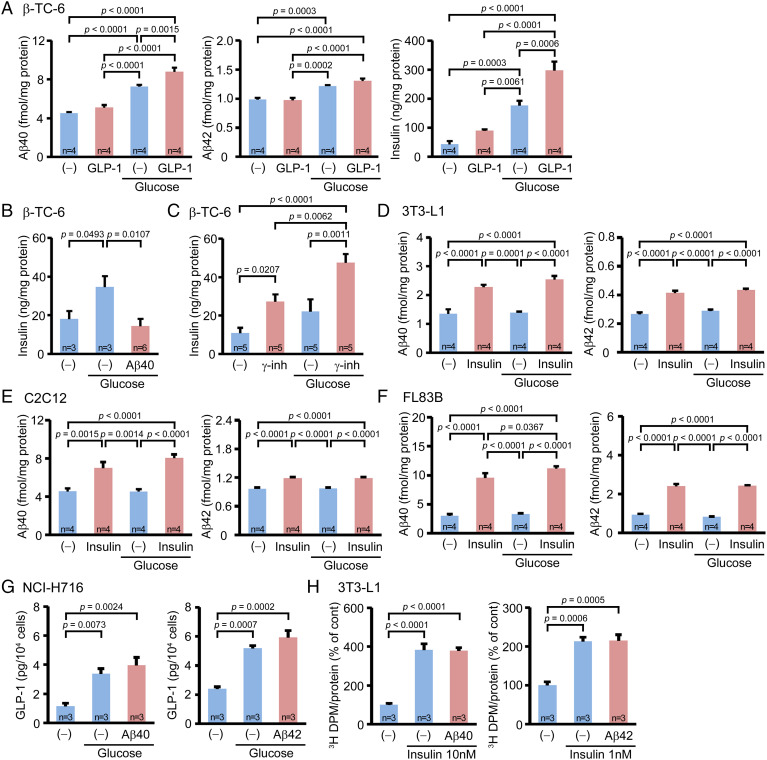
Type 2 diabetes mellitus is known to be a risk factor for Alzheimer’s disease (AD), but the underlying mechanisms remain unclear. In AD, the cerebral accumulation of amyloid β (Aβ) triggers a pathological cascade leading to neurodegeneration. Plasma Aβ levels are thought to reflect the brain amyloid pathology and currently used as a diagnostic biomarker of AD. However, amyloid precursor protein and Aβ-generating enzymes, β- and γ-secretases, are widely expressed in various peripheral tissues. Previous reports have shown that glucose and insulin loading cause a transient increase of plasma Aβ in mice and humans. These findings led us to speculate that plasma Aβ is produced from glucose- and insulin-susceptible peripheral tissues to play a role in glucose and insulin metabolism. To test this hypothesis, we investigated the effects of glucose and insulin on Aβ secretion and the effect of Aβ on insulin secretion in vivo, ex vivo, and in vitro. Aβ was found to be secreted from β-cells of the pancreas along with insulin upon glucose stimulation. Upon insulin stimulation, Aβ was secreted from cells of insulin-targeted organs, such as adipose tissues, skeletal muscles, and the liver, along with their organokines. Furthermore, Aβ inhibited the glucose-triggered insulin secretion from β-cells, slowing down glucose clearance from the blood. These results suggest that peripheral Aβ acts as a negative modulator of insulin secretion. Our findings provide a possible mechanism linking diabetes to AD and call attention to how plasma Aβ levels are used in AD diagnosis.
2 型糖尿病是阿尔茨海默病(AD)的一个已知风险因素,但潜在机制仍不清楚。在 AD 中,淀粉样蛋白β(Aβ)在大脑中的积累引发了导致神经退行性变的病理级联反应。血浆 Aβ 水平被认为反映了大脑淀粉样病理学,并目前被用作 AD 的诊断生物标志物。然而,淀粉样前体蛋白和 Aβ 生成酶,β-和 γ-分泌酶,在各种外周组织中广泛表达。先前的报告表明,葡萄糖和胰岛素负荷会导致小鼠和人类血浆 Aβ短暂增加。这些发现使我们推测,血浆 Aβ是由葡萄糖和胰岛素敏感的外周组织产生的,以在葡萄糖和胰岛素代谢中发挥作用。为了验证这一假设,我们研究了葡萄糖和胰岛素对 Aβ 分泌的影响,以及 Aβ 对体内、体外和体外胰岛素分泌的影响。发现 Aβ 可随葡萄糖刺激从胰腺的β 细胞与胰岛素一起分泌。在胰岛素刺激下,Aβ 可从胰岛素靶向器官的细胞中分泌出来,如脂肪组织、骨骼肌和肝脏,以及它们的器官因子。此外,Aβ 抑制β 细胞中葡萄糖触发的胰岛素分泌,减缓血糖从血液中的清除速度。这些结果表明,外周 Aβ 作为胰岛素分泌的负调节剂发挥作用。我们的发现提供了一个可能的机制,将糖尿病与 AD 联系起来,并引起人们对 AD 诊断中如何使用血浆 Aβ 水平的关注。