Faculty of Pharmacy, Ho Chi Minh City University of Technology (HUTECH), Ho Chi Minh City 700000, Vietnam.
Institute of Research and Development, Duy Tan University, Danang 550000, Vietnam.
Int J Mol Sci. 2020 Apr 30;21(9):3165. doi: 10.3390/ijms21093165.
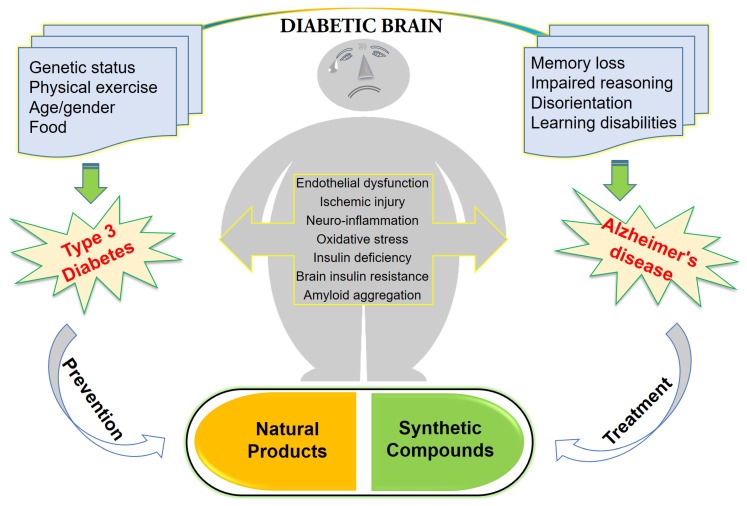
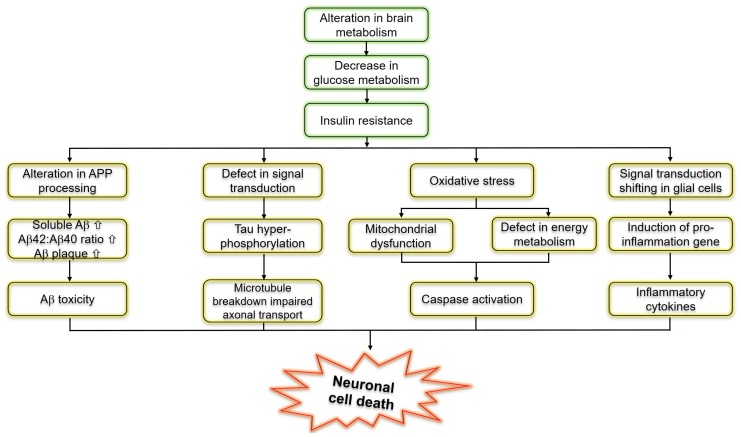
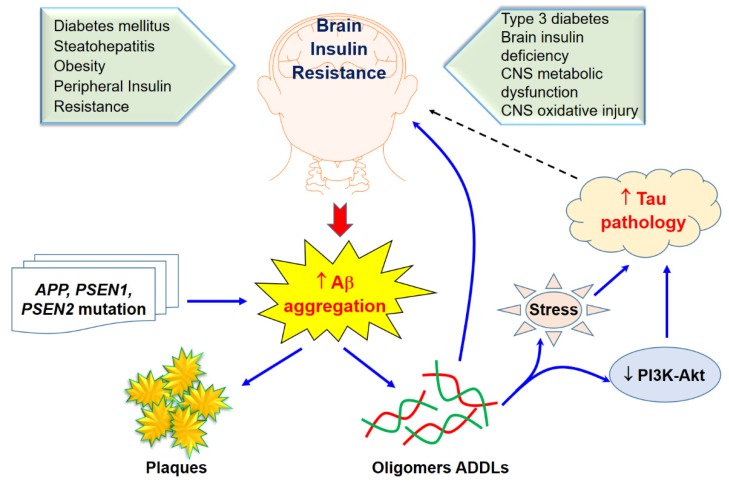
The exact connection between Alzheimer's disease (AD) and type 2 diabetes is still in debate. However, poorly controlled blood sugar may increase the risk of developing Alzheimer's. This relationship is so strong that some have called Alzheimer's "diabetes of the brain" or "type 3 diabetes (T3D)". Given more recent studies continue to indicate evidence linking T3D with AD, this review aims to demonstrate the relationship between T3D and AD based on the fact that both the processing of amyloid-β (Aβ) precursor protein toxicity and the clearance of Aβ are attributed to impaired insulin signaling, and that insulin resistance mediates the dysregulation of bioenergetics and progress to AD. Furthermore, insulin-related therapeutic strategies are suggested to succeed in the development of therapies for AD by slowing down their progressive nature or even halting their future complications.
阿尔茨海默病(AD)和 2 型糖尿病之间的确切联系仍存在争议。然而,血糖控制不佳可能会增加患阿尔茨海默病的风险。这种关系如此密切,以至于有人将阿尔茨海默病称为“大脑糖尿病”或“3 型糖尿病(T3D)”。鉴于最近的研究继续表明 T3D 与 AD 之间存在关联的证据,本综述旨在根据以下事实证明 T3D 与 AD 之间的关系:淀粉样蛋白-β(Aβ)前体蛋白毒性的处理和 Aβ的清除归因于胰岛素信号转导受损,而胰岛素抵抗介导了生物能量的失调和向 AD 的进展。此外,建议采用与胰岛素相关的治疗策略来成功开发 AD 的治疗方法,通过减缓其进展性甚至阻止其未来的并发症。