Laboratory of Chemical Physics, National Institute of Diabetes and Digestive and Kidney Diseases, NIH, Bethesda, MD 20892.
Proc Natl Acad Sci U S A. 2022 Mar 22;119(12):e2116736119. doi: 10.1073/pnas.2116736119. Epub 2022 Mar 15.
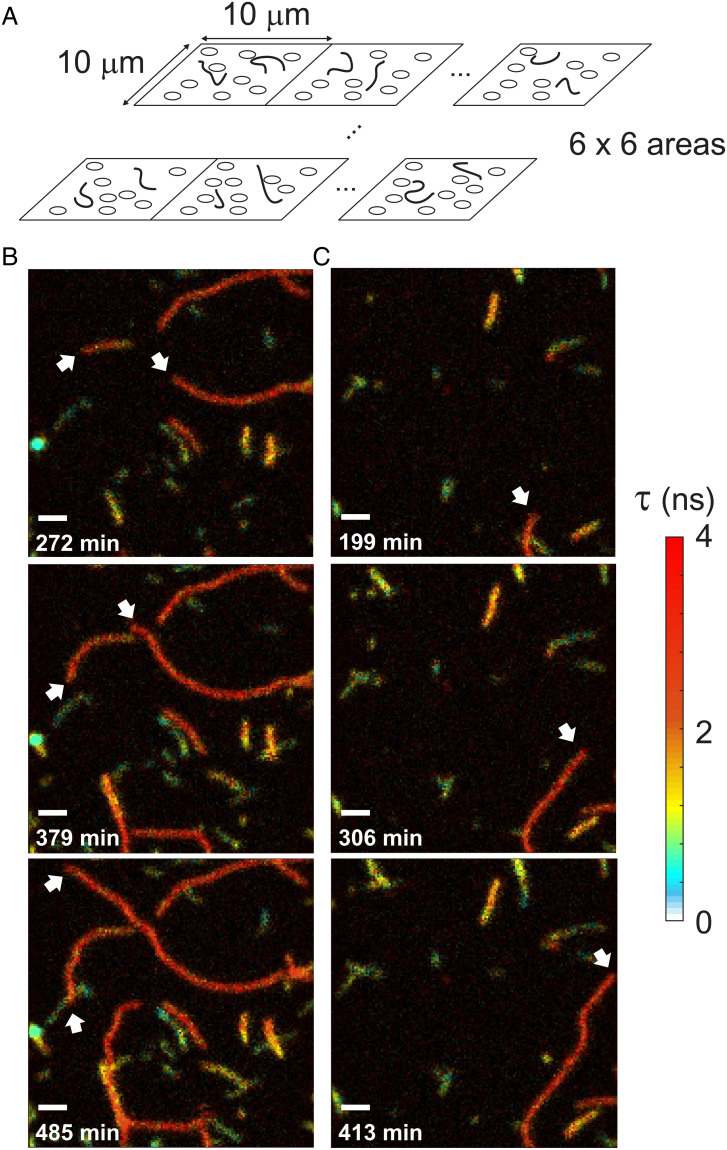
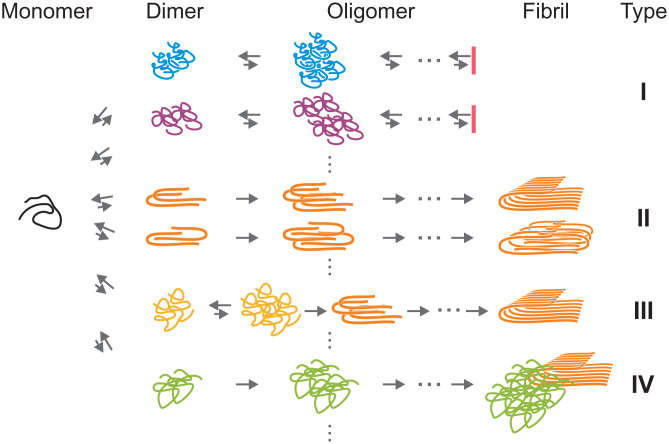
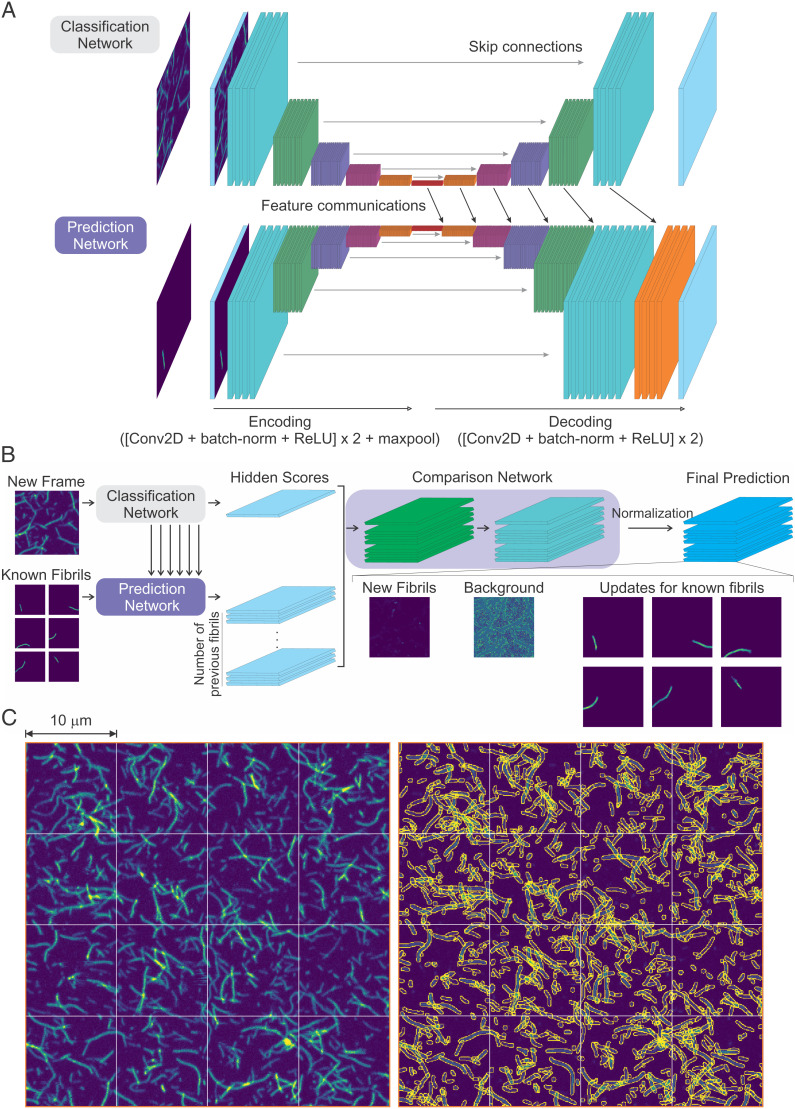
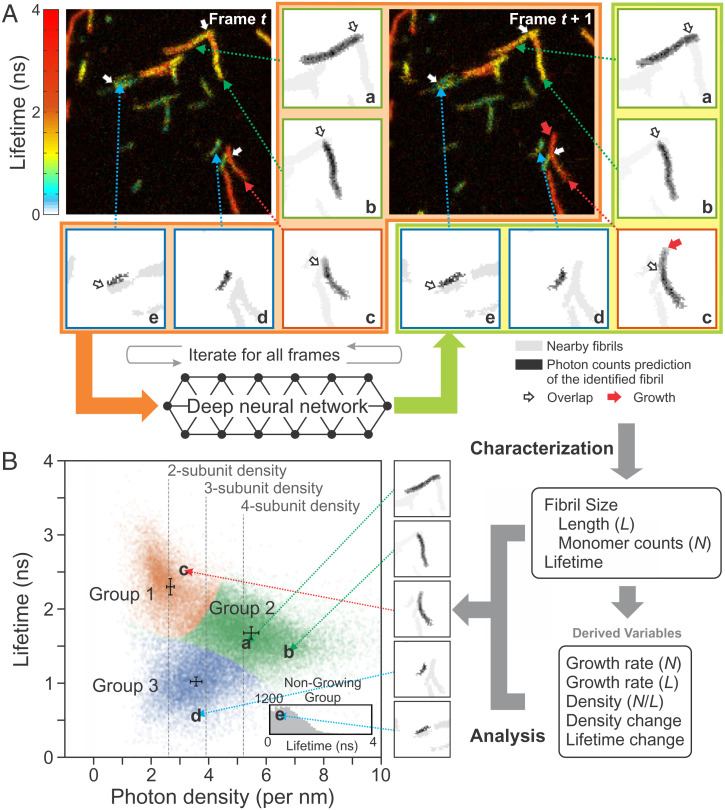
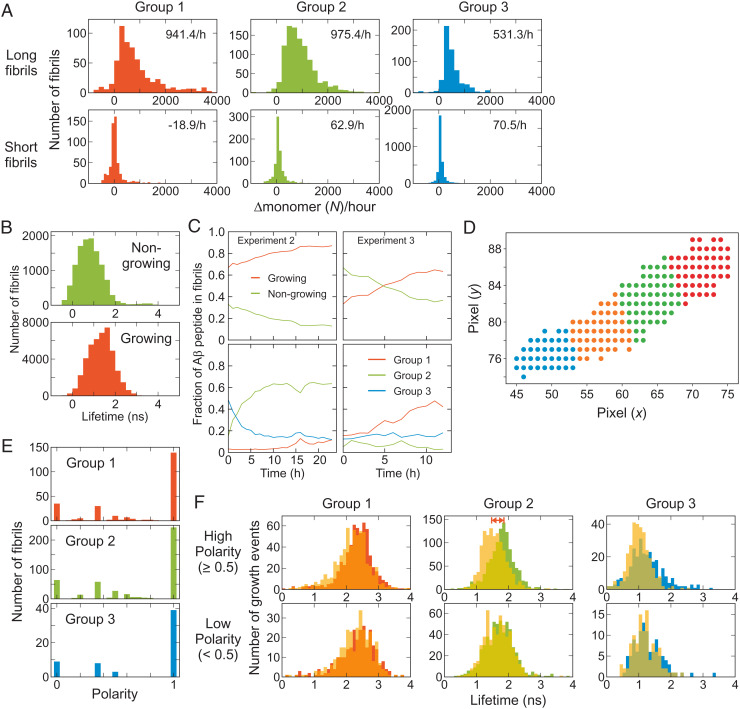
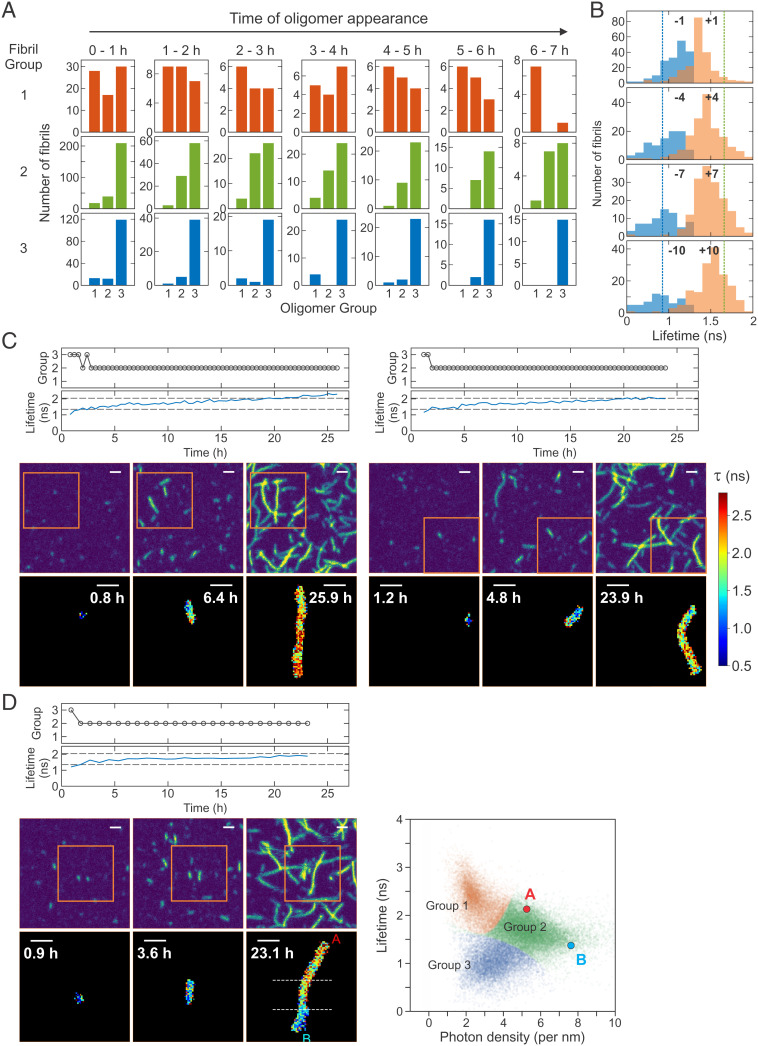
Polymorphism in the structure of amyloid fibrils suggests the existence of many different assembly pathways. Characterization of this heterogeneity is the key to understanding the aggregation mechanism and toxicity, but in practice it is extremely difficult to probe individual aggregation pathways in a mixture. Here, we present development of a method combining single-molecule fluorescence lifetime imaging and deep learning for monitoring individual fibril formation in real time and their high-throughput analysis. A deep neural network (FNet) separates an image of highly overlapping fibrils into single fibril images, which allows for tracking the growth and changes in characteristics of individual fibrils. Using this method, we investigated aggregation of the 42-residue amyloid-β peptide (Aβ42). We demonstrate that highly heterogeneous fibril formation can be quantitatively characterized in terms of the number of cross-β subunits, elongation speed, growth polarity, and conformation of fibrils. Tracking individual fibril formation and growth also leads to the discovery of a general nucleation mechanism (termed heterogeneous secondary nucleation), where a fibril is formed on the surface of an oligomer with a different structure. Our development will be broadly applicable to characterization of heterogeneous aggregation processes of other proteins.
淀粉样纤维结构的多态性表明存在许多不同的组装途径。这种异质性的特征描述是理解聚集机制和毒性的关键,但实际上,在混合物中探测单个聚集途径极其困难。在这里,我们提出了一种将单分子荧光寿命成像和深度学习相结合的方法,用于实时监测和高通量分析单个纤维的形成。一个深度神经网络(FNet)将高度重叠的纤维的图像分离成单个纤维的图像,这允许跟踪单个纤维的生长和特征的变化。使用这种方法,我们研究了 42 个残基的淀粉样β肽(Aβ42)的聚集。我们证明,高度异质的纤维形成可以根据交叉-β亚基的数量、伸长速度、生长极性和纤维构象进行定量描述。跟踪单个纤维的形成和生长也导致了一种普遍的成核机制(称为异质二次成核)的发现,其中纤维在具有不同结构的寡聚物的表面上形成。我们的开发将广泛适用于其他蛋白质的异质聚集过程的特征描述。