Department of Pharmacy, Tianjin First Central Hospital, School of Medicine, Nankai University, Tianjin, China.
Department of Thoracic Surgery, Tianjin First Central Hospital, School of Medicine, Nankai University, Tianjin, China.
Bioengineered. 2022 Apr;13(4):8064-8075. doi: 10.1080/21655979.2022.2051853.
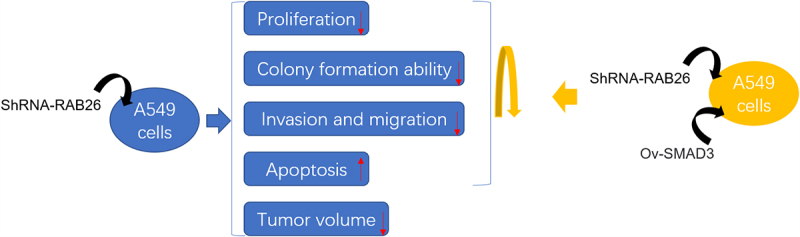
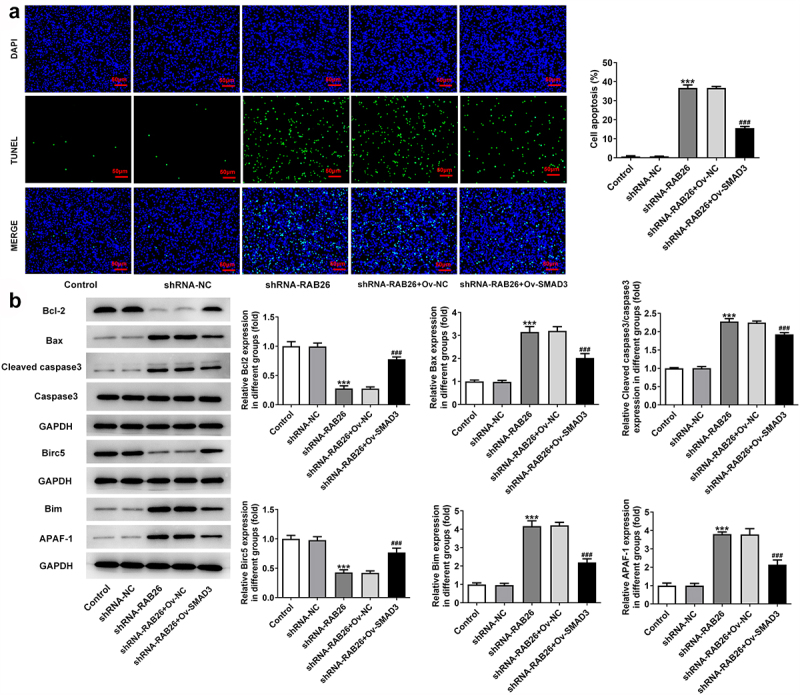
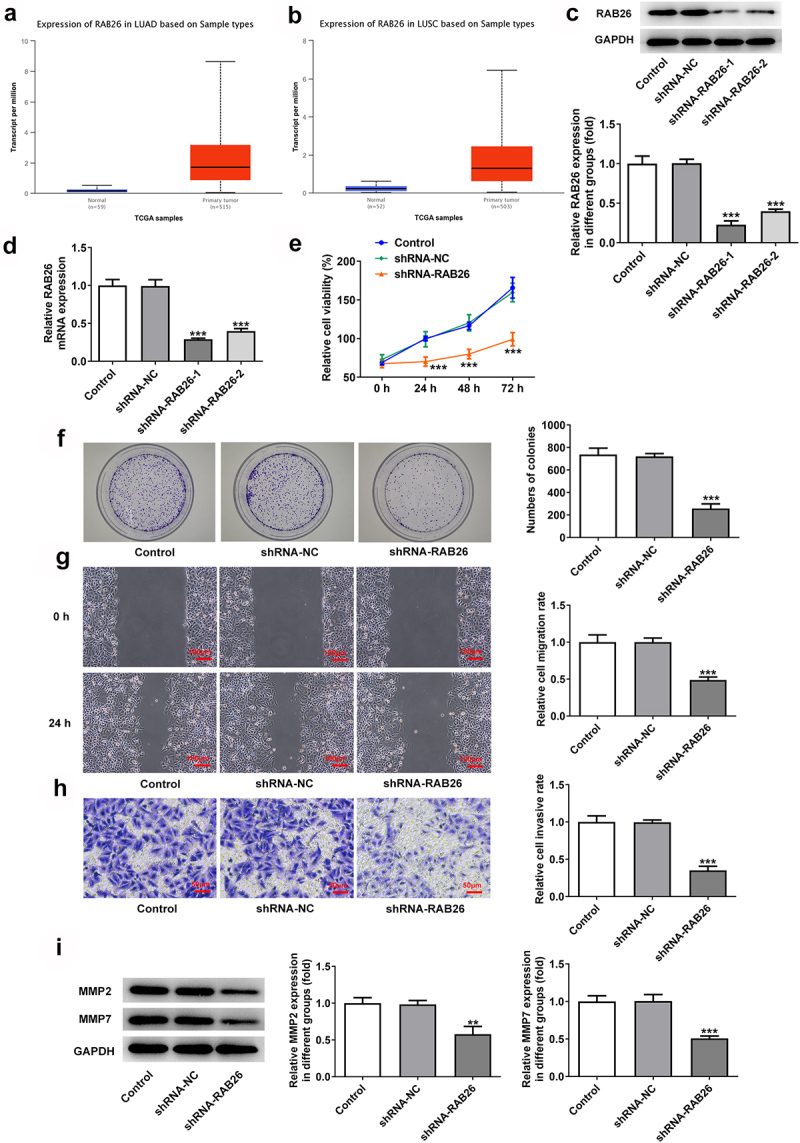
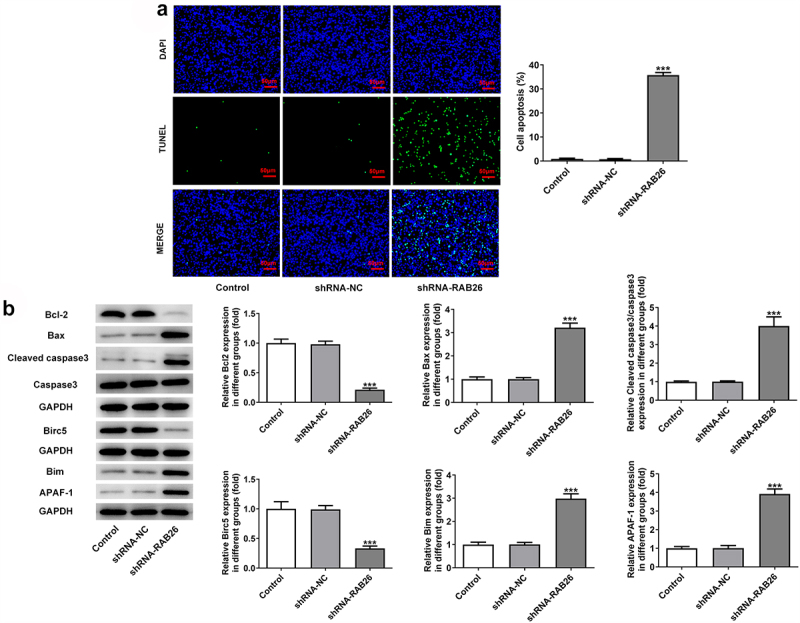
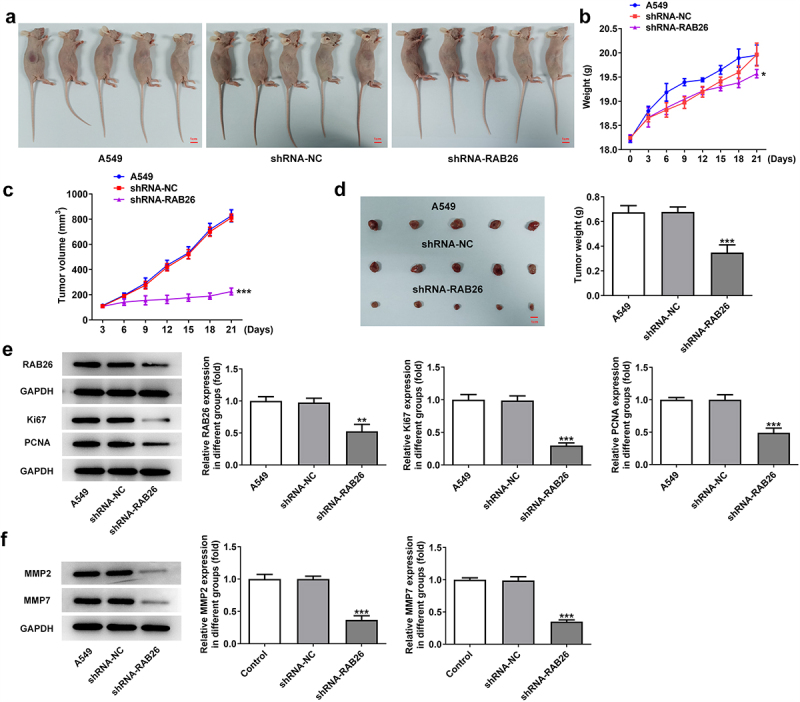
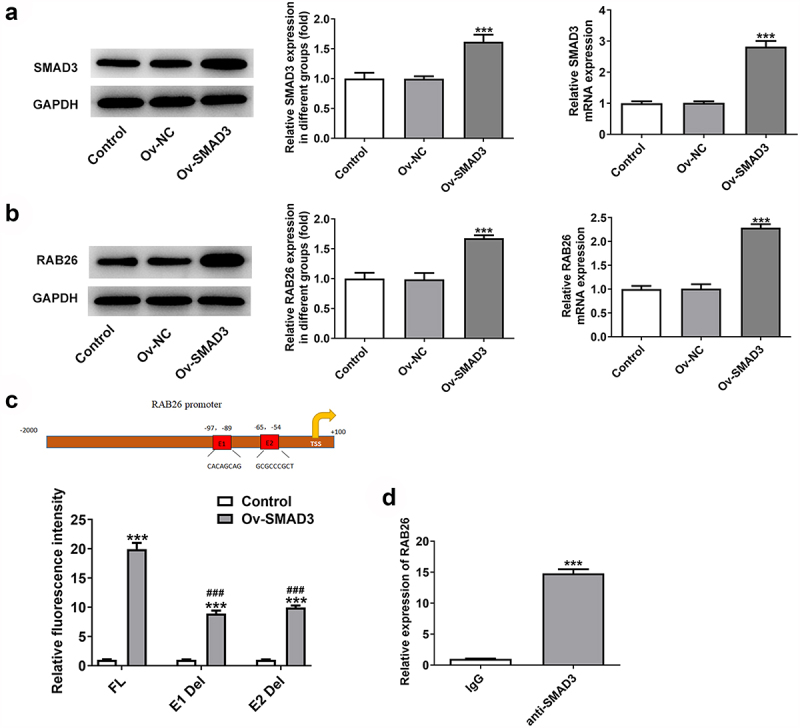
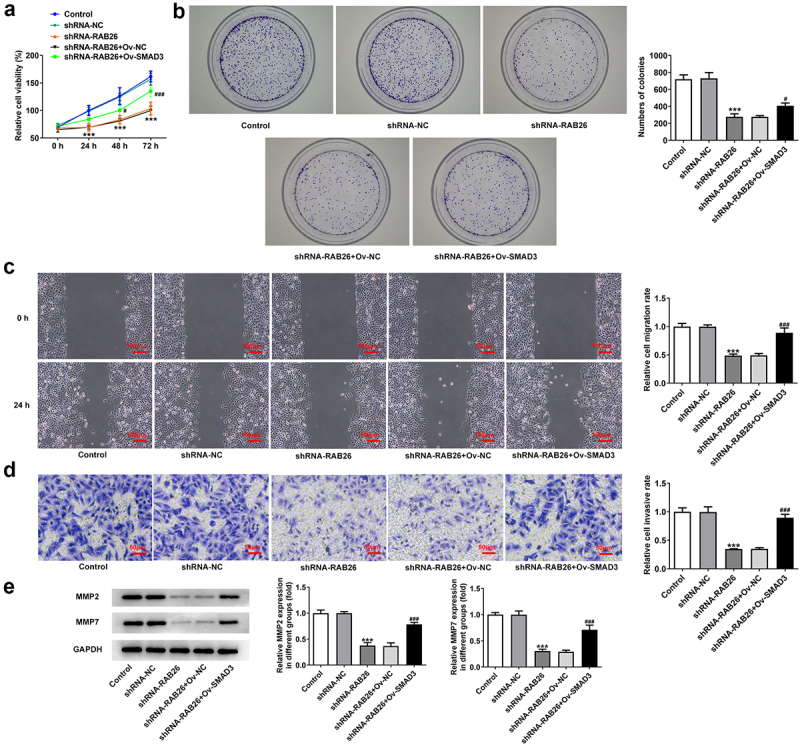
Non-small cell lung cancer (NSCLC) accounts for 85% of all cases of lung cancer, which constitutes the leading cause of cancer mortality. RAB26, a member of Rab GTPase superfamily, has been suggested to play a role in the tumorigenesis of NSCLC. The present work aimed to explore whether and how RAB26 contributed to the progression of NSCLC. NSCLC cell line A549 was transfection with short hairpin RNA (shRNA) or overexpression (Ov) vector to knockdown RAB26 or overexpress SMAD3, respectively. Then the malignant processes of A549 cells including proliferation, migration, invasion and apoptosis were evaluated by CCK-8, colony formation, wound-healing, transwell and TUNEL assays, respectively. Expression of proteins involved in these processes was measured by western blot. A549 xenograft mice model was established to confirm the effect of RAB26 silence on NSCLC progression in vivo. The relationship between RAB26 and SMAD3 was analyzed by bioinformatics and then verified by dual-luciferase reporter and chromatin immunoprecipitation (ChIP) assays. We found that silence of RAB26 inhibited the proliferation, migration and invasion but promoted apoptosis of A549 cells. In vivo studies revealed that the tumor growth of A549 xenograft was markedly suppressed upon RAB26 silence. Moreover, it was confirmed that SMAD3 bound to the promoter of RAB26 and enhance its expression. Finally, we observed that overexpression of SMAD3 significantly blocked the inhibitory effect of RAB26 silence on NSCLC progression. Collectively, RAB26 may contribute to the progression of NSCLC after being transcriptionally activated by SMAD3.
非小细胞肺癌(NSCLC)占所有肺癌病例的 85%,是癌症死亡的主要原因。Rab GTPase 超家族的成员 RAB26 已被证明在 NSCLC 的肿瘤发生中起作用。本研究旨在探讨 RAB26 是否以及如何促进 NSCLC 的进展。分别用短发夹 RNA(shRNA)或过表达(Ov)载体转染 NSCLC 细胞系 A549,敲低 RAB26 或过表达 SMAD3。然后通过 CCK-8、集落形成、划痕愈合、Transwell 和 TUNEL 测定分别评估 A549 细胞的恶性进程,包括增殖、迁移、侵袭和凋亡。通过 Western blot 测定这些过程中涉及的蛋白质的表达。建立 A549 异种移植小鼠模型,以确认 RAB26 沉默对 NSCLC 体内进展的影响。通过生物信息学分析 RAB26 和 SMAD3 之间的关系,然后通过双荧光素酶报告基因和染色质免疫沉淀(ChIP)测定验证。我们发现,沉默 RAB26 抑制 A549 细胞的增殖、迁移和侵袭,但促进其凋亡。体内研究表明,沉默 RAB26 后 A549 异种移植瘤的生长明显受到抑制。此外,证实 SMAD3 结合到 RAB26 的启动子并增强其表达。最后,我们观察到过表达 SMAD3 显著阻断了 RAB26 沉默对 NSCLC 进展的抑制作用。总之,SMAD3 转录激活 RAB26 可能促进 NSCLC 的进展。