Department of Neuroscience and Howard Hughes Medical Institute, University of Wisconsin School of Medicine and Public Health, Madison, Wisconsin 53705.
Medical Scientist Training Program, University of Wisconsin School of Medicine and Public Health, Madison, Wisconsin 53705.
J Neurosci. 2022 Apr 27;42(17):3512-3522. doi: 10.1523/JNEUROSCI.2521-21.2022. Epub 2022 Mar 16.
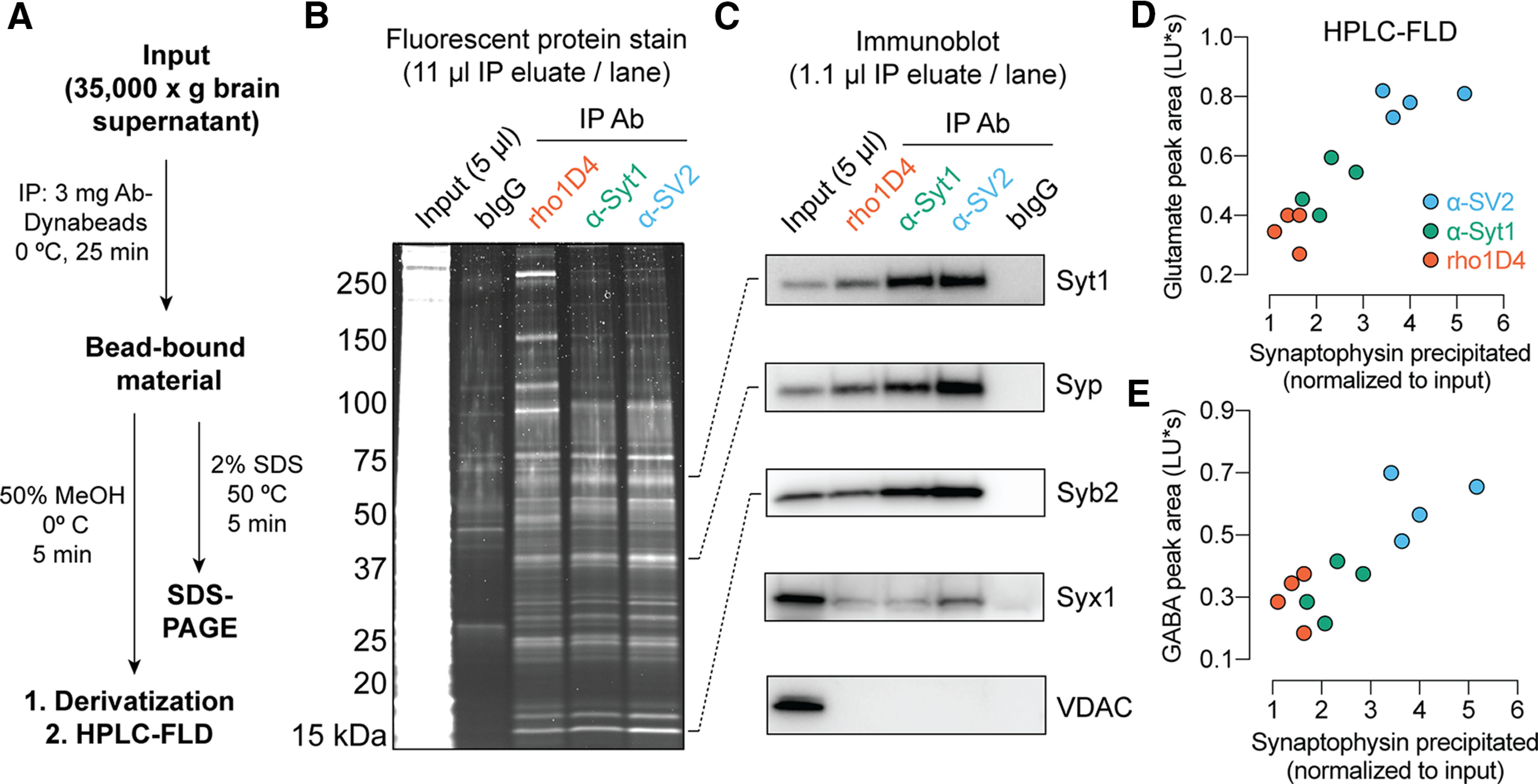
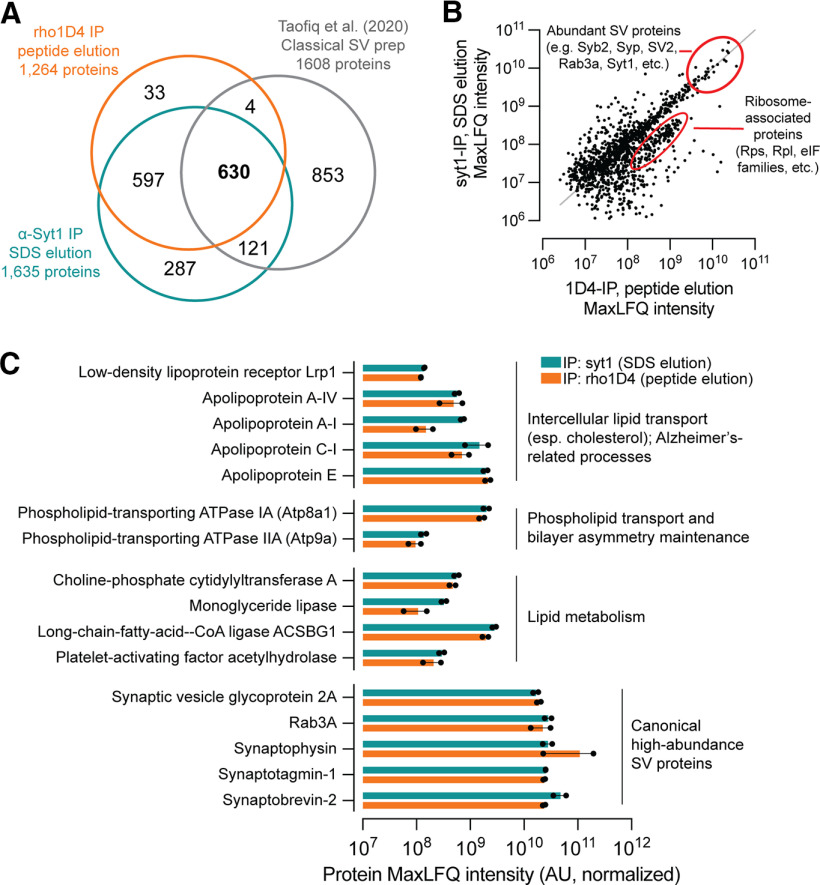
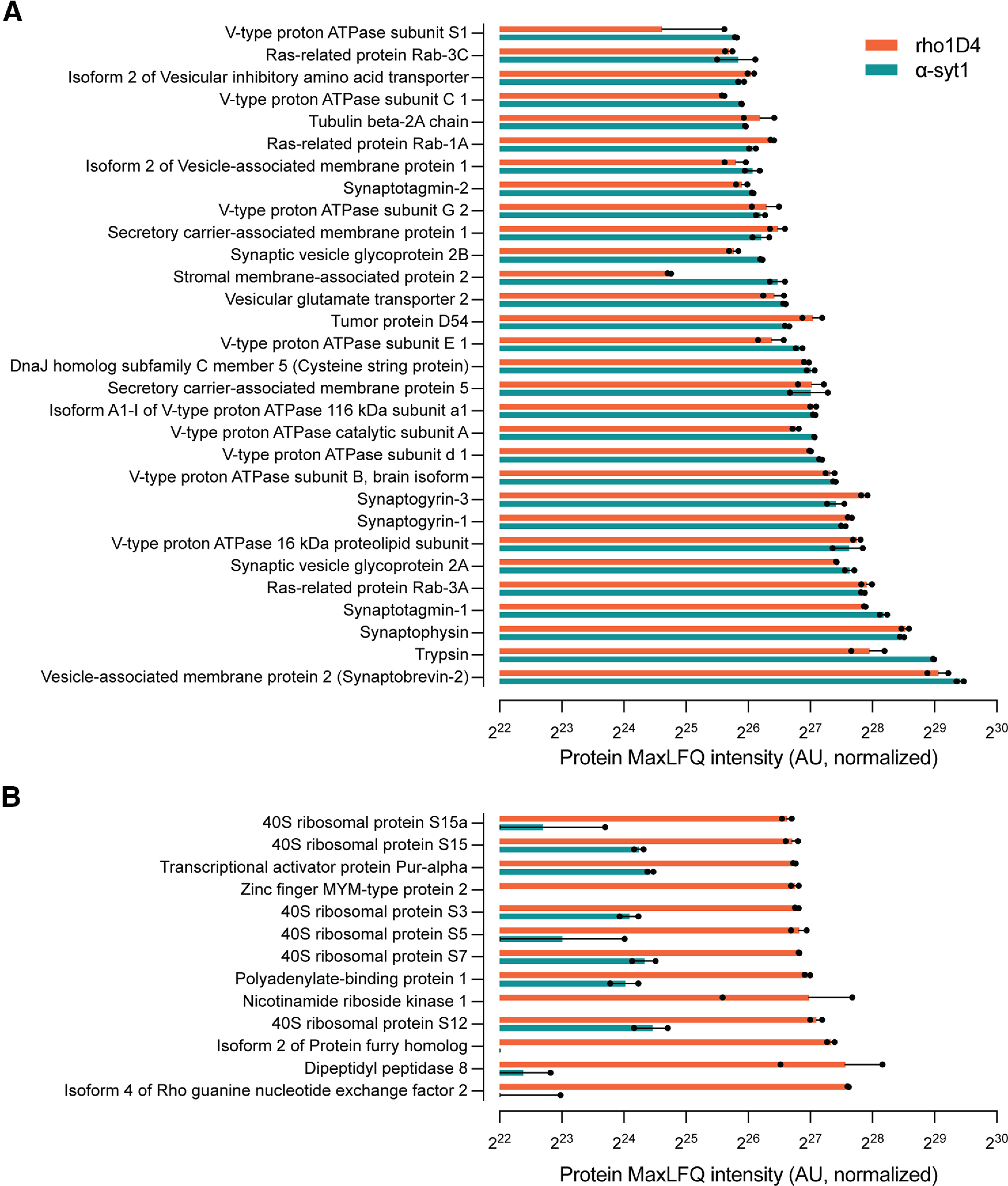
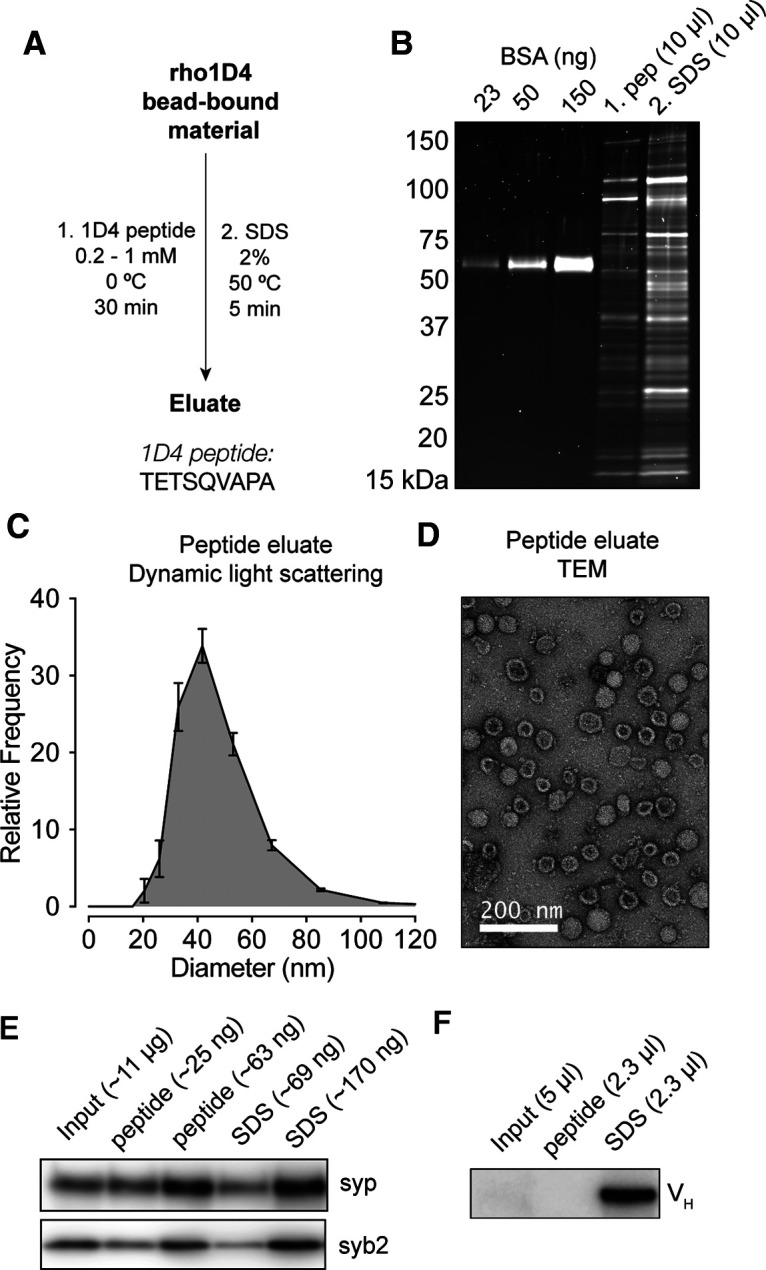
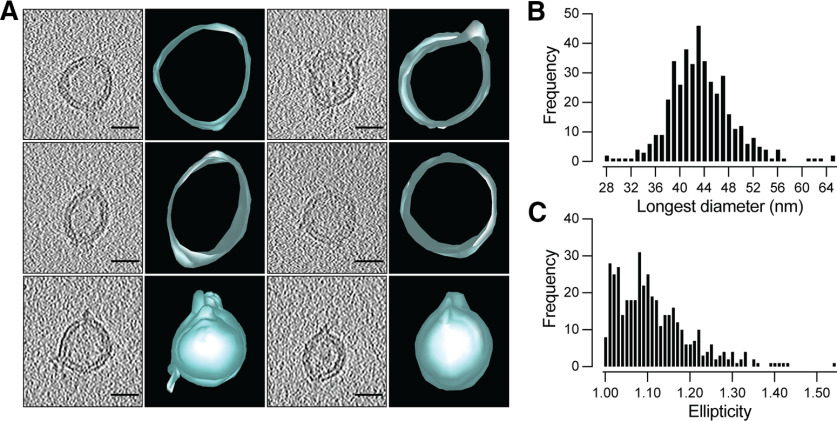
Current methods to isolate synaptic vesicles (SVs), the organellar quanta of synaptic transmission, require highly specialized materials and up to 24 h. These technical obstacles have thus far limited the study of SVs in models of synaptic function and pathophysiology. Here, we describe techniques for the rapid isolation of SVs by immunoprecipitation with widely available antibodies conjugated to magnetic beads. We report that the inexpensive rho1D4 monoclonal antibody binds SVs and show that elution with the 1D4 peptide yields native vesicles that are ≥ 10-fold purer than those obtained with classical techniques. These methods substantially widen the accessibility of SVs, enabling their purification in 60-90 min for downstream analyses including mass spectrometry and cryo-electron microscopy. Immunopurified SV preparations from mouse brain contained apolipoprotein E, the LDL receptor Lrp1, and enzymes involved in lipid metabolism, suggesting that SVs may play direct roles in lipid homeostasis and lipoprotein trafficking at the nerve terminal. SVs are small organelles that form and recycle at nerve terminals to enable synaptic transmission. Much remains unknown about the processes that enable the formation and function of SVs. Moreover, nerve terminals appear to be particularly vulnerable to pathophysiologic processes underlying neurodegenerative diseases and schizophrenia. Although techniques to purify synaptic vesicles thus have the potential to yield significant insights into physiology and pathophysiology of nerve terminals, current methods rely on either esoteric materials or expression of transgenes. This article addresses these problems by establishing robust, efficient methods for SV purification using widely available materials, and it highlights several promising areas of future study arising from proteomic analyses of immunopurified SVs.
目前,分离突触小泡(SVs)的方法需要高度专业化的材料和长达 24 小时。这些技术障碍限制了 SV 在突触功能和病理生理学模型中的研究。本文描述了通过用广泛可用的抗体与磁珠偶联进行免疫沉淀来快速分离 SV 的技术。我们报告说廉价的 rho1D4 单克隆抗体与 SVs 结合,并表明用 1D4 肽洗脱得到的天然囊泡比经典技术获得的囊泡纯度高 10 倍以上。这些方法大大拓宽了 SV 的可及性,使其能够在 60-90 分钟内进行下游分析,包括质谱和冷冻电子显微镜分析。从小鼠脑中免疫纯化的 SV 制剂含有载脂蛋白 E、LDL 受体 Lrp1 和参与脂质代谢的酶,这表明 SV 可能在神经末梢的脂质稳态和脂蛋白转运中发挥直接作用。SV 是在神经末梢形成和循环的小细胞器,以实现突触传递。关于 SV 的形成和功能的过程,还有很多未知之处。此外,神经末梢似乎特别容易受到神经退行性疾病和精神分裂症的病理生理过程的影响。虽然纯化突触小泡的技术有可能深入了解神经末梢的生理学和病理生理学,但目前的方法要么依赖于深奥的材料,要么依赖于转基因的表达。本文通过建立使用广泛可用的材料进行 SV 纯化的稳健、高效方法来解决这些问题,并强调了从免疫纯化 SV 的蛋白质组学分析中产生的几个有前途的未来研究领域。