Oncology Research, Amgen Inc, South San Francisco, California, USA.
Genome Analysis Unit, Amgen Inc, South San Francisco, California, USA.
J Immunother Cancer. 2022 Mar;10(3). doi: 10.1136/jitc-2021-004348.
Bispecific T-cell engager (BiTE) molecules induce redirected lysis of cancer cells by T cells and are an emerging modality for solid tumor immunotherapy. While signs of clinical activity have been demonstrated, efficacy of T-cell engagers (TCEs) in solid tumors settings, molecular determinants of response, and underlying mechanisms of resistance to BiTE therapy require more investigation.
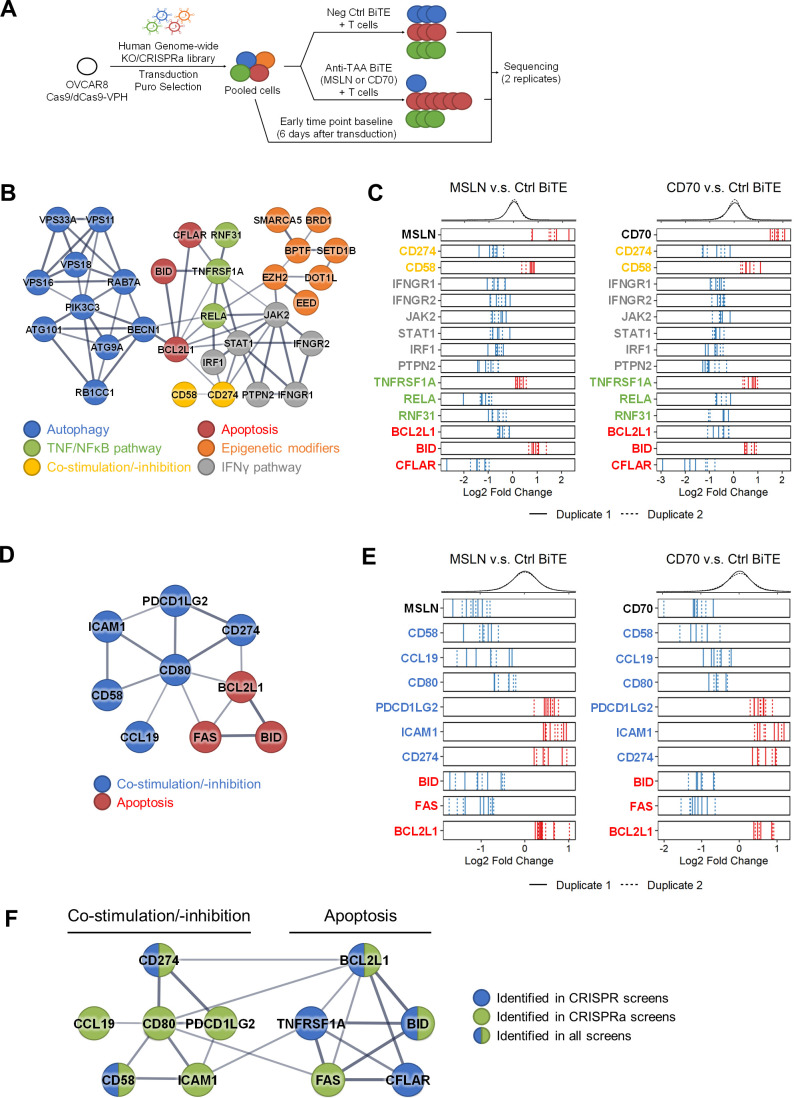
To uncover cancer cell-intrinsic genetic modifiers of TCE-mediated cytotoxicity, we performed genome-wide CRISPR (Clustered Regularly Interspaced Short Palindromic Repeats) loss-of-function and CRISPRa (CRISPR activation) gain-of-function screens using TCEs against two distinct tumor-associated antigens (TAAs). By using in vitro T-cell cytotoxicity assays and in vivo efficacy studies, we validated the roles of two common pathways identified in our screen, T-cell costimulation pathway and apoptosis pathway, as key modifiers of BiTE activity.
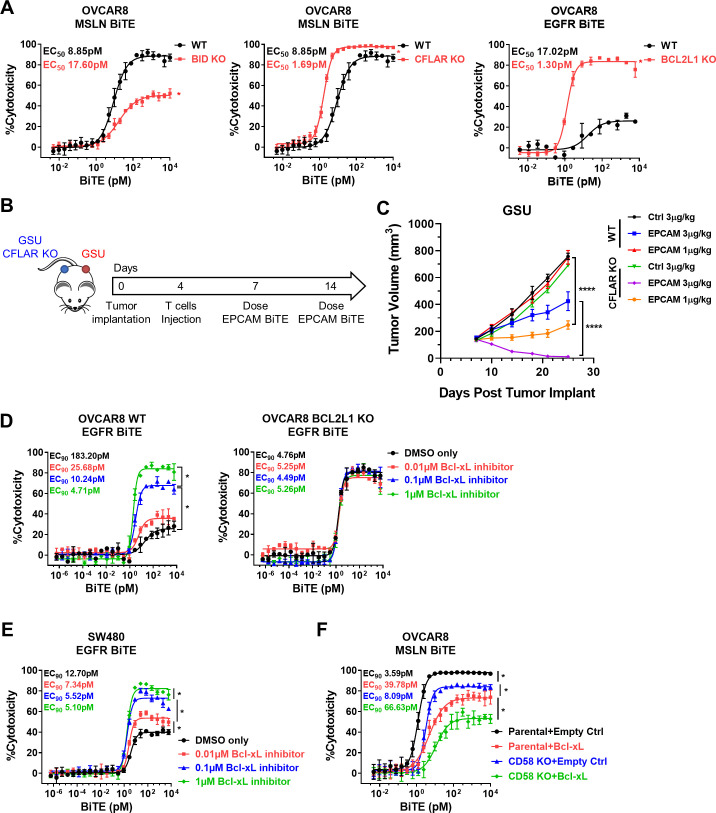
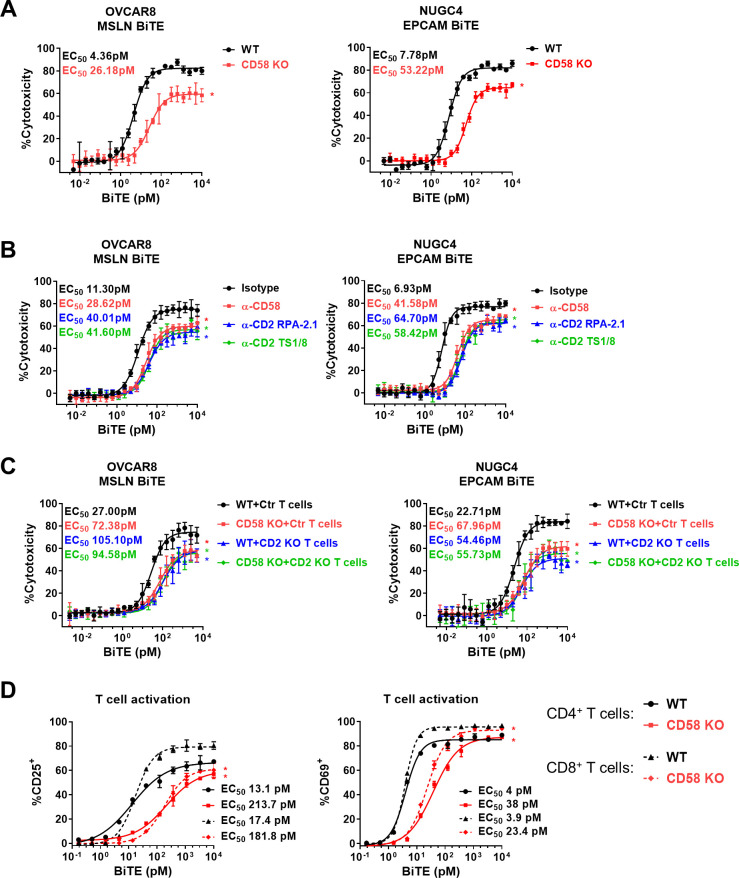
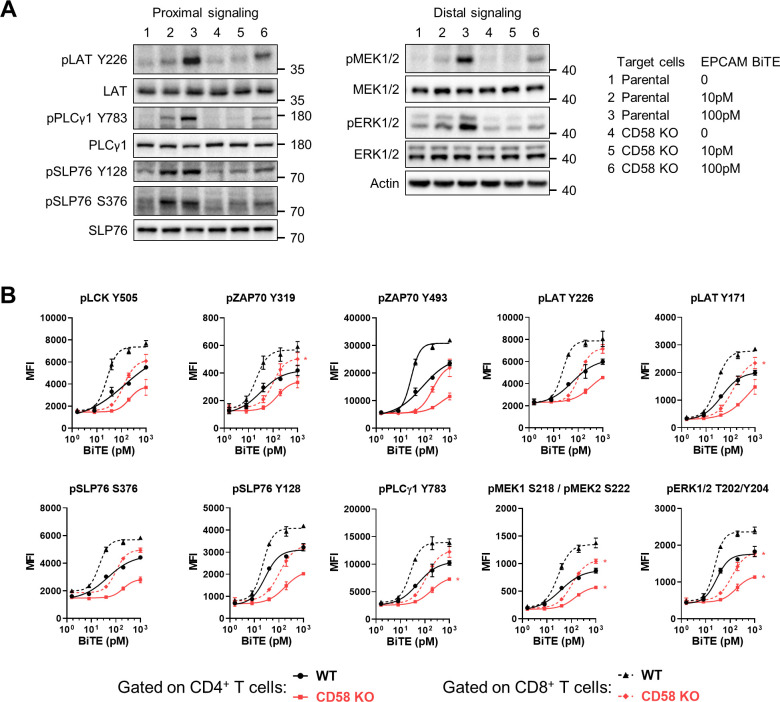
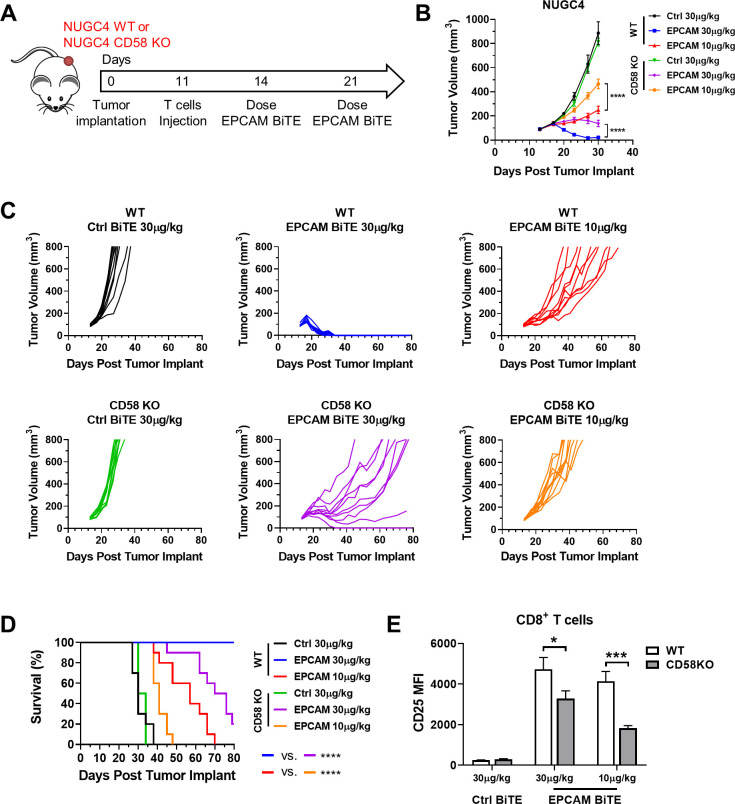
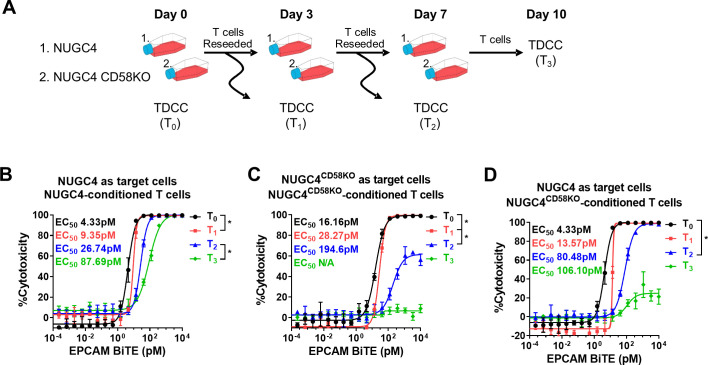
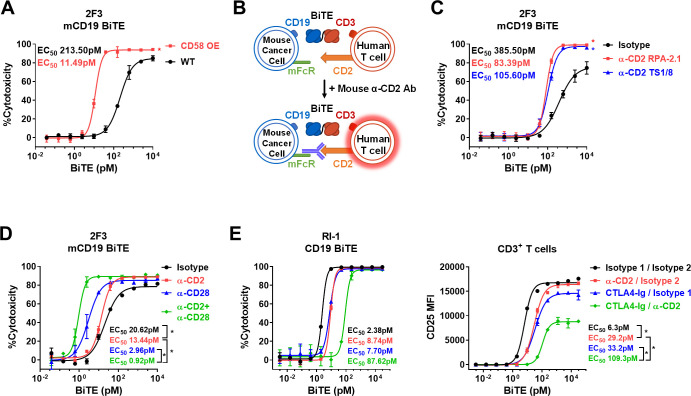
Our genetic screens uncovered TAAs-independent cancer cell-intrinsic genes with functions in autophagy, T-cell costimulation, the apoptosis pathway, chromatin remodeling, and cytokine signaling that altered responsiveness to BiTE-mediated killing. Notably, loss of CD58 (the ligand of the CD2 T-cell costimulatory receptor), a gene frequently altered in cancer, led to decreased TCE-mediated cytotoxicity, T-cell activation and antitumor efficacy in vitro and in vivo. Moreover, the effects of CD58 loss were synergistically compounded by concurrent loss of CD80/CD86 (ligands for the CD28 T-cell costimulatory receptor), whereas joint CD2 and CD28 costimulation additively enhanced TCE-mediated killing, indicating non-redundant costimulatory mechanisms between the two pathways. Additionally, loss of (Caspase-8 and FADD Like Apoptosis Regulator), , and (BH3 Interacting Domain Death Agonist) induced profound changes in sensitivity to TCEs, indicating that key regulators of apoptosis, which are frequently altered in cancer, impact tumor responsiveness to BiTE therapy.
This study demonstrates that genetic alterations central to carcinogenesis and commonly detected in cancer samples lead to significant modulation of BiTE antitumor activity in vitro and in vivo, findings with relevance for a better understanding of patient responses to BiTE therapy and novel combinations that enhance TCE efficacy.
双特异性 T 细胞衔接器(BiTE)分子通过 T 细胞诱导癌细胞的重定向裂解,是实体肿瘤免疫治疗的一种新兴模式。虽然已经显示出临床活性的迹象,但 T 细胞衔接器(TCE)在实体肿瘤环境中的疗效、反应的分子决定因素以及对 BiTE 治疗的耐药潜在机制仍需要更多的研究。
为了揭示 TCE 介导的细胞毒性的肿瘤细胞内在遗传修饰因子,我们使用针对两种不同肿瘤相关抗原(TAA)的 TCE 进行了全基因组 CRISPR(成簇规律间隔短回文重复序列)基因敲除和 CRISPRa(CRISPR 激活)基因过表达筛选。通过体外 T 细胞细胞毒性测定和体内疗效研究,我们验证了我们筛选中确定的两个常见途径,即 T 细胞共刺激途径和凋亡途径,作为 BiTE 活性的关键修饰因子的作用。
我们的遗传筛选揭示了 TAA 非依赖性肿瘤细胞内在基因,这些基因在自噬、T 细胞共刺激、凋亡途径、染色质重塑和细胞因子信号传导中具有功能,这些基因改变了对 BiTE 介导杀伤的反应性。值得注意的是,CD58(CD2 T 细胞共刺激受体的配体)的缺失,一种在癌症中经常改变的基因,导致 TCE 介导的细胞毒性、T 细胞激活和体内外抗肿瘤疗效降低。此外,CD58 缺失的影响通过同时缺失 CD80/CD86(CD28 T 细胞共刺激受体的配体)而协同增强,而联合 CD2 和 CD28 共刺激则相加增强 TCE 介导的杀伤作用,表明两条途径之间存在非冗余的共刺激机制。此外, (Caspase-8 和 FADD 样凋亡调节剂)、 (Bid)和 (BH3 相互作用域死亡激动剂)的缺失导致对 TCE 的敏感性发生深刻变化,表明凋亡的关键调节剂,这些调节剂在癌症中经常改变,影响肿瘤对 BiTE 治疗的反应性。
这项研究表明,与癌症发生相关的遗传改变,并且在癌症样本中经常检测到,导致 BiTE 抗肿瘤活性在体外和体内发生显著调节,这一发现对更好地理解患者对 BiTE 治疗的反应以及增强 TCE 疗效的新组合具有重要意义。