Department of Pharmaceutical Sciences and Computational Chemical Genomics Screening Center, School of Pharmacy, University of Pittsburgh, Pittsburgh, Pennsylvania 15261, United States.
National Center of Excellence for Computational Drug Abuse Research, University of Pittsburgh, Pittsburgh, Pennsylvania 15261, United States.
ACS Chem Neurosci. 2022 Apr 6;13(7):959-977. doi: 10.1021/acschemneuro.1c00749. Epub 2022 Mar 17.
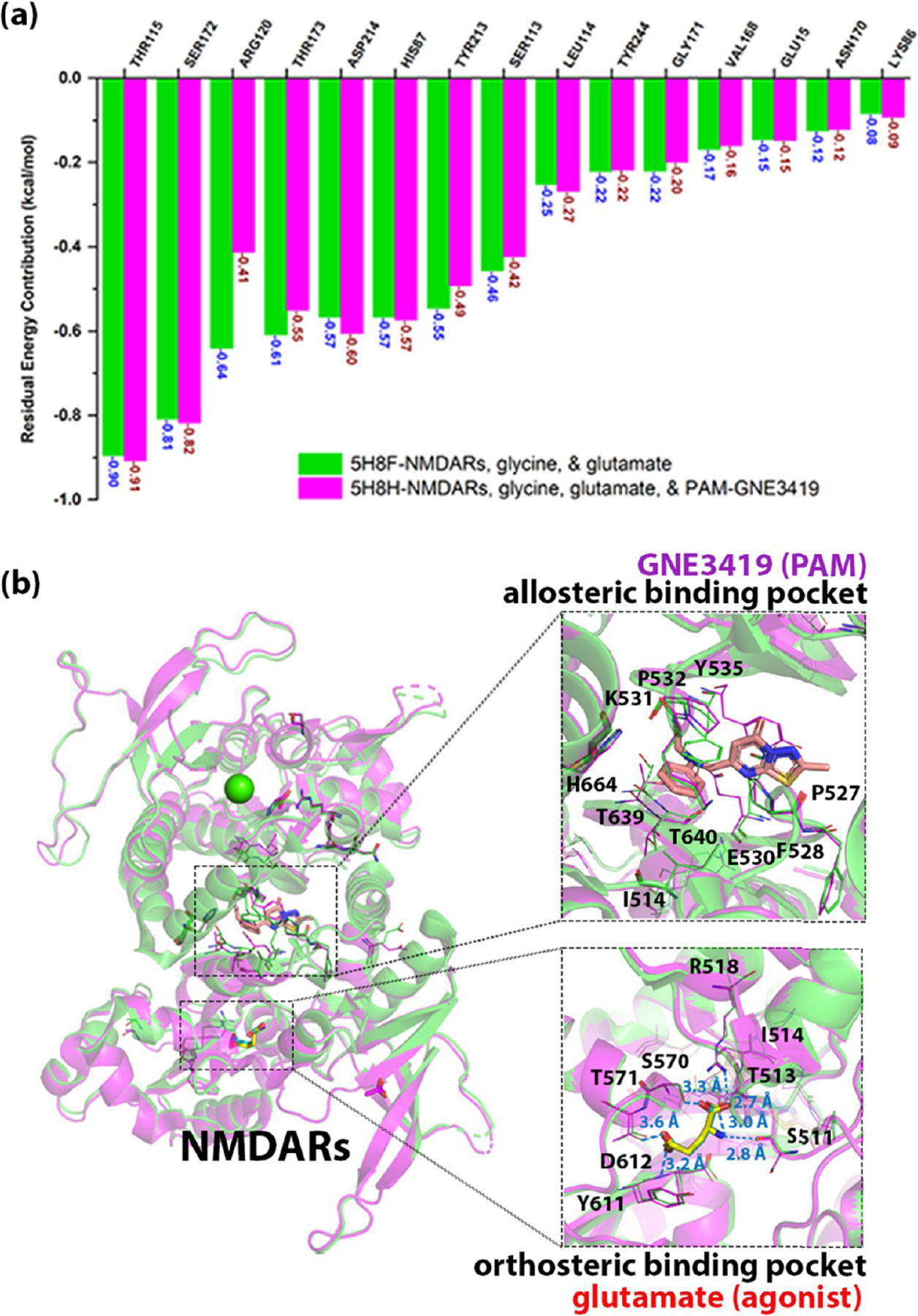
Allosteric modulators (AMs) that bind allosteric sites can exhibit greater selectivity than the orthosteric ligands and can either enhance agonist-induced receptor activity (termed positive allosteric modulator or PAM), inhibit agonist-induced activity (negative AM or NAM), or have no effect on activity (silent AM or SAM). Until now, it is not clear what the exact effects of AMs are on the orthosteric active site or the allosteric binding pocket(s). In the present work, we collected both the three-dimensional (3D) structures of receptor-orthosteric ligand and receptor-orthosteric ligand-AM complexes of a specific target protein. Using our novel algorithm toolset, molecular complex characterizing system (MCCS), we were able to quantify the key residues in both the orthosteric and allosteric binding sites along with potential changes of the binding pockets. After analyzing 21 pairs of 3D crystal or cryo-electron microscopy (cryo-EM) complexes, including 4 pairs of GPCRs, 5 pairs of ion channels, 11 pairs of enzymes, and 1 pair of transcription factors, we found that the binding of AMs had little impact on both the orthosteric and allosteric binding pockets. In return, given the accurately predicted allosteric binding pocket(s) of a drug target of medicinal interest, we can confidently conduct the virtual screening or lead optimization without concern that the huge conformational change of the pocket could lead to the low accuracy of virtual screening.
变构调节剂(AMs)与变构位点结合,可以比正位配体具有更高的选择性,并且可以增强激动剂诱导的受体活性(称为正变构调节剂或 PAM),抑制激动剂诱导的活性(负变构调节剂或 NAM),或对活性没有影响(沉默变构调节剂或 SAM)。到目前为止,还不清楚 AMs 对正位活性位点或变构结合口袋的确切影响。在本工作中,我们收集了特定靶蛋白的受体-正位配体和受体-正位配体-AM 复合物的三维(3D)结构。使用我们的新型算法工具集,分子复合物特征系统(MCCS),我们能够量化正位和变构结合位点的关键残基以及结合口袋的潜在变化。在分析了 21 对 3D 晶体或冷冻电镜(cryo-EM)复合物后,包括 4 对 GPCRs、5 对离子通道、11 对酶和 1 对转录因子,我们发现 AM 的结合对正位和变构结合口袋几乎没有影响。反过来,考虑到有医学意义的药物靶标变构结合口袋的准确预测,我们可以放心地进行虚拟筛选或先导优化,而不必担心口袋的巨大构象变化会导致虚拟筛选的准确性降低。