The Second Clinical Medical College of Nanchang University, The Second Affiliated Hospital of Nanchang University, Jiangxi, Nanchang 330006, China.
The Second Clinical Medical College of Nanchang University, The Second Affiliated Hospital of Nanchang University, Jiangxi, Nanchang 330006, China; Department of Metabolism and Endocrinology, The Second Affiliated Hospital of Nanchang University, Jiangxi, Nanchang 330006, China.
Mol Metab. 2022 Jun;60:101470. doi: 10.1016/j.molmet.2022.101470. Epub 2022 Mar 15.
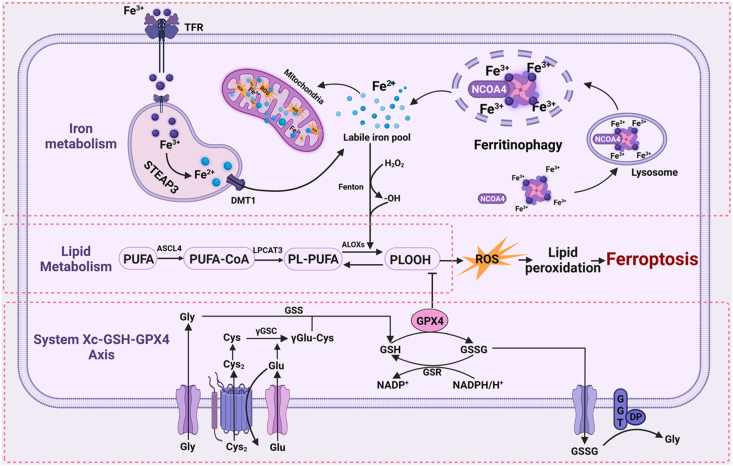
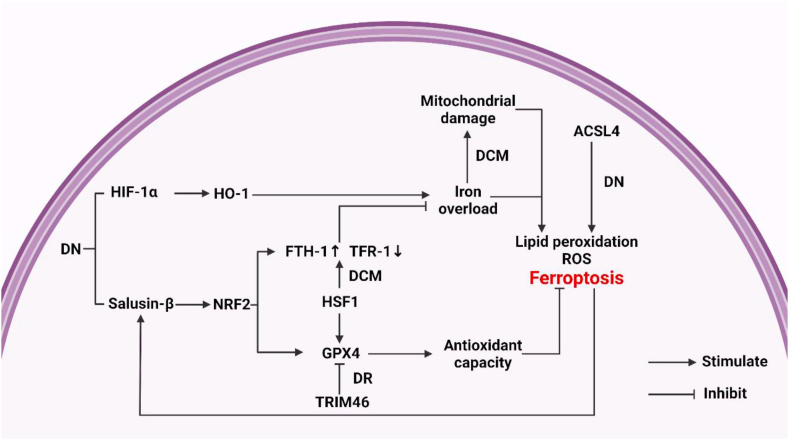
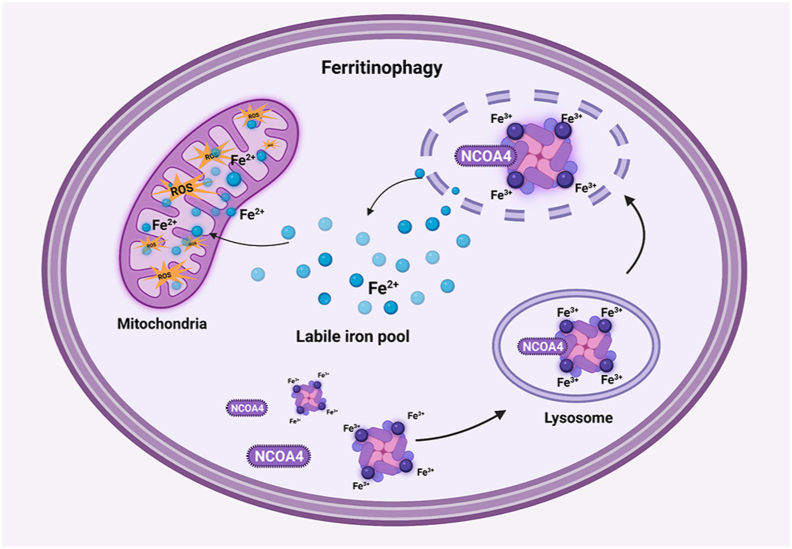
With long-term metabolic malfunction, diabetes can cause serious damage to whole-body tissue and organs, resulting in a variety of complications. Therefore, it is particularly important to further explore the pathogenesis of diabetes complications and develop drugs for prevention and treatment. In recent years, different from apoptosis and necrosis, ferroptosis has been recognized as a new regulatory mode of cell death and involves the regulation of nuclear receptor coactivator 4 (NCOA4)-mediated ferritinophagy. Evidence shows that ferroptosis and ferritinophagy play a significant role in the occurrence and development of diabetes complications.
we systematically review the current understanding of ferroptosis and ferritinophagy, focusing on their potential mechanisms, connection, and regulation, discuss their involvement in diabetes complications, and consider emerging therapeutic opportunities and the associated challenges with future prospects.
In summary, ferroptosis and ferritinophagy are worthy targets for the treatment of diabetes complications, but their complete molecular mechanism and pathophysiological process still require further study.
长期的代谢功能紊乱,糖尿病会对全身组织和器官造成严重损害,导致多种并发症。因此,进一步探讨糖尿病并发症的发病机制并开发预防和治疗药物尤为重要。近年来,与细胞凋亡和细胞坏死不同,铁死亡已被认为是一种新的细胞死亡调控模式,涉及核受体共激活因子 4(NCOA4)介导的铁蛋白自噬的调节。有证据表明,铁死亡和铁蛋白自噬在糖尿病并发症的发生和发展中起着重要作用。
我们系统地回顾了目前对铁死亡和铁蛋白自噬的认识,重点讨论了它们的潜在机制、联系和调控,探讨了它们在糖尿病并发症中的作用,并考虑了新兴的治疗机会以及未来的相关挑战和前景。
总之,铁死亡和铁蛋白自噬是治疗糖尿病并发症的有价值的靶点,但它们的完整分子机制和病理生理学过程仍需要进一步研究。