Elson S. Floyd College of Medicine, Washington State University, Spokane, Washington, USA.
Department of Nutrition and Exercise Physiology, Elson S. Floyd College of Medicine, Washington State University, Spokane, Washington, USA.
Cancer Med. 2022 Aug;11(15):2990-2998. doi: 10.1002/cam4.4655. Epub 2022 Mar 18.
Studies have shown that cancer screenings dropped dramatically following the onset of the coronavirus diseases 2019 (COVID-19) pandemic. In this study, we examined differences in rates of cervical and colorectal cancer (CRC) screening and diagnosis indicators before and during the first year of the COVID-19 pandemic.
We used retrospective data from a large healthcare system in Washington State. Targeted screening data included completed cancer screenings for both CRC (colonoscopy) and cervical cancer (Papanicolaou test (Pap test)). We analyzed and compared the rate of uptake of colorectal (colonoscopies) and cervical cancer (Pap) screenings done pre-COVID-19 (April 1, 2019-March 31, 2020) and during the pandemic (April 1, 2020-March 31, 2021).
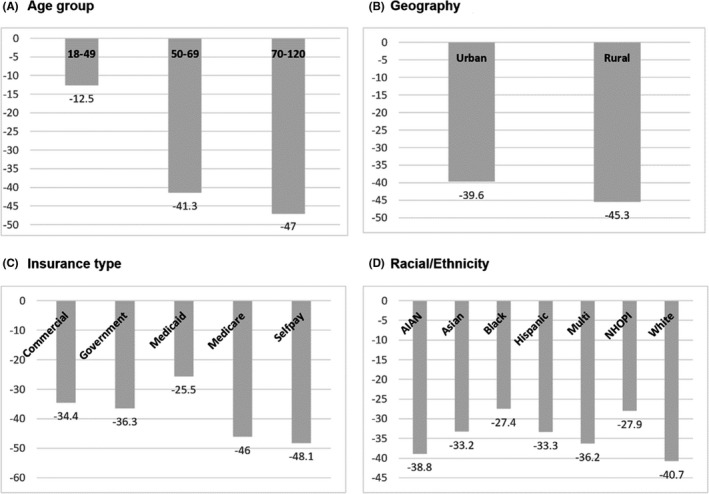
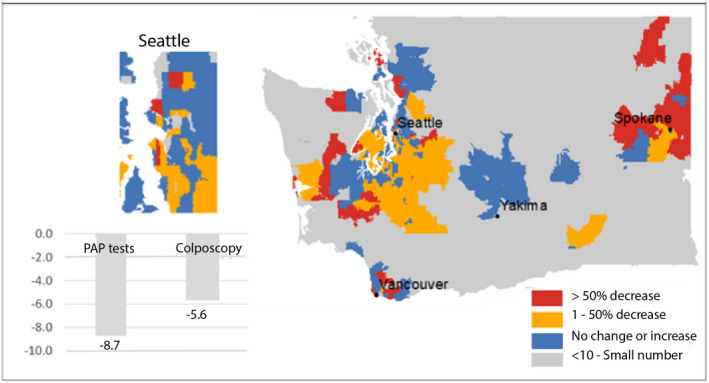
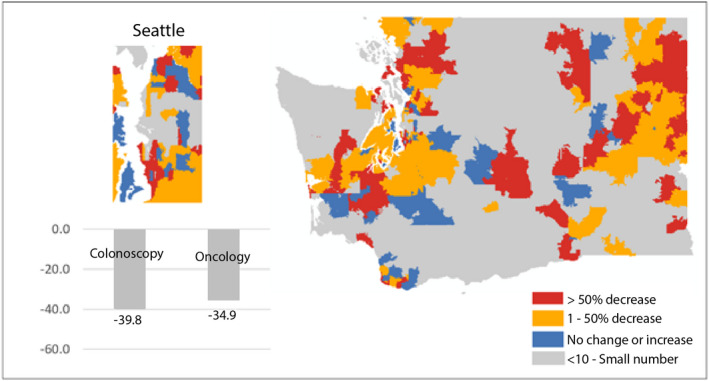
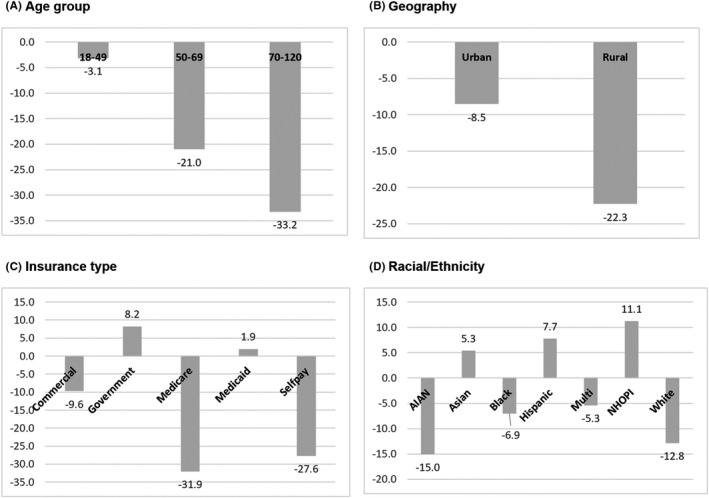
A total of 26,081 (12.7%) patients underwent colonoscopies in the pre-COVID-19 period, compared to only 15,708 (7.4%) patients during the pandemic, showing a 39.8% decrease. A total of 238 patients were referred to medical oncology for CRC compared to only 155 patients during the first year of the pandemic, a reduction of 34%. In the pre-COVID-19 period, 22,395 (10.7%) women were administered PAP tests compared to 20,455 (9.6%) women during the pandemic, for a 7.4% reduction. period 1780 women were referred to colposcopy, compared to only 1680 patients during the pandemic, for a 4.3% reduction.
Interruption in screening and subsequent delay in diagnosis during the pandemic will likely lead to later-stage diagnoses for both CRC and cervical cancer, which is known to result in decreased survival.
The results emphasize the need to prioritize cancer screening, particularly for those at higher risk.
研究表明,2019 年冠状病毒病(COVID-19)大流行开始后,癌症筛查大幅下降。在这项研究中,我们检查了 COVID-19 大流行前一年和第一年期间宫颈癌和结直肠癌(CRC)筛查和诊断指标的差异。
我们使用了华盛顿州一个大型医疗保健系统的回顾性数据。有针对性的筛查数据包括为 CRC(结肠镜检查)和宫颈癌(巴氏试验(Pap 试验))完成的癌症筛查。我们分析并比较了 COVID-19 之前(2019 年 4 月 1 日至 2020 年 3 月 31 日)和大流行期间(2020 年 4 月 1 日至 2021 年 3 月 31 日)接受结直肠癌(结肠镜检查)和宫颈癌(巴氏)筛查的比例。
COVID-19 前期间共有 26081 名(12.7%)患者接受了结肠镜检查,而大流行期间只有 15708 名(7.4%)患者,下降了 39.8%。共有 238 名患者被转介到肿瘤内科接受 CRC 治疗,而大流行期间只有 155 名患者,减少了 34%。在 COVID-19 前期间,22395 名(10.7%)女性接受了巴氏试验,而大流行期间有 20455 名(9.6%)女性,下降了 7.4%。共有 1780 名女性被转介到阴道镜检查,而大流行期间只有 1680 名患者,减少了 4.3%。
大流行期间筛查中断以及随后诊断延迟可能导致 CRC 和宫颈癌的晚期诊断,这已知会导致生存率降低。
研究结果强调需要优先考虑癌症筛查,特别是对高危人群。