UMR 7194 "Histoire naturelle de l'Homme préhistorique" CNRS-MNHN-UPVD, Alliance Sorbonne Université, Musée de l'Homme, Palais de Chaillot, 17 place du Trocadéro, 75116 Paris, France.
STAR Protoc. 2022 Mar 16;3(1):101191. doi: 10.1016/j.xpro.2022.101191. eCollection 2022 Mar 18.
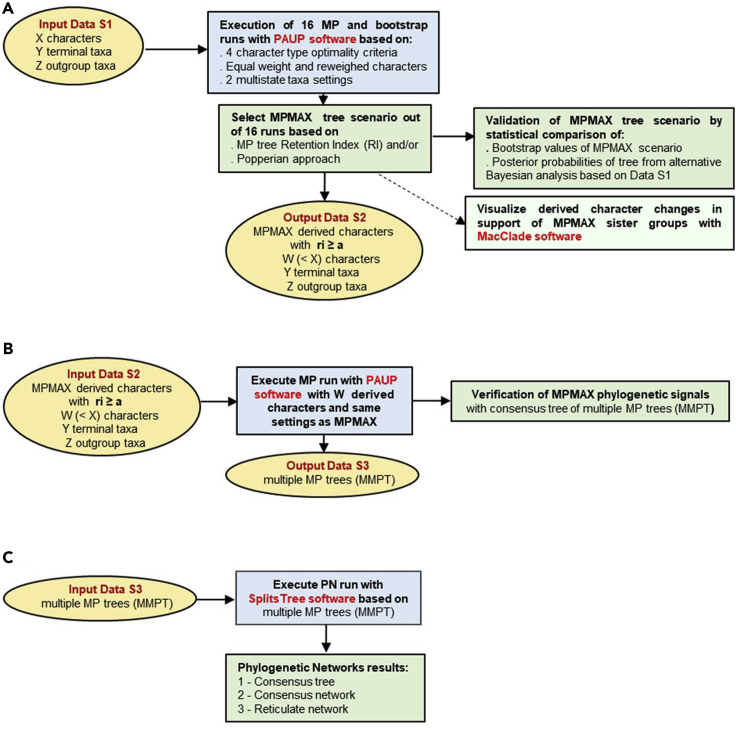
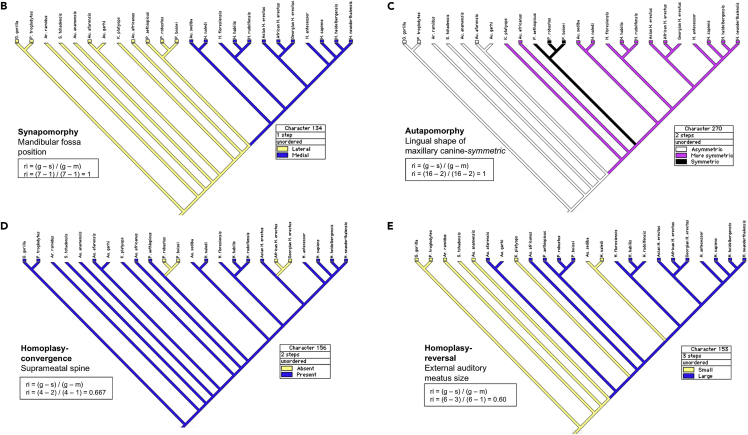
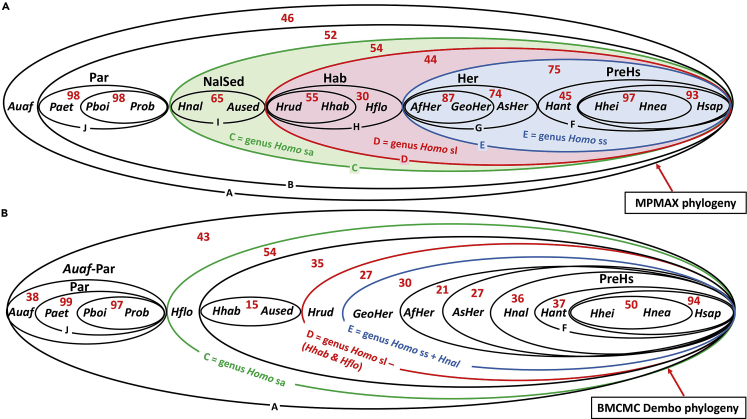
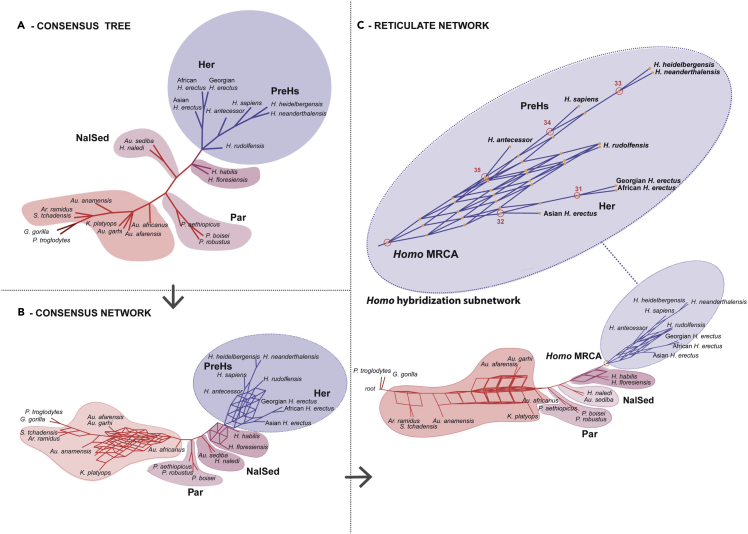
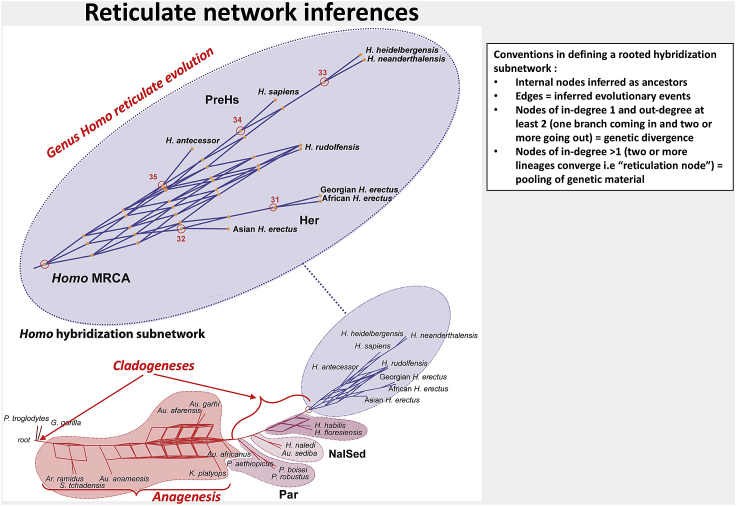
Our protocol combines Maximum Parsimony and Phylogenetic Networks approaches to understand the phylogenetic relationships and evolutionary processes of hominin species that might have shared inheritance from multiple ancestors. By addressing the questions of pattern and process in human phylogeny, the protocol can be used to clarify the taxonomic definition(s) of diverse hominin groups and ascertain whether or not the mode of evolution of genus is reticulate. Using high quality and informative phenotypic data sets is necessary to yield meaningful results. For complete details on the use and execution of this protocol, please refer to Caparros and Prat (2021).
我们的方案结合了最大简约法和系统发生网络方法,以了解可能具有来自多个祖先的共同遗传的人类物种的系统发育关系和进化过程。通过解决人类系统发生中的模式和过程问题,该方案可用于澄清不同人类群体的分类定义,并确定属的进化模式是否为网状的。使用高质量和信息丰富的表型数据集是产生有意义结果的必要条件。有关该方案使用和执行的完整详细信息,请参阅 Caparros 和 Prat(2021)。