Xinjiang Medical University, Urumqi, Xinjiang, China.
Department of Gastroenterology, People's Hospital of Xinjiang Uygur Autonomous Region, Urumqi, Xinjiang, China.
Dis Markers. 2022 Mar 16;2022:4983471. doi: 10.1155/2022/4983471. eCollection 2022.
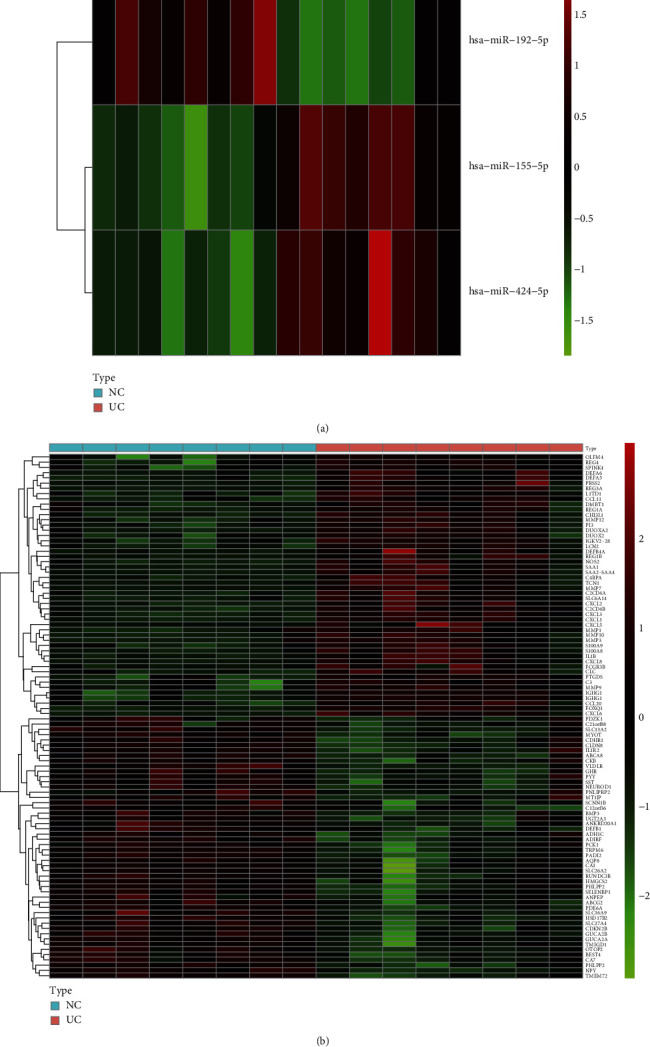
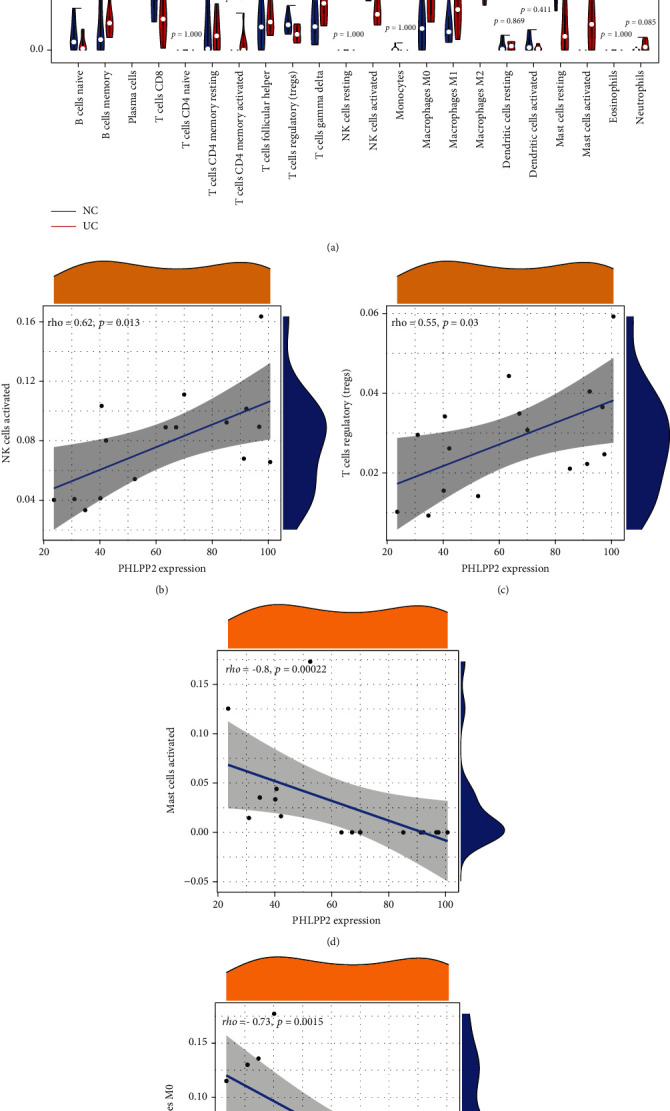
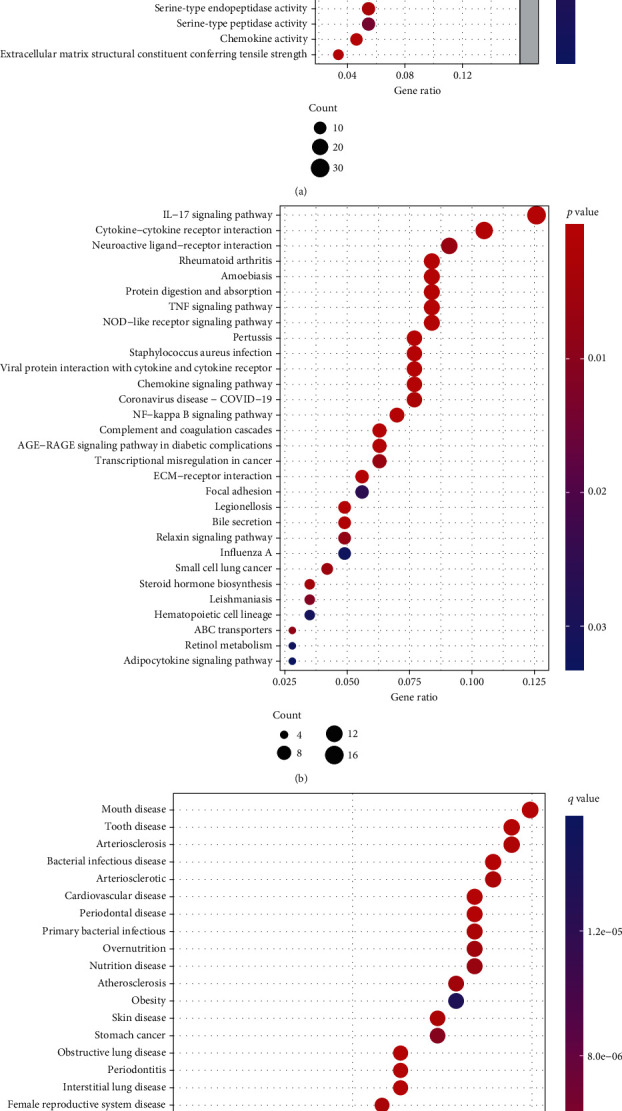
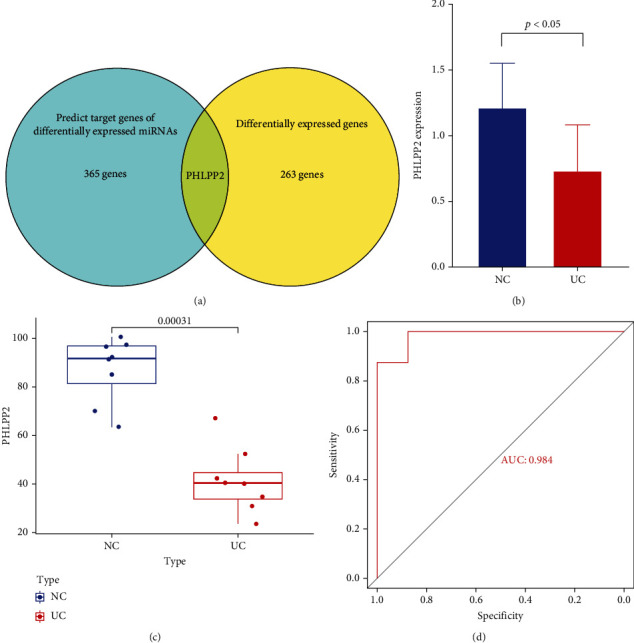
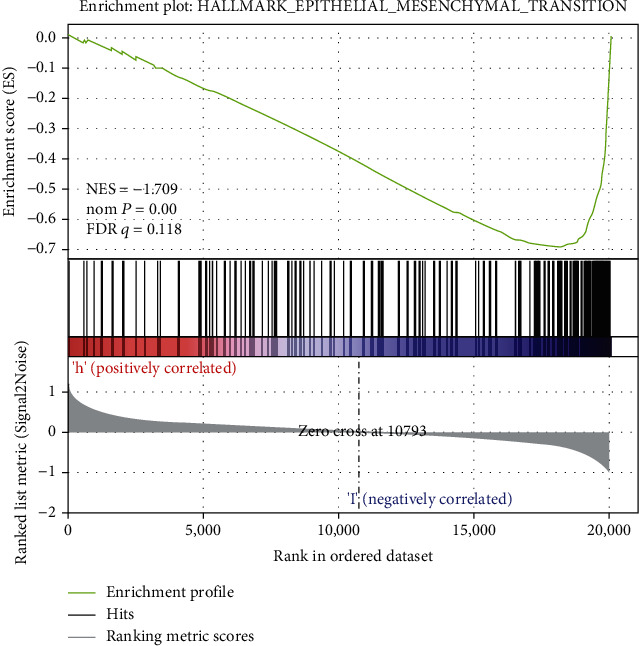
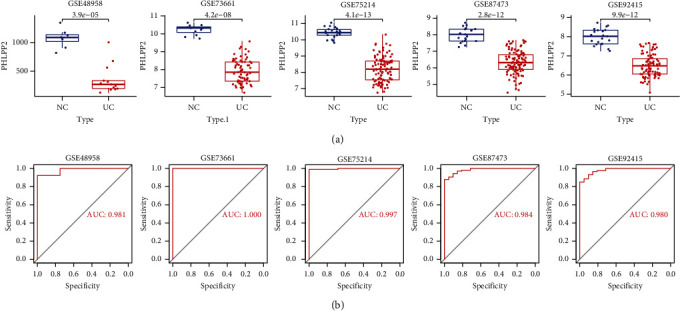
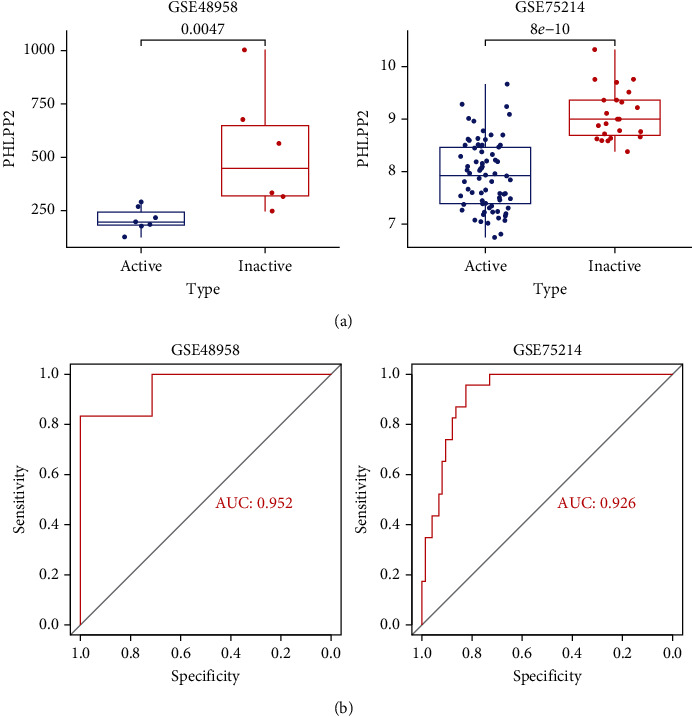
Ulcerative colitis (UC) is a progressive intestine inflammatory disease that is prone to recur. Herein, we utilize microarray technology and bioinformatics to reveal the underlying pathogenesis of UC and provide novel markers. Colonic biopsies were taken from eight UC patients and eight healthy controls. Three differentially expressed miRNAs (DEMIs) and 264 differentially expressed genes (DEGs) were screened using mRNA and miRNA microarray. Most DEGs were significantly associated with immune response and were markedly enriched in the IL-17 signaling pathway. Among the target genes of DEMIs, PHLPP2 overlapped with DEGs and the downregulation of PHLPP2 group was mainly involved in the epithelial-mesenchymal transition. PHLPP2 was downregulated in UC patients, which was validated in 5 GEO datasets and qRT-PCR. The ROC curve demonstrated that PHLPP2 has a perfect ability to distinguish UC patients from healthy controls. Moreover, PHLPP2 was low expression in patients with active UC. CIBERSORT algorithm indicated that the abundance of gamma delta T cells ( = 0.04), M0 macrophages ( = 0.01), and activated mast cells ( < 0.01) was significantly greater than that of the control group. The Spearman correlation analysis showed that PHLPP2 was positively correlated with the proportion of activated NK cells (rho = 0.62, = 0.013) and Tregs (rho = 0.55, = 0.03), but negatively correlated with those of activated mast cells (rho = -0.8, < 0.01) and macrophages (rho = -0.73, < 0.01). These results indicate that PHLPP2 is associated with immune cells in the pathogenesis of UC, as well as provide new prospects and future directions of investigation.
溃疡性结肠炎(UC)是一种易复发的进行性肠道炎症性疾病。在此,我们利用微阵列技术和生物信息学来揭示 UC 的潜在发病机制,并提供新的标志物。从 8 名 UC 患者和 8 名健康对照者中采集结肠活检组织。使用 mRNA 和 miRNA 微阵列筛选出 3 个差异表达的 miRNA(DEMIs)和 264 个差异表达基因(DEGs)。大多数 DEGs 与免疫反应显著相关,并显著富集在 IL-17 信号通路中。在 DEMIs 的靶基因中,PHLPP2 与 DEGs 重叠,且 PHLPP2 下调组主要涉及上皮-间充质转化。UC 患者 PHLPP2 下调,在 5 个 GEO 数据集和 qRT-PCR 中得到验证。ROC 曲线表明 PHLPP2 能够完美地区分 UC 患者和健康对照者。此外,PHLPP2 在活动期 UC 患者中低表达。CIBERSORT 算法表明,γδ T 细胞( = 0.04)、M0 巨噬细胞( = 0.01)和活化肥大细胞( < 0.01)的丰度明显高于对照组。Spearman 相关性分析表明,PHLPP2 与活化 NK 细胞(rho = 0.62, = 0.013)和 Treg 细胞(rho = 0.55, = 0.03)的比例呈正相关,而与活化肥大细胞(rho = -0.8, < 0.01)和巨噬细胞(rho = -0.73, < 0.01)的比例呈负相关。这些结果表明,PHLPP2 与 UC 发病机制中的免疫细胞有关,并为进一步研究提供了新的前景和方向。