Department of General Surgery, First Affiliated Hospital of Anhui Medical University, Hefei, 230022 Anhui, China.
Comput Math Methods Med. 2022 Aug 1;2022:5412627. doi: 10.1155/2022/5412627. eCollection 2022.
This study was designed to identify potential biomarkers for ulcerative colitis (UC) and analyze the immune infiltration characteristics in UC.
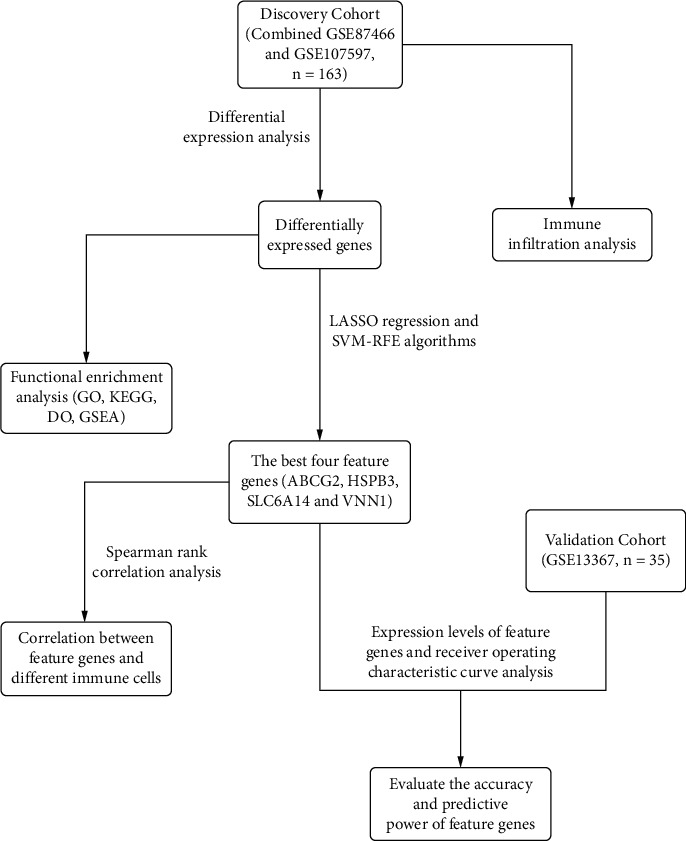
Datasets containing human UC and normal control tissues (GSE87466, GSE107597, and GSE13367) were downloaded from the GEO database. Then, the GSE87466 and GSE107597 datasets were merged, and the differentially expressed genes (DEGs) between UC and normal control tissues were screened out by the "limma R" package. The LASSO regression model and support vector machine recursive feature elimination (SVM-RFE) were performed to screen out the best biomarkers. The GSE13367 dataset was used as a validation cohort, and the receiver operating characteristic curve (ROC) was used to evaluate the diagnostic performance. Finally, the immune infiltration characteristics in UC were explored by CIBERSORT, and we further analyzed the correlation between potential biomarkers and different immune cells.
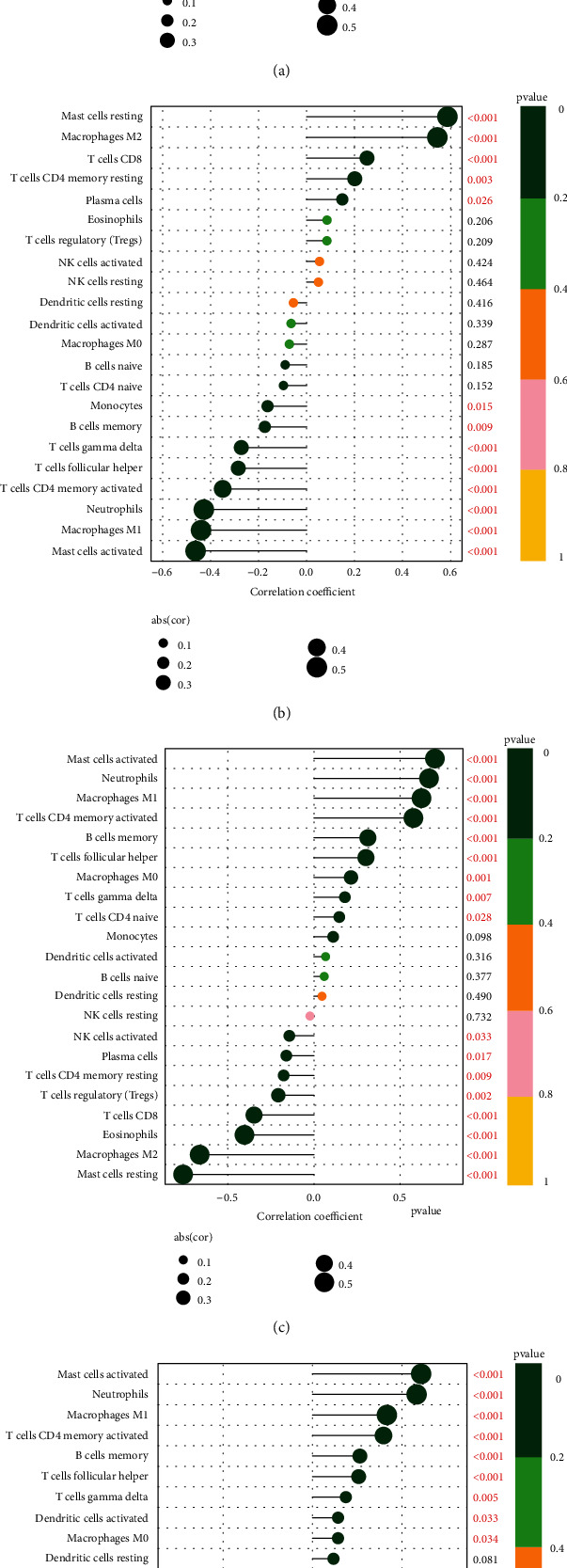
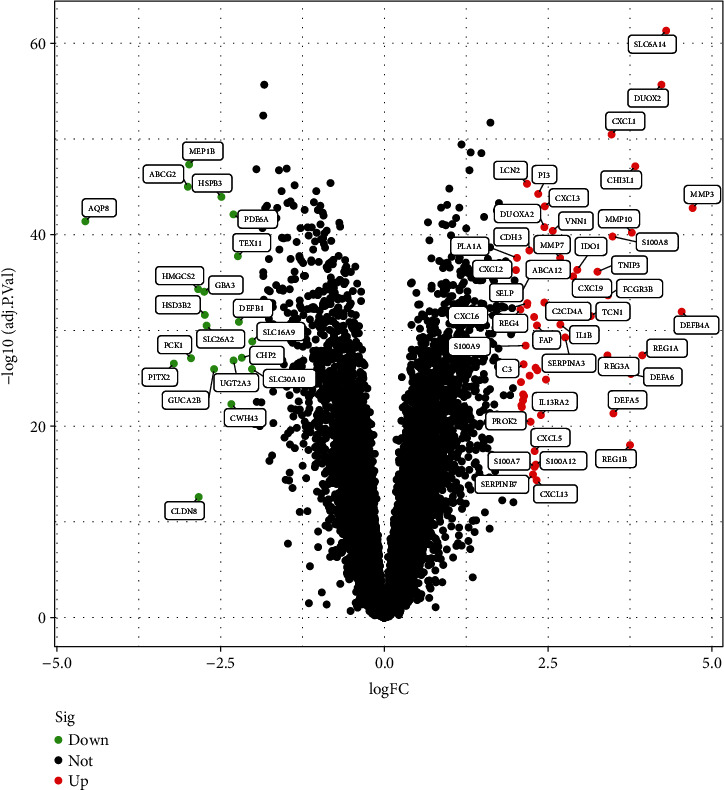
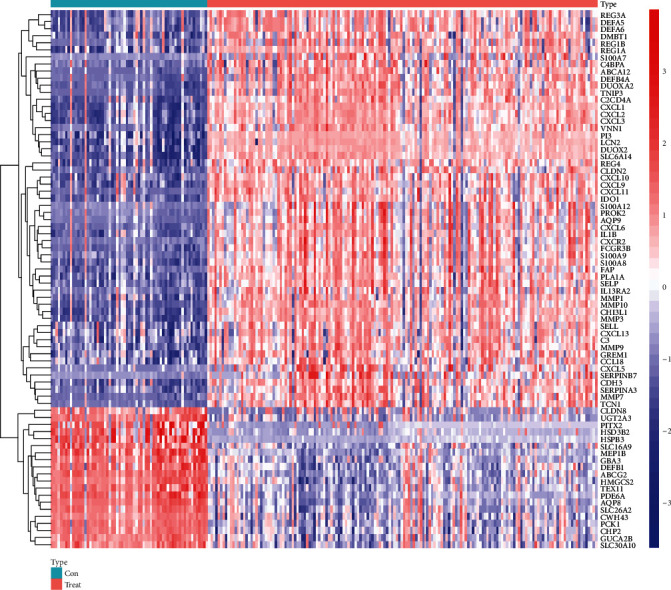
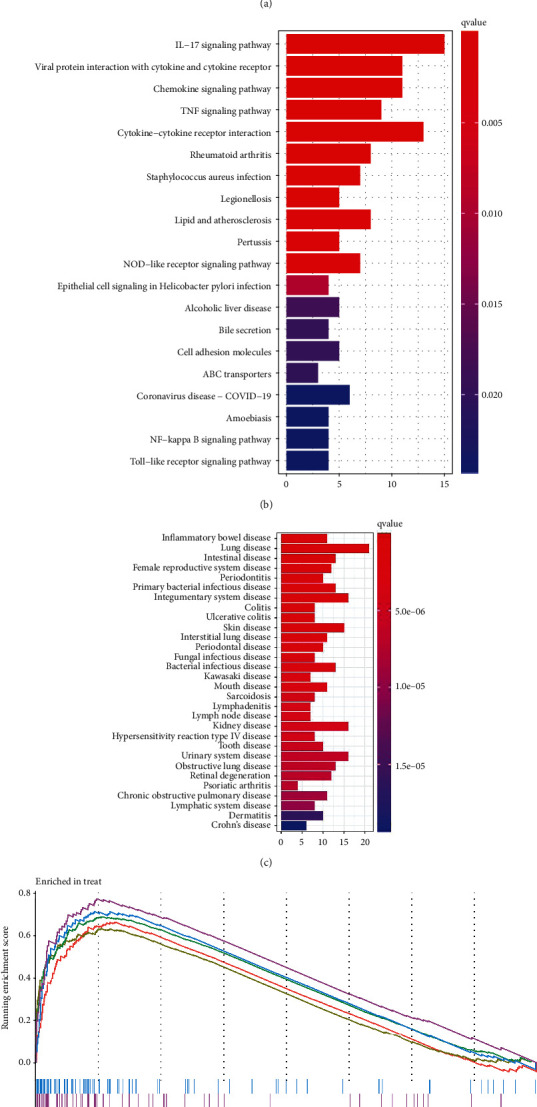
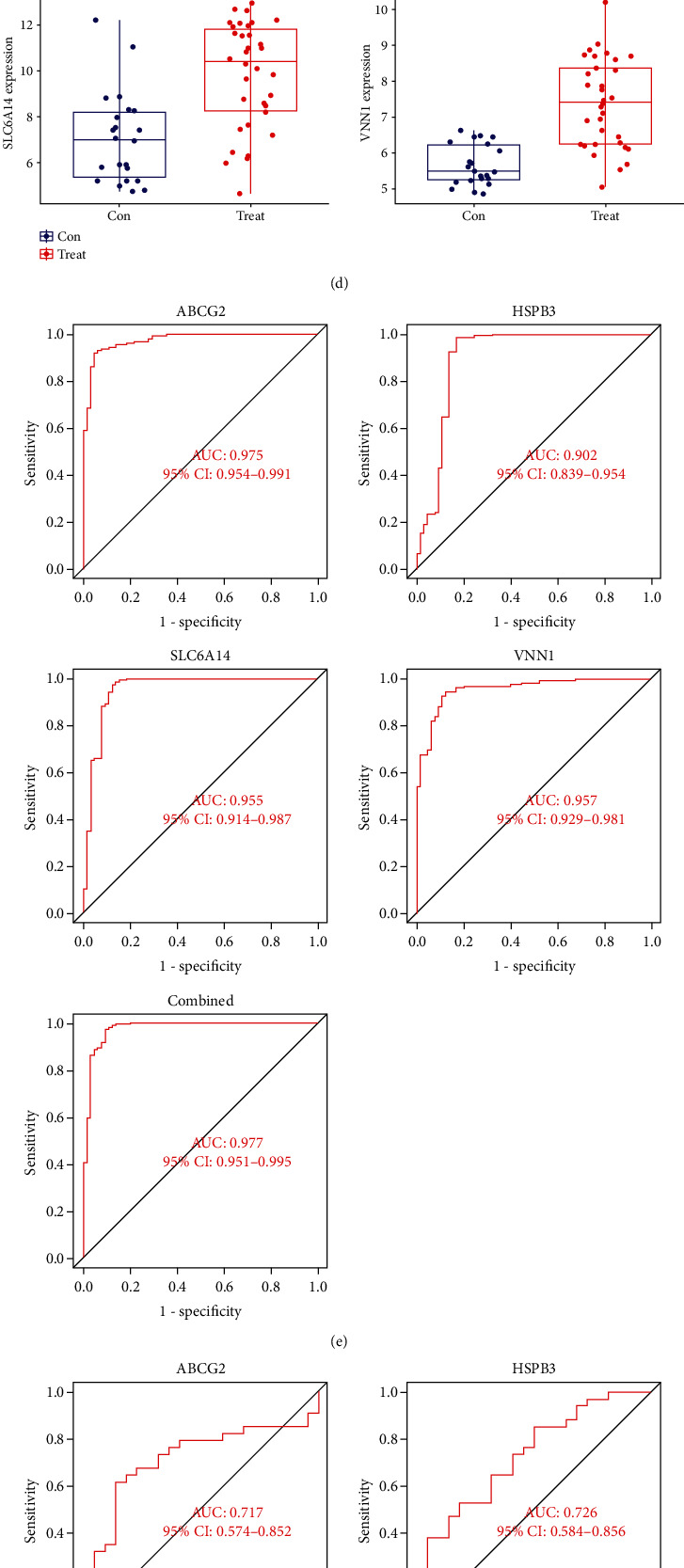
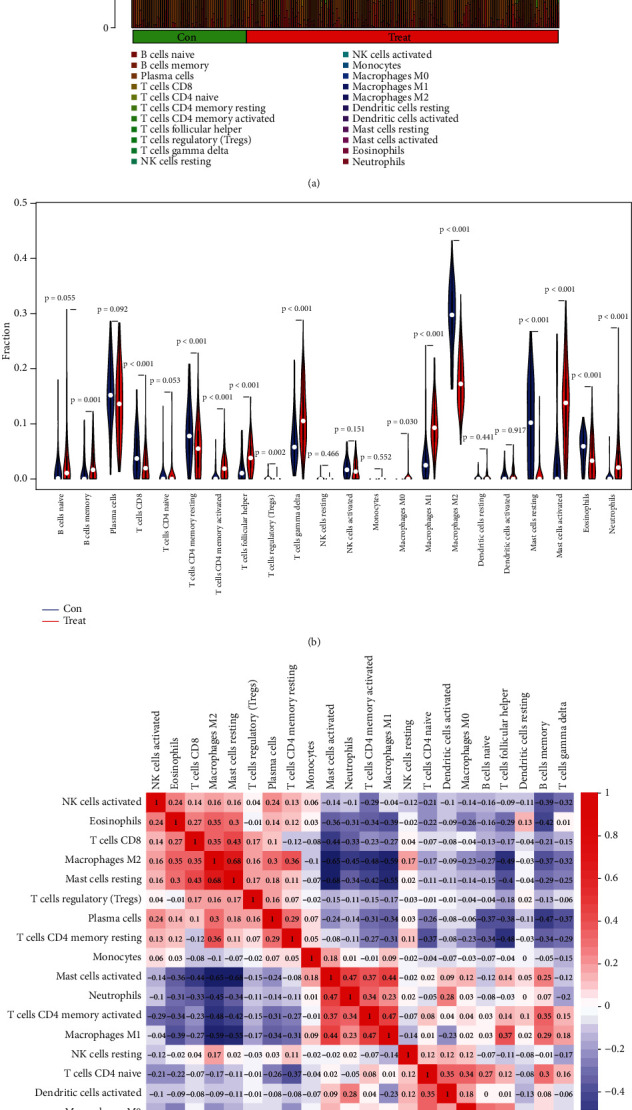
A total of 76 DEGs were screened out, among which 56 genes were upregulated and 20 genes were downregulated. Functional enrichment analysis revealed that these DEGs were mainly involved in immune response, chemokine signaling, IL-17 signaling, cytokine receptor interactions, inflammatory bowel disease, etc. ABCG2, HSPB3, SLC6A14, and VNN1 were identified as potential biomarkers for UC and validated in the GSE13367 dataset (AUC = 0.889, 95% CI: 0.797~0.961). Immune infiltration analysis by CIBERSORT revealed that there were significant differences in immune infiltration characteristics between UC and normal control tissues. A high level of memory B cells, T cells, activated mast cells, M1 macrophages, neutrophils, etc. were found in the UC group, while a high level of M2 type macrophages, resting mast cells, eosinophils, CD8+ T cells, etc. were found in the normal control group.
ABCG2, HSPB3, SLC6A14, and VNN 1 were identified as potential biomarkers for UC. There was an obvious difference in immune infiltration between UC and normal control tissues, which may provide help to guide individualized treatment and develop new research directions.
本研究旨在鉴定溃疡性结肠炎(UC)的潜在生物标志物,并分析 UC 中的免疫浸润特征。
从 GEO 数据库中下载包含人类 UC 和正常对照组织的数据集(GSE87466、GSE107597 和 GSE13367)。然后,通过“limma R”包合并 GSE87466 和 GSE107597 数据集,筛选出 UC 与正常对照组织之间的差异表达基因(DEGs)。通过 LASSO 回归模型和支持向量机递归特征消除(SVM-RFE)筛选出最佳生物标志物。使用 GSE13367 数据集作为验证队列,通过接收者操作特征曲线(ROC)评估诊断性能。最后,通过 CIBERSORT 探索 UC 中的免疫浸润特征,并进一步分析潜在生物标志物与不同免疫细胞的相关性。
共筛选出 76 个 DEGs,其中 56 个基因上调,20 个基因下调。功能富集分析表明,这些 DEGs 主要涉及免疫反应、趋化因子信号、IL-17 信号、细胞因子受体相互作用、炎症性肠病等。在 GSE13367 数据集中验证发现,ABCG2、HSPB3、SLC6A14 和 VNN1 可作为 UC 的潜在生物标志物(AUC=0.889,95%CI:0.797~0.961)。通过 CIBERSORT 进行免疫浸润分析表明,UC 和正常对照组织之间的免疫浸润特征存在显著差异。UC 组中记忆 B 细胞、T 细胞、活化肥大细胞、M1 巨噬细胞、中性粒细胞等水平较高,而正常对照组中 M2 型巨噬细胞、静止肥大细胞、嗜酸性粒细胞、CD8+T 细胞等水平较高。
ABCG2、HSPB3、SLC6A14 和 VNN1 被鉴定为 UC 的潜在生物标志物。UC 与正常对照组织之间的免疫浸润存在明显差异,这可能有助于指导个体化治疗并为新的研究方向提供帮助。