Department of Gastrointestinal Surgery, First Affiliated Hospital of Bengbu Medical College, Bengbu, Anhui, China.
Anhui Key Laboratory of Tissue Transplantation, Bengbu Medical College, Bengbu, China.
Oxid Med Cell Longev. 2022 Mar 10;2022:4877275. doi: 10.1155/2022/4877275. eCollection 2022.
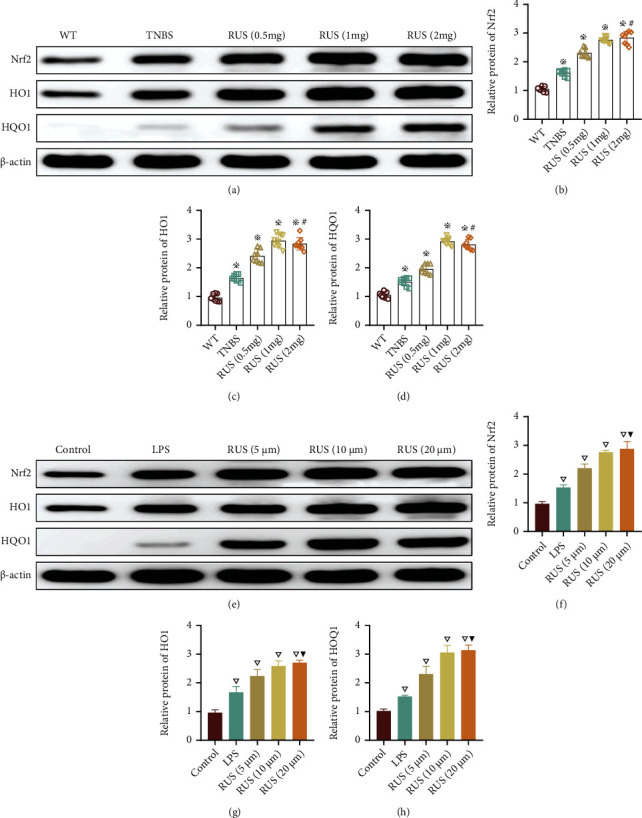
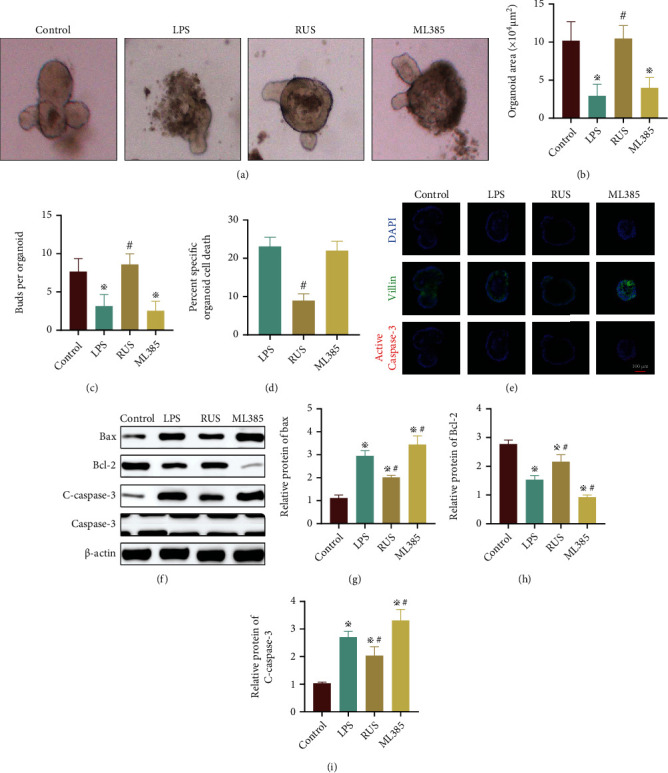
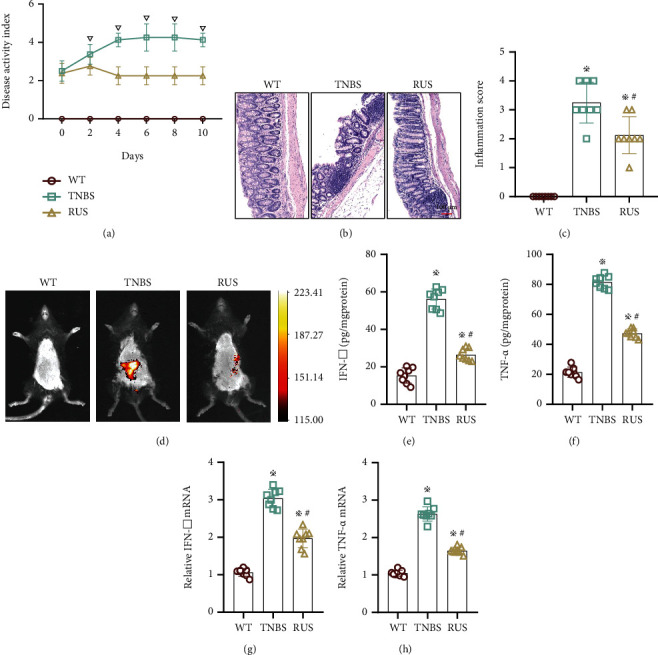
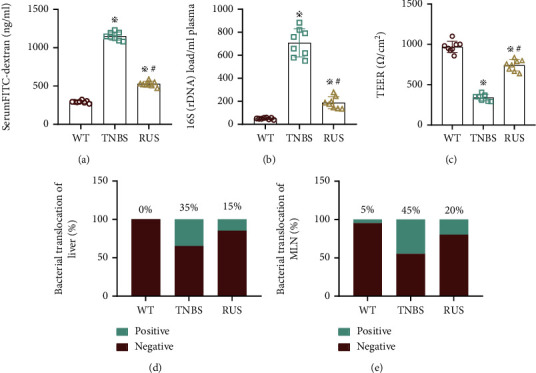
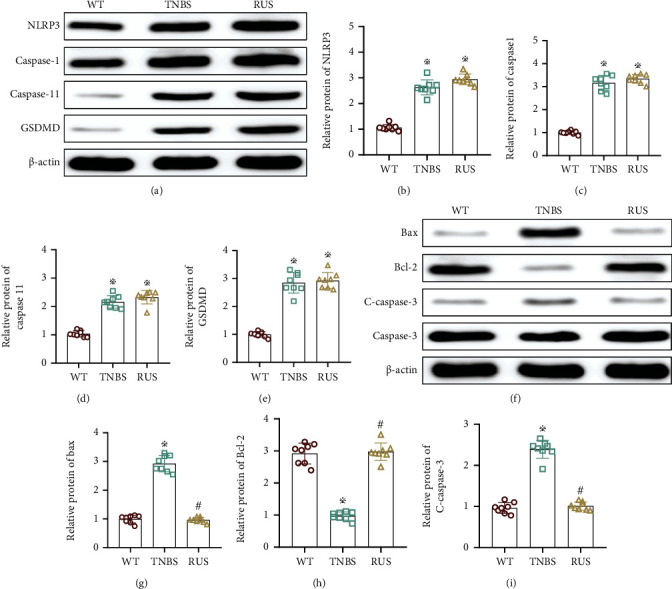
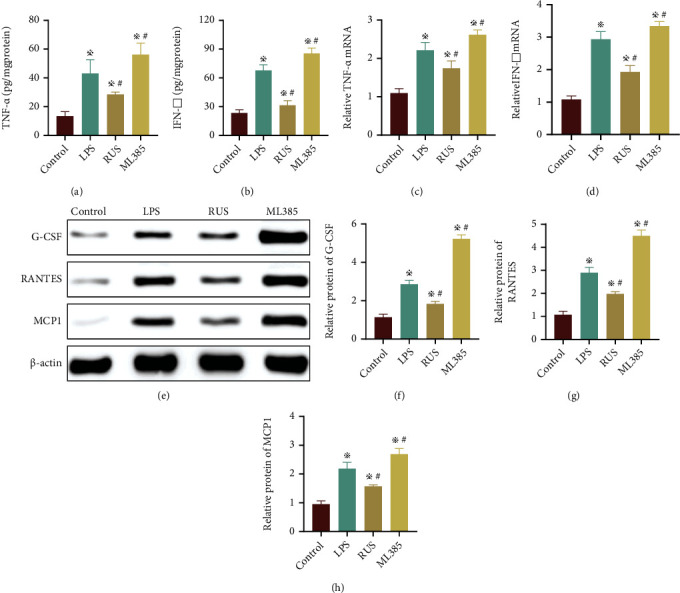
Interaction of intestinal barrier dysfunction and intestinal inflammation promotes the progression of Crohn's disease (CD). A more recent study has suggested that ruscogenins (RUS) can exert anti-inflammatory effects through activation of the Nrf2/NQO1 pathway. The current study is aimed at determining the functionalization of RUS on CD-like colitis. Wild-type (WT) mice induced with trinitrobenzene sulfonic acid (TNBS) exhibit a significant inflammation in their colon and are hence widely used for CD models. In the current study, the mice were treated with the Nrf-2 antagonist (ML385) or ruscogenin (RUS) whereas normal WT mice were kept as the negative control. Comparative analysis was then performed on the inflammation and barrier function of the colons. analysis of mouse colonic organoid systems revealed the influence of RUS on LPS-induced apoptosis, cytokine, and chemokine expressions in the intestinal epithelium. It was found that RUS ameliorates murine colitis through activation of the Nrf2/NQO1 pathway which was presented as a decrease in inflammation score and downregulated levels of cytokine and chemokine synthesis, as well as increased intestinal permeability. Further, it was noted that RUS alleviated LPS-induced apoptosis in the intestinal epithelium cells through upregulation of the Nrf2/NQO1 signaling pathway in the mouse colonic organoids. In addition, ruscogenin (RUS) attenuated the levels of Bax and C-caspase-3 through activation of the Nrf2/HO1 signaling pathway both and . Therefore, it was evident that RUS can be applied as a potential alternative therapeutic agent in CD based on its protective effects on the barrier function and anti-inflammatory activity.
肠道屏障功能障碍和肠道炎症的相互作用促进了克罗恩病(CD)的进展。最近的一项研究表明,瑞舒伐他汀(RUS)可以通过激活 Nrf2/NQO1 通路发挥抗炎作用。本研究旨在确定 RUS 在 CD 样结肠炎中的功能化。用三硝基苯磺酸(TNBS)诱导的野生型(WT)小鼠在结肠中表现出明显的炎症,因此被广泛用于 CD 模型。在本研究中,用 Nrf-2 拮抗剂(ML385)或瑞舒伐他汀(RUS)处理小鼠,而正常的 WT 小鼠作为阴性对照。然后对结肠的炎症和屏障功能进行比较分析。对小鼠结肠类器官系统的分析表明,RUS 影响 LPS 诱导的肠上皮细胞凋亡、细胞因子和趋化因子的表达。结果发现,RUS 通过激活 Nrf2/NQO1 通路改善了小鼠结肠炎,表现为炎症评分降低,细胞因子和趋化因子合成水平下调,以及肠通透性增加。此外,还注意到 RUS 通过上调小鼠结肠类器官中的 Nrf2/NQO1 信号通路减轻了 LPS 诱导的肠上皮细胞凋亡。此外,瑞舒伐他汀(RUS)通过激活 Nrf2/HO1 信号通路,降低 Bax 和 C-caspase-3 的水平。因此,RUS 可以作为 CD 的潜在治疗药物,因为它具有保护屏障功能和抗炎活性。