Fishburn Adam T, Pham Oanh H, Kenaston Matthew W, Beesabathuni Nitin S, Shah Priya S
Department of Microbiology and Molecular Genetics, University of California, Davis, Davis, CA, United States.
Department of Chemical Engineering, University of California, Davis, Davis, CA, United States.
Front Microbiol. 2022 Mar 3;13:847588. doi: 10.3389/fmicb.2022.847588. eCollection 2022.
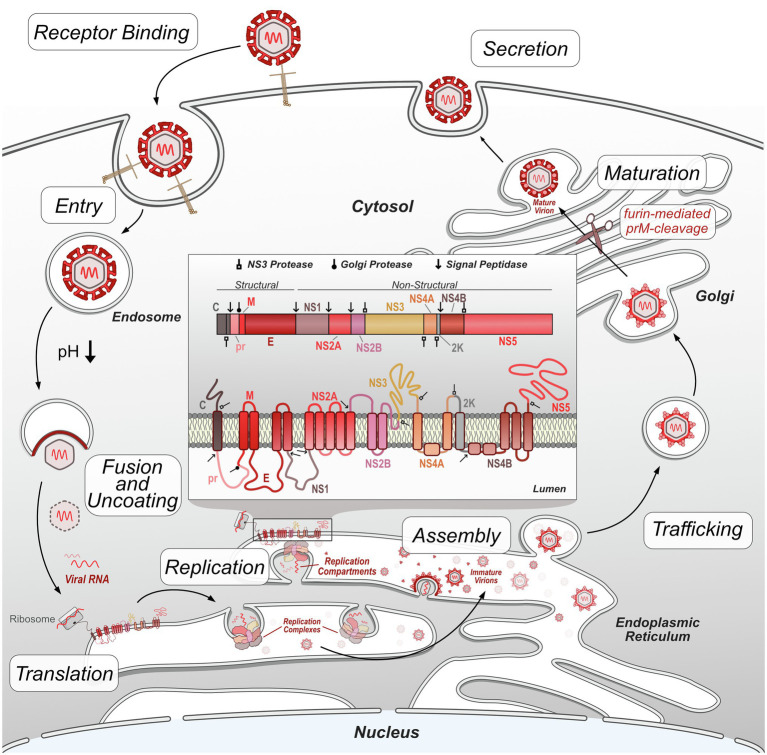
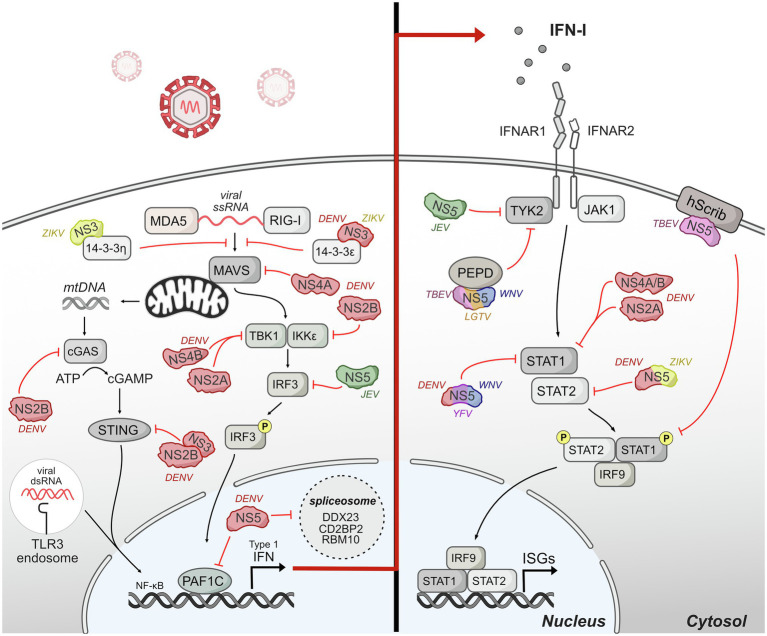
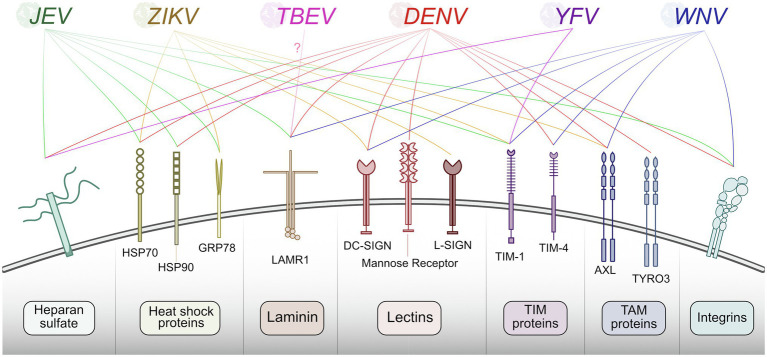
Flaviviruses comprise a genus of viruses that pose a significant burden on human health worldwide. Transmission by both mosquito and tick vectors, and broad host tropism contribute to the presence of flaviviruses globally. Like all viruses, they require utilization of host molecular machinery to facilitate their replication through physical interactions. Their RNA genomes are translated using host ribosomes, synthesizing viral proteins that cooperate with each other and host proteins to reshape the host cell into a factory for virus replication. Thus, dissecting the physical interactions between viral proteins and their host protein targets is essential in our comprehension of how flaviviruses replicate and how they alter host cell behavior. Beyond replication, even single interactions can contribute to immune evasion and pathogenesis, providing potential avenues for therapeutic intervention. Here, we review protein interactions between flavivirus and host proteins that contribute to virus replication, immune evasion, and disease.
黄病毒属的病毒给全球人类健康带来了重大负担。通过蚊子和蜱虫媒介传播以及广泛的宿主嗜性导致了黄病毒在全球的存在。与所有病毒一样,它们需要利用宿主分子机制,通过物理相互作用来促进其复制。它们的RNA基因组利用宿主核糖体进行翻译,合成相互协作的病毒蛋白以及与宿主蛋白,将宿主细胞重塑为病毒复制工厂。因此,剖析病毒蛋白与其宿主蛋白靶点之间的物理相互作用,对于我们理解黄病毒如何复制以及如何改变宿主细胞行为至关重要。除了复制之外,即使是单个相互作用也可能有助于免疫逃避和发病机制,为治疗干预提供了潜在途径。在这里,我们综述了黄病毒与宿主蛋白之间有助于病毒复制、免疫逃避和疾病的蛋白质相互作用。