School of Chemistry and Molecular Biosciences, The University of Queensland, St. Lucia, Queensland, Australia.
Australian Infectious Diseases Research Centre, The University of Queensland, St. Lucia, Queensland, Australia.
mSphere. 2020 Jun 17;5(3):e00095-20. doi: 10.1128/mSphere.00095-20.
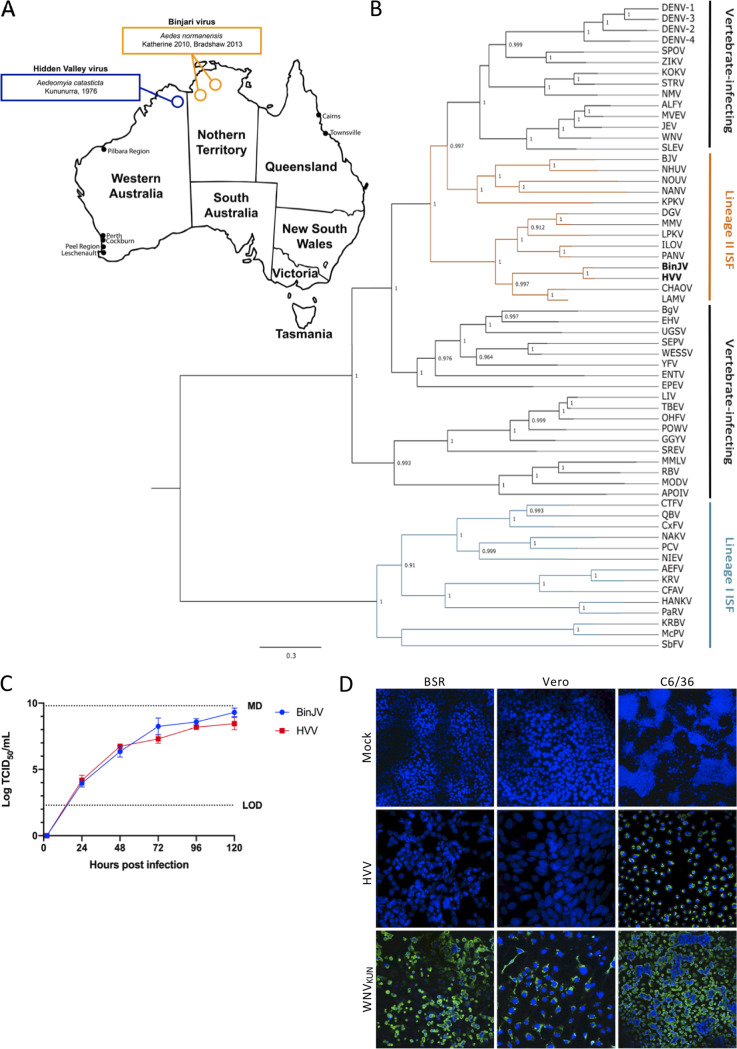
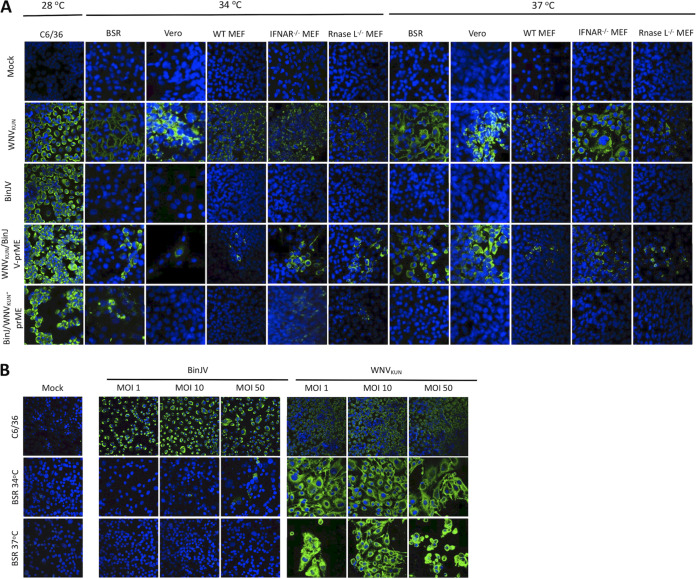
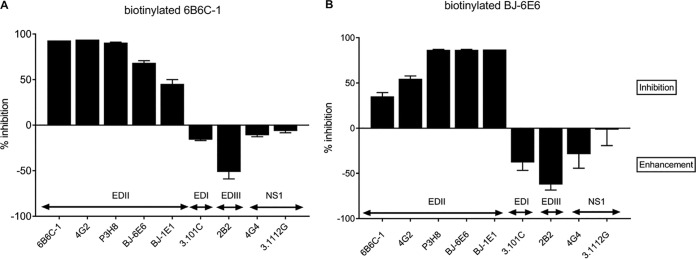
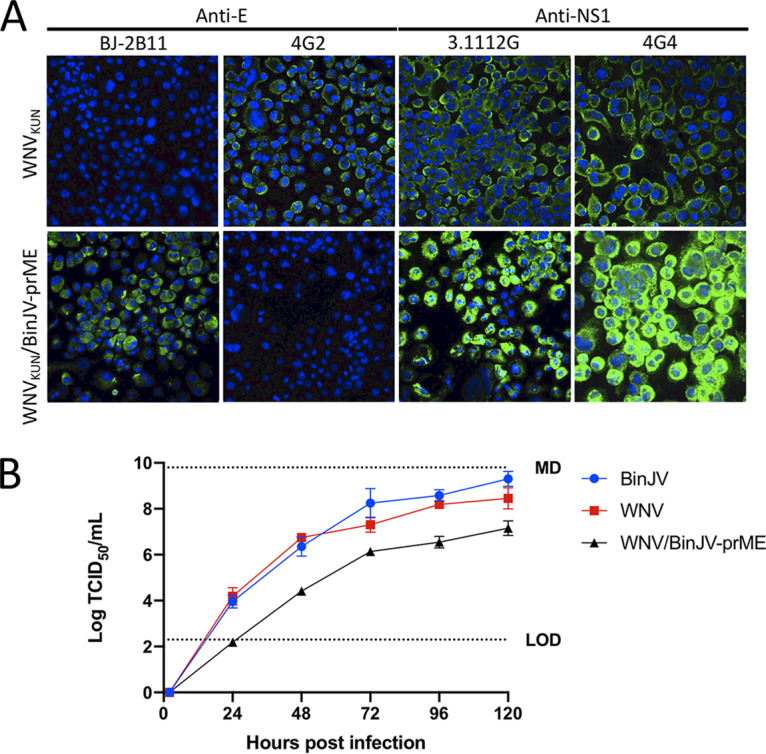
We describe two new insect-specific flaviviruses (ISFs) isolated from mosquitoes in Australia, Binjari virus (BinJV) and Hidden Valley virus (HVV), that grow efficiently in mosquito cells but fail to replicate in a range of vertebrate cell lines. Phylogenetic analysis revealed that BinJV and HVV were closely related (90% amino acid sequence identity) and clustered with lineage II (dual-host affiliated) ISFs, including the Lammi and Nounané viruses. Using a panel of monoclonal antibodies prepared to BinJV viral proteins, we confirmed a close relationship between HVV and BinJV and revealed that they were antigenically quite divergent from other lineage II ISFs. We also constructed chimeric viruses between BinJV and the vertebrate-infecting West Nile virus (WNV) by swapping the structural genes (prM and E) to produce BinJ/WNV-prME and WNV/BinJV-prME. This allowed us to assess the role of different regions of the BinJV genome in vertebrate host restriction and revealed that while BinJV structural proteins facilitated entry to vertebrate cells, the process was inefficient. In contrast, the BinJV replicative components in wild-type BinJV and BinJ/WNV-prME failed to initiate replication in a wide range of vertebrate cell lines at 37°C, including cells lacking components of the innate immune response. However, trace levels of replication of BinJ/WNV-prME could be detected in some cultures of mouse embryo fibroblasts (MEFs) deficient in antiviral responses (IFNAR MEFs or RNase L MEFs) incubated at 34°C after inoculation. This suggests that BinJV replication in vertebrate cells is temperature sensitive and restricted at multiple stages of cellular infection, including inefficient cell entry and susceptibility to antiviral responses. The globally important flavivirus pathogens West Nile virus, Zika virus, dengue viruses, and yellow fever virus can infect mosquito vectors and be transmitted to humans and other vertebrate species in which they cause significant levels of disease and mortality. However, the subgroup of closely related flaviviruses, known as lineage II insect-specific flaviviruses (Lin II ISFs), only infect mosquitoes and cannot replicate in cells of vertebrate origin. Our data are the first to uncover the mechanisms that restrict the growth of Lin II ISFs in vertebrate cells and provides new insights into the evolution of these viruses and the mechanisms associated with host switching that may allow new mosquito-borne viral diseases to emerge. The new reagents generated in this study, including the first Lin II ISF-reactive monoclonal antibodies and Lin II ISF mutants and chimeric viruses, also provide new tools and approaches to enable further research advances in this field.
我们描述了两种从澳大利亚蚊子中分离出来的新型昆虫特异性黄病毒(ISFs),分别是 Binjari 病毒(BinJV)和 Hidden Valley 病毒(HVV),它们在蚊子细胞中生长效率很高,但不能在多种脊椎动物细胞系中复制。系统发育分析表明,BinJV 和 HVV 密切相关(90%氨基酸序列同一性),并与谱系 II(双宿主相关)ISFs 聚类,包括 Lammi 和 Nounané 病毒。使用针对 BinJV 病毒蛋白制备的单克隆抗体进行检测,我们确认了 HVV 与 BinJV 之间的密切关系,并发现它们与其他谱系 II ISFs 在抗原上存在很大差异。我们还通过交换结构基因(prM 和 E)构建了 BinJV 和脊椎动物感染的西尼罗河病毒(WNV)之间的嵌合病毒,以产生 BinJ/WNV-prME 和 WNV/BinJV-prME。这使我们能够评估 BinJV 基因组中不同区域在脊椎动物宿主限制中的作用,并表明虽然 BinJV 结构蛋白有助于进入脊椎动物细胞,但该过程效率低下。相比之下,野生型 BinJV 和 BinJ/WNV-prME 的 BinJV 复制成分在 37°C 时未能在多种脊椎动物细胞系中启动复制,包括缺乏先天免疫反应成分的细胞。然而,在接种后在缺乏抗病毒反应的小鼠胚胎成纤维细胞(MEFs)(IFNAR MEFs 或 RNase L MEFs)中,在 34°C 孵育时,可检测到 BinJ/WNV-prME 的痕量复制。这表明 BinJV 在脊椎动物细胞中的复制对温度敏感,并在细胞感染的多个阶段受到限制,包括细胞进入效率低下和对抗病毒反应的敏感性。西尼罗河病毒、寨卡病毒、登革热病毒和黄热病病毒等具有全球重要性的黄病毒病原体可感染蚊子媒介,并传播给人类和其他脊椎动物物种,在这些物种中它们会引起严重的疾病和死亡率。然而,被称为谱系 II 昆虫特异性黄病毒(Lin II ISFs)的密切相关黄病毒亚组仅感染蚊子,不能在脊椎动物来源的细胞中复制。我们的数据首次揭示了限制 Lin II ISFs 在脊椎动物细胞中生长的机制,并为这些病毒的进化以及与宿主转换相关的机制提供了新的见解,这些机制可能导致新的蚊媒病毒病的出现。本研究中产生的新试剂,包括第一批 Lin II ISF 反应性单克隆抗体和 Lin II ISF 突变体和嵌合病毒,也为该领域的进一步研究提供了新的工具和方法。