Xiao Tingting, Guo Qian, Zhou Yanzi, Shen Ping, Wang Yuan, Fang Qiang, Li Mo, Zhang Shuntian, Guo Lihua, Yu Xiao, Liao Yulin, Wang Chunhui, Chi Xiaohui, Kong Xiaoyang, Zhou Kai, Zheng Beiwen, Luo Qixia, Chen Yunbo, Zhu Huaiqiu, Xiao Yonghong
State Key Laboratory for Diagnosis and Treatment of Infectious Diseases, National Clinical Research Center for Infectious Diseases, National Medical Center for Infectious Diseases, Collaborative Innovation Center for Diagnosis and Treatment of Infectious Diseases, The First Affiliated Hospital, Zhejiang University School of Medicine, Hangzhou, China.
State Key Laboratory for Turbulence and Complex Systems, Department of Biomedical Engineering, College of Future Technology and Center for Quantitative Biology, Peking University, Beijing, China.
Front Microbiol. 2022 Mar 4;13:782210. doi: 10.3389/fmicb.2022.782210. eCollection 2022.
Carbapenem-resistant (CRAB) is a common cause of ventilator-associated pneumonia (VAP) in intensive care unit (ICU) patients, but its infection and colonization state are difficult to distinguish. If the judgment is wrong, it may aggravate the abuse of antibiotics and further accelerate the evolution of drug resistance. We sought to provide new clues for the diagnosis, pathogenesis and treatment of CRAB VAP based on lower respiratory tract (LRT) microbiota.
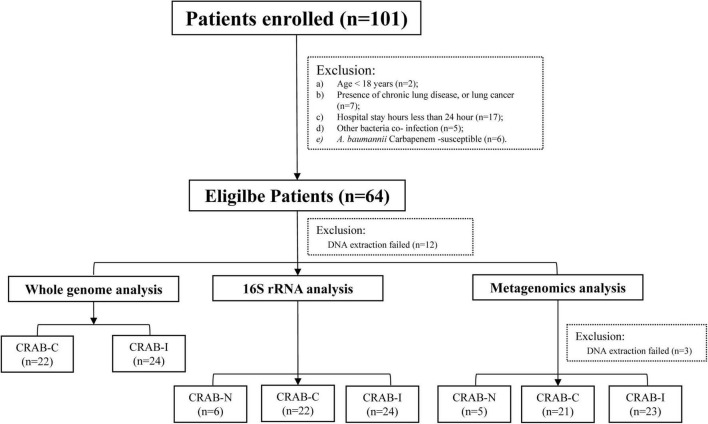
A prospective study was conducted on patients with mechanical ventilation from July 2018 to December 2019 in a tertiary hospital. Multi-genomics studies (16S rRNA amplicon, metagenomics, and whole-genome sequencing [WGS]) of endotracheal deep aspirate (ETA) were performed.
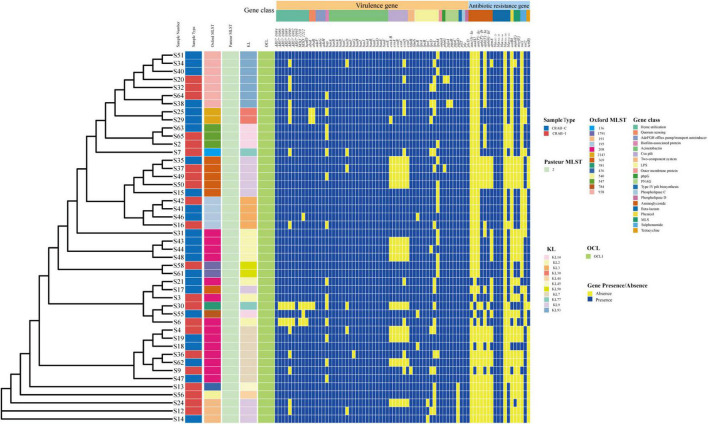
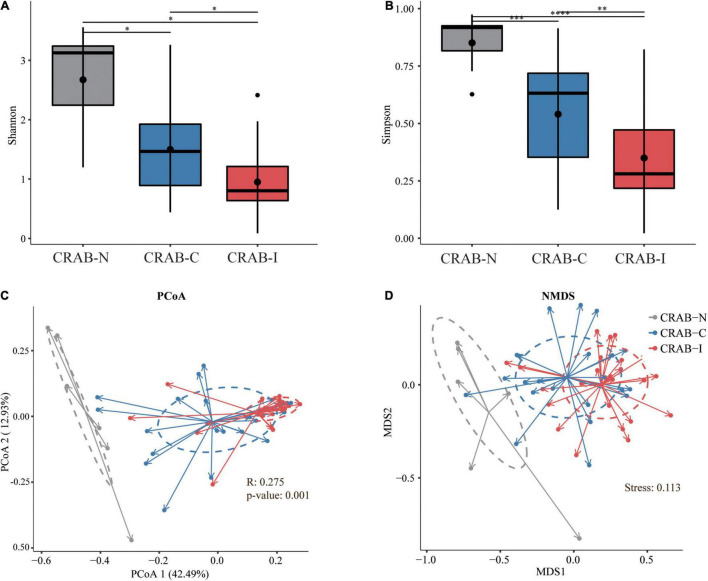
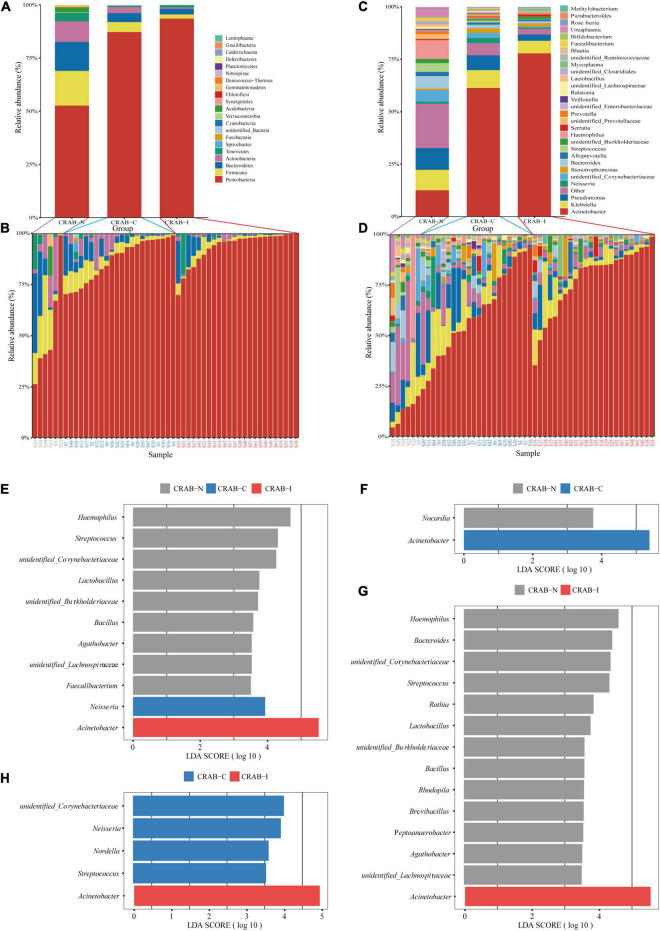
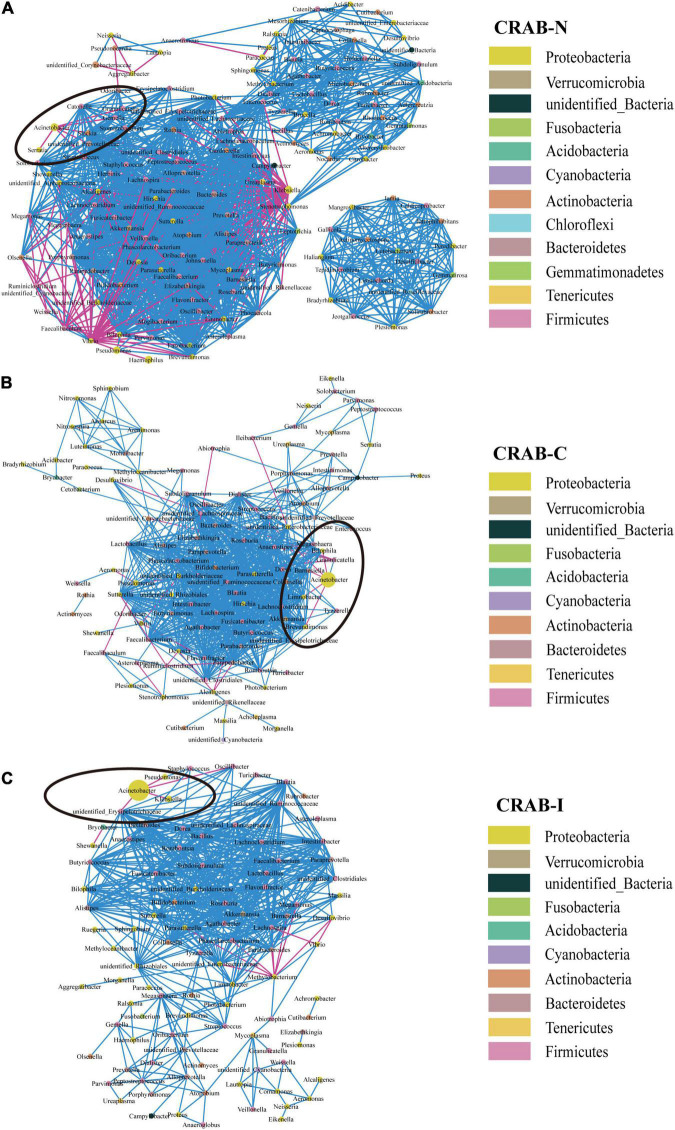
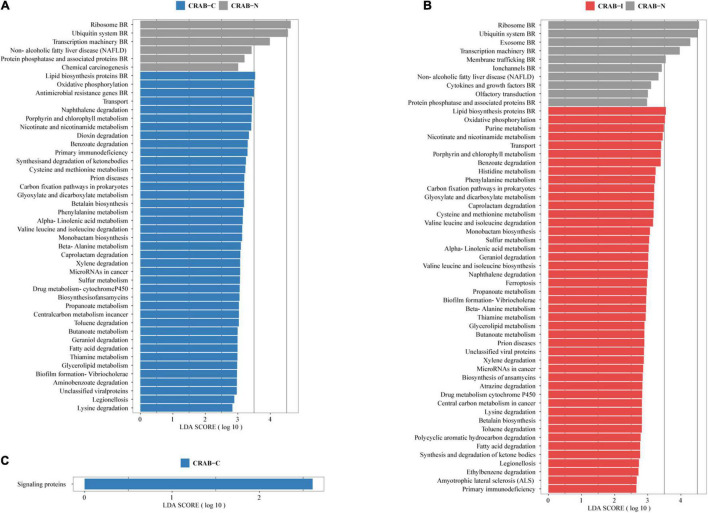
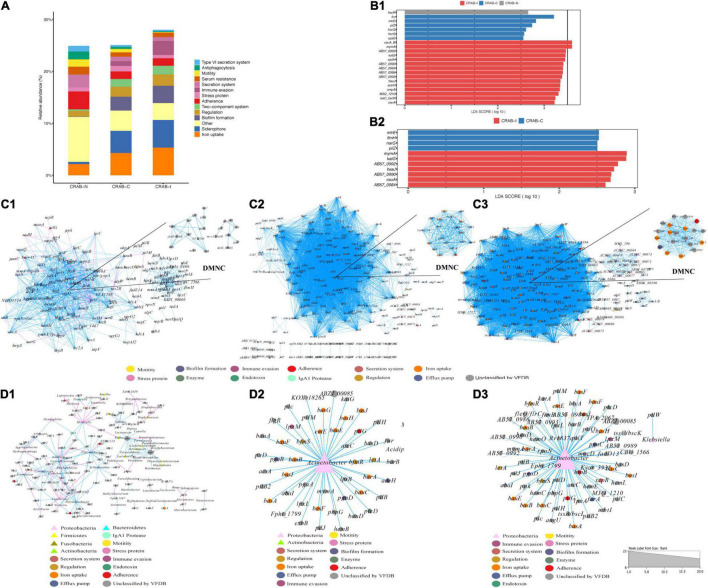
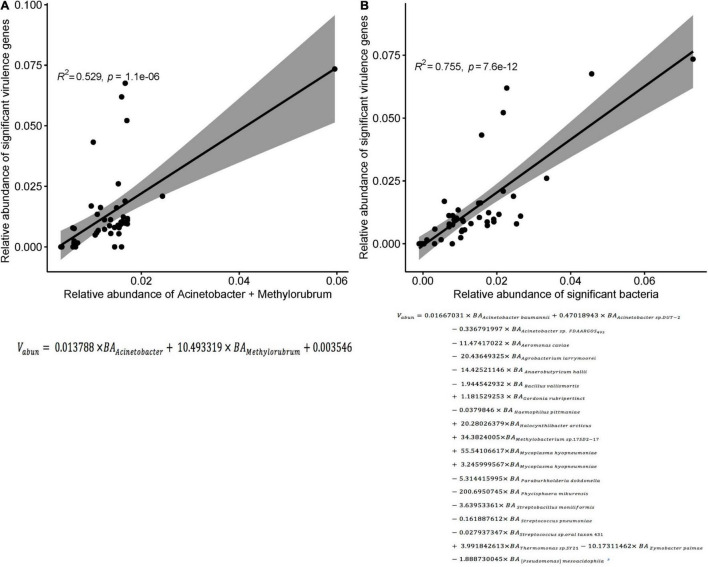
Fifty-two ICU patients were enrolled, including 24 with CRAB VAP (CRAB-I), 22 with CRAB colonization (CRAB-C), and six CRAB-negative patients (infection-free) (CRAB-N). Diversity of pulmonary microbiota was significantly lower in CRAB-I than in CRAB-C or CRAB-N (mean Shannon index, 1.79 vs. 2.73 vs. 4.81, < 0.05). Abundances of 11 key genera differed between the groups. was most abundant in CRAB-I (76.19%), moderately abundant in CRAB-C (59.14%), and least abundant in CRAB-N (11.25%), but its interactions with other genera increased in turn. Metagenomics and WGS analysis showed that virulence genes were more abundant in CRAB-I than in CRAB-C. Multi-locus sequence typing (MLST) of 46 CRAB isolates revealed that the main types were ST208 (30.43%) and ST938 (15.22%), with no difference between CRAB-I and CRAB-C.
Lower respiratory tract microbiota dysbiosis including elevated relative abundance of and reduced bacterial interactions, and virulence enrichment may lead to CRAB VAP.
耐碳青霉烯类鲍曼不动杆菌(CRAB)是重症监护病房(ICU)患者呼吸机相关性肺炎(VAP)的常见病因,但其感染和定植状态难以区分。若判断错误,可能会加剧抗生素的滥用,并进一步加速耐药性的演变。我们试图基于下呼吸道(LRT)微生物群为CRAB VAP的诊断、发病机制及治疗提供新线索。
2018年7月至2019年12月,在一家三级医院对机械通气患者进行了一项前瞻性研究。对气管内深部吸出物(ETA)进行了多基因组学研究(16S rRNA扩增子、宏基因组学和全基因组测序[WGS])。
纳入52例ICU患者,其中24例为CRAB VAP(CRAB-I),22例为CRAB定植(CRAB-C),6例CRAB阴性患者(无感染)(CRAB-N)。CRAB-I组肺部微生物群的多样性显著低于CRAB-C组或CRAB-N组(平均香农指数,1.79对2.73对4.81,P<0.05)。11个关键菌属的丰度在各组间存在差异。[菌属名称未给出]在CRAB-I组中最为丰富(76.19%),在CRAB-C组中中等丰富(59.14%),在CRAB-N组中最不丰富(11.25%),但其与其他菌属的相互作用依次增加。宏基因组学和WGS分析显示,CRAB-I组的毒力基因比CRAB-C组更丰富。对46株CRAB分离株进行多位点序列分型(MLST)显示,主要类型为ST208(30.43%)和ST938(15.22%),CRAB-I组和CRAB-C组之间无差异。
下呼吸道微生物群失调,包括[菌属名称未给出]相对丰度升高、细菌间相互作用减少以及毒力增强,可能导致CRAB VAP。