Hu Yi, Wu Yufan, Jiang CuiPing, Wang Zhuxian, Shen Chunyan, Zhu Zhaoming, Li Hui, Zeng Quanfu, Xue Yaqi, Wang Yuan, Liu Li, Yi Yankui, Zhu Hongxia, Liu Qiang
School of Traditional Chinese Medicine, Southern Medical University, Guangzhou, China.
Department of Traditional Chinese Medicine, Guangzhou Red Cross Hospital, Jinan University, Guangzhou, China.
Front Chem. 2022 Mar 2;10:843970. doi: 10.3389/fchem.2022.843970. eCollection 2022.
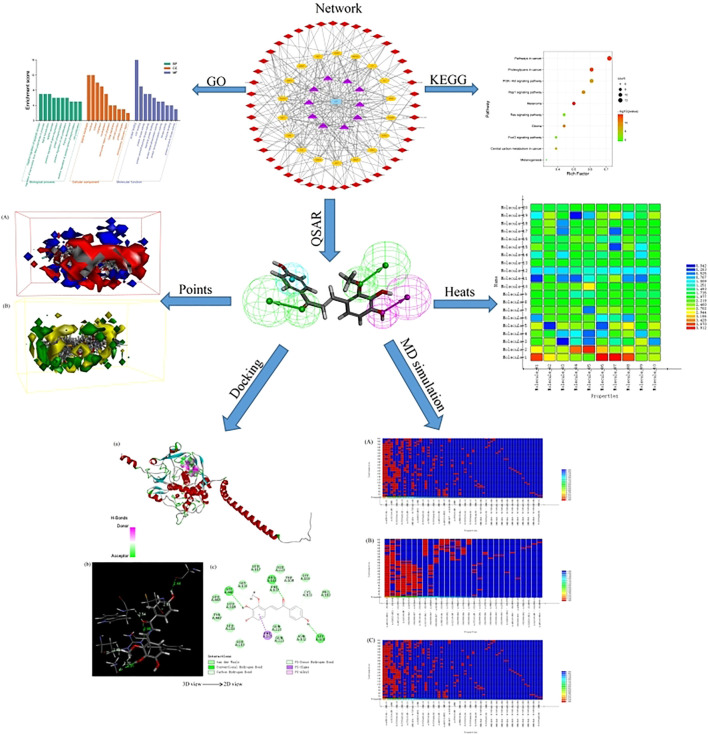
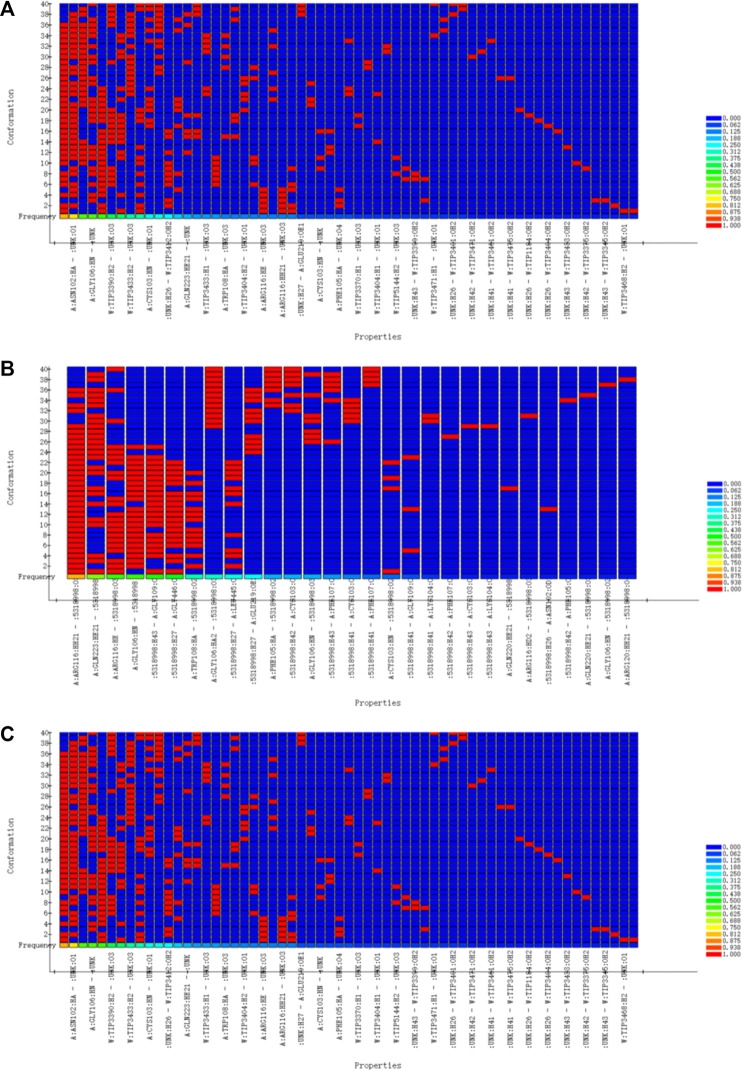
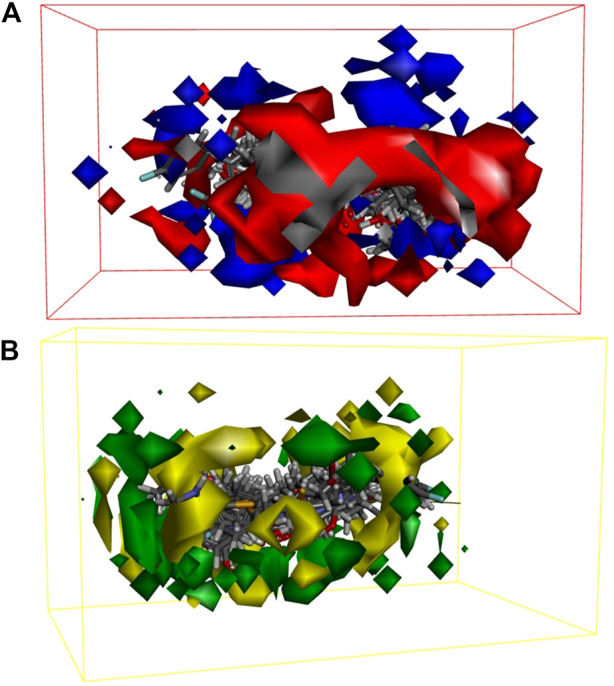
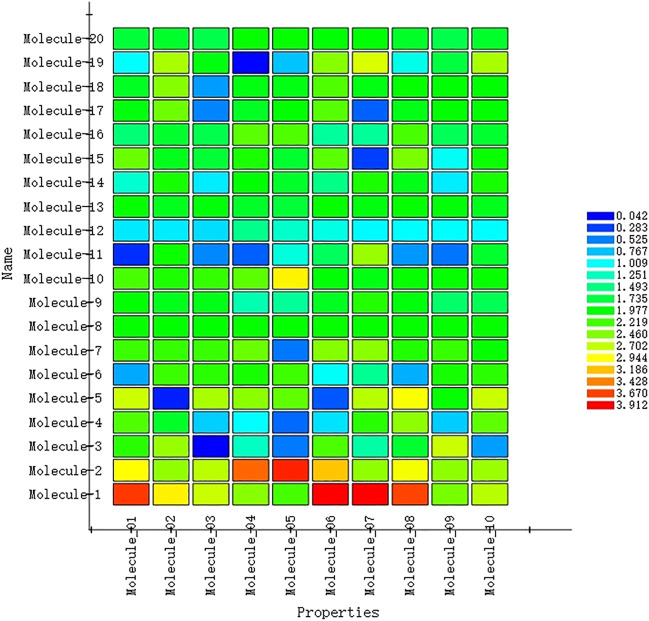
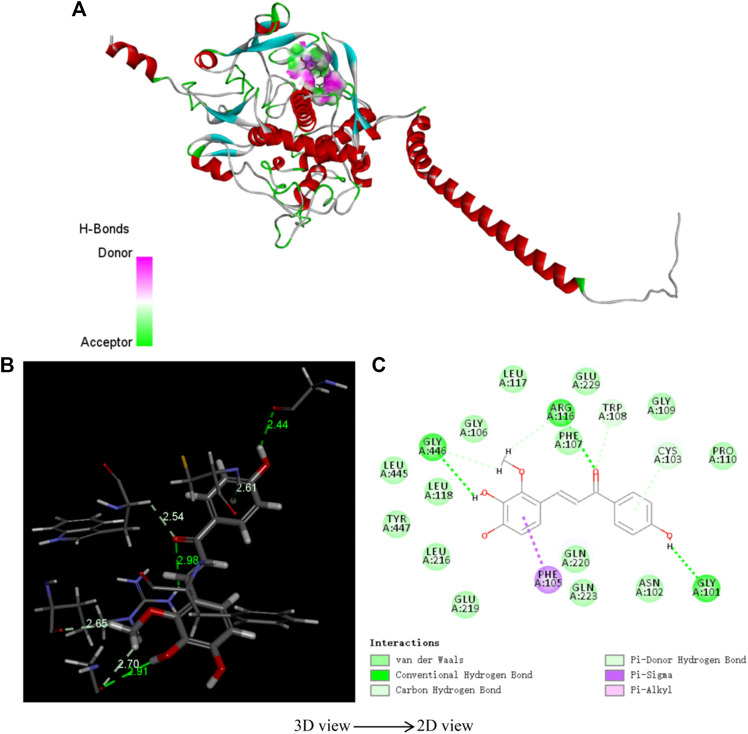
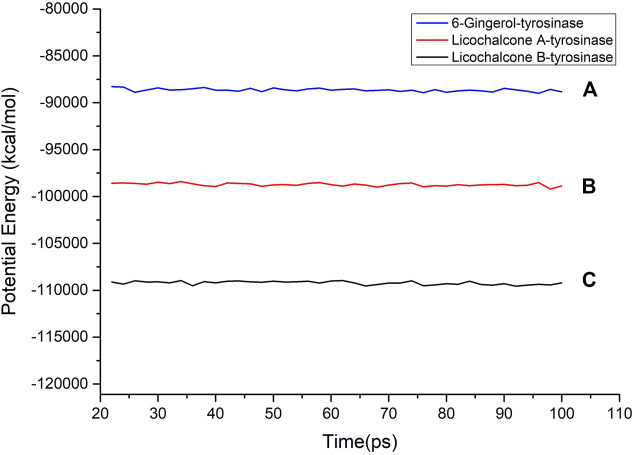
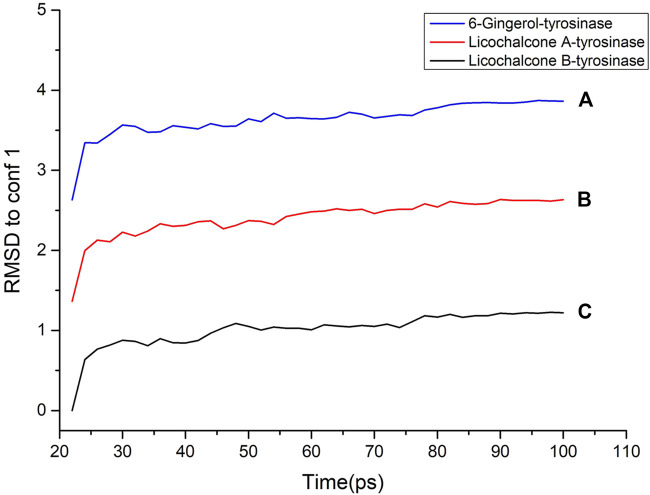
Licorice flavonoids (LCFs) are natural flavonoids isolated from which are known to have anti-melanoma activities . However, the molecular mechanism of LCF anti-melanoma has not been fully understood. In this study, network pharmacology, 3D/2D-QSAR, molecular docking, and molecular dynamics (MD) simulation were used to explore the molecular mechanism of LCF anti-melanoma. First of all, we screened the key active components and targets of LCF anti-melanoma by network pharmacology. Then, the logIC values of the top 20 compounds were predicted by the 2D-QSAR pharmacophore model, and seven highly active compounds were screened successfully. An optimal 3D-QSAR pharmacophore model for predicting the activity of LCF compounds was established by the HipHop method. The effectiveness of the 3D-QSAR pharmacophore was verified by a training set of compounds with known activity, and the possible decisive therapeutic effect of the potency group was inferred. Finally, molecular docking and MD simulation were used to verify the effective pharmacophore. In conclusion, this study established the structure-activity relationship of LCF and provided theoretical guidance for the research of LCF anti-melanoma.
甘草黄酮(LCFs)是从甘草中分离出的天然黄酮类化合物,已知其具有抗黑色素瘤活性。然而,LCF抗黑色素瘤的分子机制尚未完全明确。在本研究中,运用网络药理学、3D/2D-QSAR、分子对接和分子动力学(MD)模拟来探究LCF抗黑色素瘤的分子机制。首先,通过网络药理学筛选出LCF抗黑色素瘤的关键活性成分和靶点。然后,利用二维定量构效关系(2D-QSAR)药效团模型预测前20种化合物的logIC值,并成功筛选出7种高活性化合物。通过HipHop方法建立了用于预测LCF化合物活性的最佳三维定量构效关系(3D-QSAR)药效团模型。利用一组已知活性的化合物训练集验证了3D-QSAR药效团的有效性,并推断出药效基团可能具有的决定性治疗作用。最后,通过分子对接和MD模拟验证有效的药效团。总之,本研究建立了LCF的构效关系,为LCF抗黑色素瘤的研究提供了理论指导。