Moudio Serge, Rodin Fredrik, Albargothy Nazira Jamal, Karlsson Urban, Reyes Juan F, Hallbeck Martin
Department of Clinical Pathology and Department of Biomedical and Clinical Sciences, Linköping University, Linköping, Sweden.
Department of Biomedical and Clinical Sciences, Linköping University, Linköping, Sweden.
Front Neurol. 2022 Feb 16;13:826102. doi: 10.3389/fneur.2022.826102. eCollection 2022.
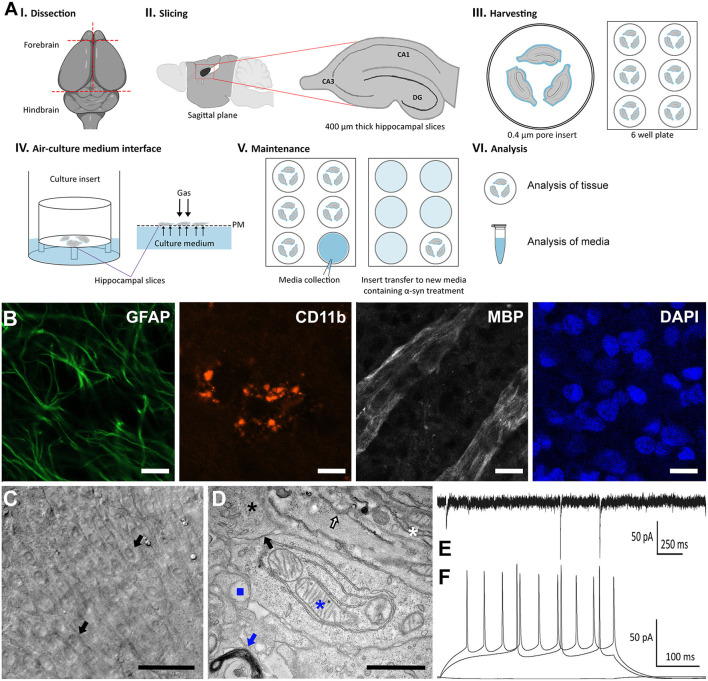
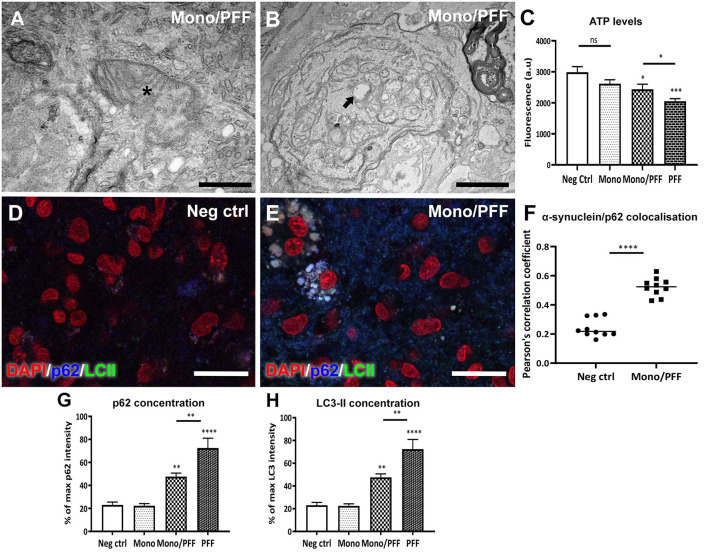
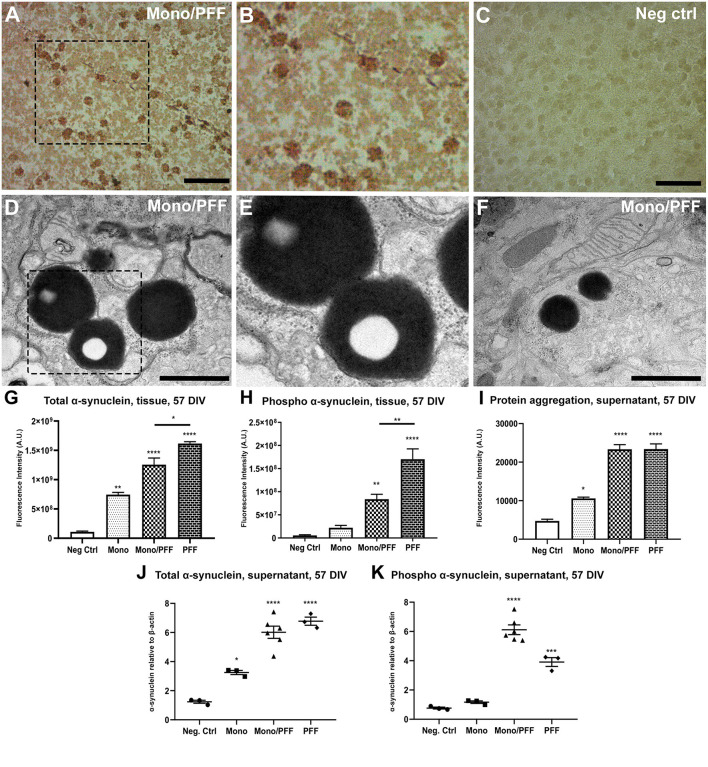
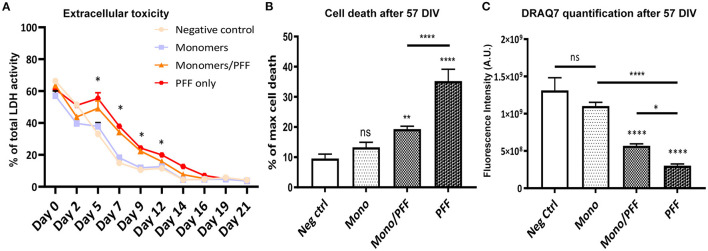
The accumulation of proteinaceous deposits comprised largely of the α-synuclein protein is one of the main hallmarks of Parkinson's disease (PD) and related synucleinopathies. Their progressive development coincides with site-specific phosphorylation, oxidative stress and eventually, compromised neuronal function. However, modeling protein aggregate formation in animal or models has proven notably difficult. Here, we took advantage of a preclinical organotypic brain slice culture model to study α-synuclein aggregate formation . We monitored the progressive and gradual changes induced by α-synuclein such as cellular toxicity, autophagy activation, mitochondrial dysfunction, cellular death as well as α-synuclein modification including site-specific phosphorylation. Our results demonstrate that organotypic brain slice cultures can be cultured for long periods of time and when cultured in the presence of aggregated α-synuclein, the molecular features of PD are recapitulated. Taken together, this model allows for detailed modeling of the molecular features of PD, thus enabling studies on the cumulative effects of α-synuclein in a complex environment. This provides a platform to screen potential disease-modifying therapeutic candidates aimed at impeding α-synuclein aggregation and/or cellular transmission. Moreover, this model provides a robust replacement for studies that do not include behavioral experiments, thus providing a way to reduce the number of animals used in an accelerated timescale.
主要由α-突触核蛋白组成的蛋白质沉积物的积累是帕金森病(PD)和相关突触核蛋白病的主要标志之一。它们的渐进性发展与位点特异性磷酸化、氧化应激以及最终受损的神经元功能相一致。然而,在动物或模型中模拟蛋白质聚集体的形成已被证明非常困难。在这里,我们利用一种临床前器官型脑片培养模型来研究α-突触核蛋白聚集体的形成。我们监测了由α-突触核蛋白诱导的渐进性和逐渐变化,如细胞毒性、自噬激活、线粒体功能障碍、细胞死亡以及α-突触核蛋白修饰,包括位点特异性磷酸化。我们的结果表明,器官型脑片培养物可以长时间培养,并且当在聚集的α-突触核蛋白存在下培养时,PD的分子特征得以重现。综上所述,这个模型允许对PD的分子特征进行详细建模,从而能够研究α-突触核蛋白在复杂环境中的累积效应。这提供了一个平台来筛选旨在阻止α-突触核蛋白聚集和/或细胞传播的潜在疾病修饰治疗候选物。此外,这个模型为不包括行为实验的研究提供了一个有力的替代方案,从而提供了一种在加速的时间尺度上减少所用动物数量的方法。