Liu Yiran E, Oto Jillian, Will John, LeBoa Christopher, Doyle Alexis, Rens Neil, Aggarwal Shelley, Kalish Iryna, Rodriguez Marcela, Sherif Beruk, Trinidad Chrisele, Del Rosario Michael, Allen Sophie, Spencer Robert, Morales Carlos, Chyorny Alexander, Andrews Jason R
Department of Medicine, Division of Infectious Diseases and Geographic Medicine, Stanford University School of Medicine, Stanford, CA, USA.
Custody Health Services, Santa Clara Valley Health and Hospital System, San Jose, CA, USA.
Prev Med Rep. 2022 Mar 15;27:101771. doi: 10.1016/j.pmedr.2022.101771. eCollection 2022 Jun.
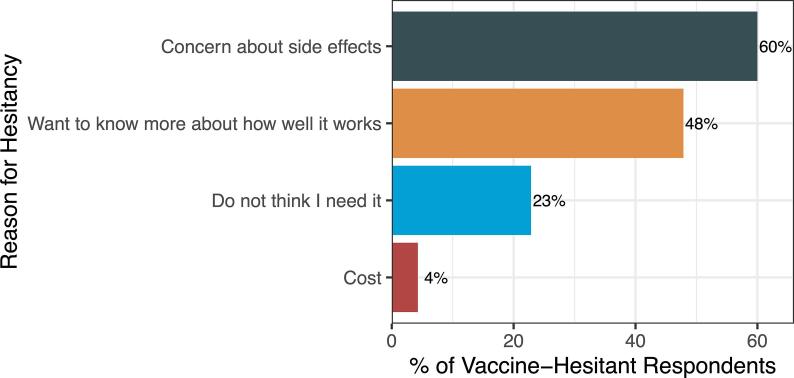
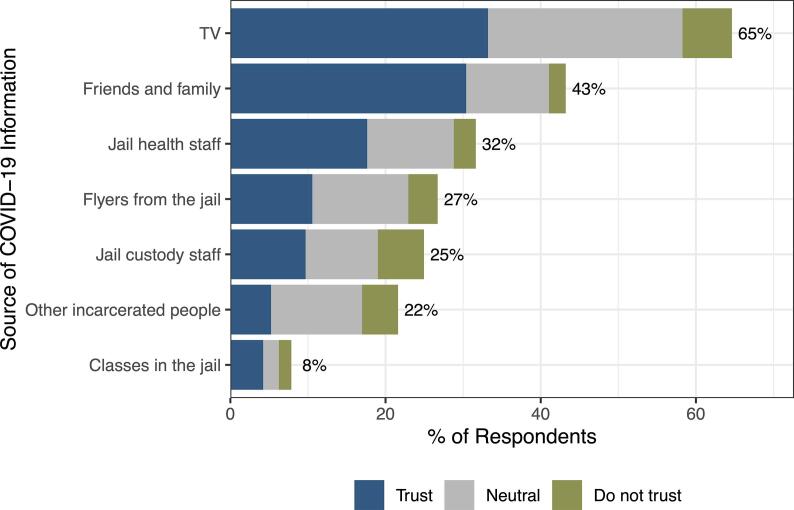
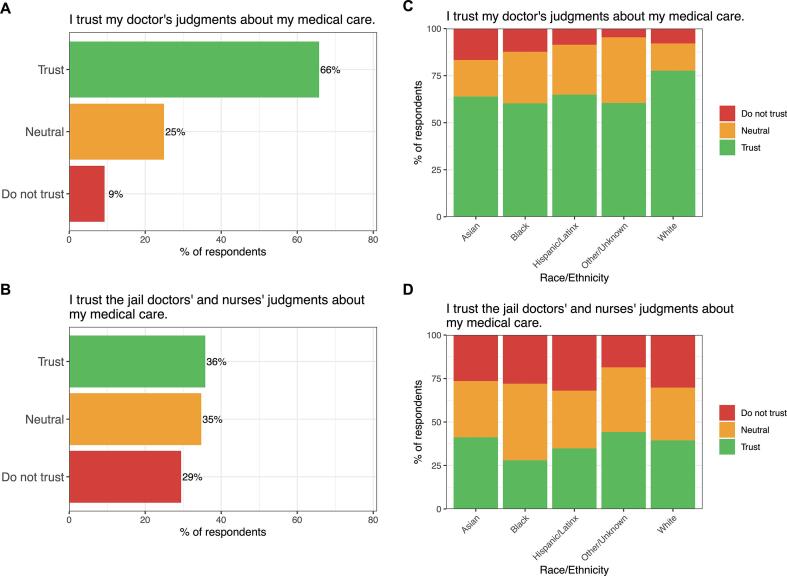
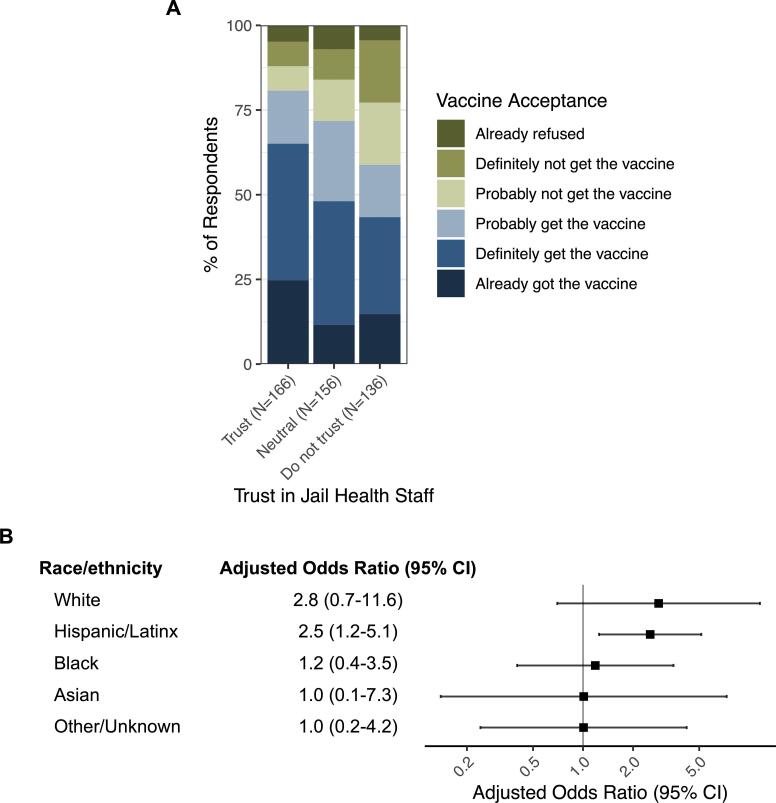
Carceral facilities are high-risk settings for COVID-19 transmission. Factors associated with COVID-19 vaccine acceptance and hesitancy among incarcerated individuals are poorly understood, especially among jail residents. Here, we conducted a retrospective review of electronic health record (EHR) data on COVID-19 vaccine uptake in custody and additionally administered a survey to assess reasons for vaccine hesitancy, sources of COVID-19 information, and medical mistrust among residents of four Northern California jails. We performed multivariate logistic regression to determine associations with vaccine acceptance. Of 2,564 jail residents offered a COVID-19 vaccine between March 19, 2021 and June 30, 2021, 1,441 (56.2%) accepted at least one dose. Among vaccinated residents, 497 (34.5%) had initially refused. Vaccine uptake was higher among older individuals, women, those with recent flu vaccination, and those living in shared housing. Among 509 survey respondents, leading reasons for vaccine hesitancy were concerns around side effects and suboptimal efficacy, with cost and the need for an annual booster being other hypothetical deterrents to vaccination. Vaccine hesitancy was also associated with mistrust of medical personnel in and out of jail, although this association varied by race/ethnicity. Television and friends/family were the most common and most trusted sources of COVID-19 information, respectively. Overall, vaccine acceptance was much lower among jail residents than the local and national general population. Interventions to increase vaccination rates in this setting should utilize accessible and trusted sources of information to address concerns about side effects and efficacy, while working to mitigate medical and institutional mistrust among residents.
监狱设施是新冠病毒传播的高风险场所。人们对与被监禁者接受和犹豫接种新冠疫苗相关的因素了解甚少,尤其是在监狱居民中。在此,我们对关于被监禁期间新冠疫苗接种情况的电子健康记录(EHR)数据进行了回顾性审查,并另外开展了一项调查,以评估北加利福尼亚四所监狱居民中疫苗犹豫的原因、新冠病毒信息来源以及对医疗的不信任情况。我们进行了多变量逻辑回归分析以确定与疫苗接受情况的关联。在2021年3月19日至2021年6月30日期间,有2564名监狱居民被提供了新冠疫苗,其中1441人(56.2%)接受了至少一剂疫苗。在已接种疫苗的居民中,497人(34.5%)最初拒绝接种。年龄较大者、女性、近期接种过流感疫苗者以及居住在共享住房中的人疫苗接种率较高。在509名调查受访者中,疫苗犹豫的主要原因是担心副作用和效果欠佳,成本以及每年需要加强接种是其他假设的接种阻碍因素。疫苗犹豫也与对监狱内外医务人员的不信任有关,尽管这种关联因种族/族裔而异。电视和朋友/家人分别是最常见和最受信任的新冠病毒信息来源。总体而言,监狱居民的疫苗接受率远低于当地和全国普通人群。在此环境下提高疫苗接种率的干预措施应利用可获取且受信任的信息来源来解决对副作用和效果的担忧,同时努力减轻居民对医疗和机构的不信任。