An Hsiao-Lung, Kuo Hung-Chih, Tang Tang K
Program in Molecular Medicine, National Yang Ming Chiao Tung University and Academia Sinica, Taipei, Taiwan.
Institute of Biomedical Sciences, Academia Sinica, Taipei, Taiwan.
Front Cell Dev Biol. 2022 Mar 2;10:830432. doi: 10.3389/fcell.2022.830432. eCollection 2022.
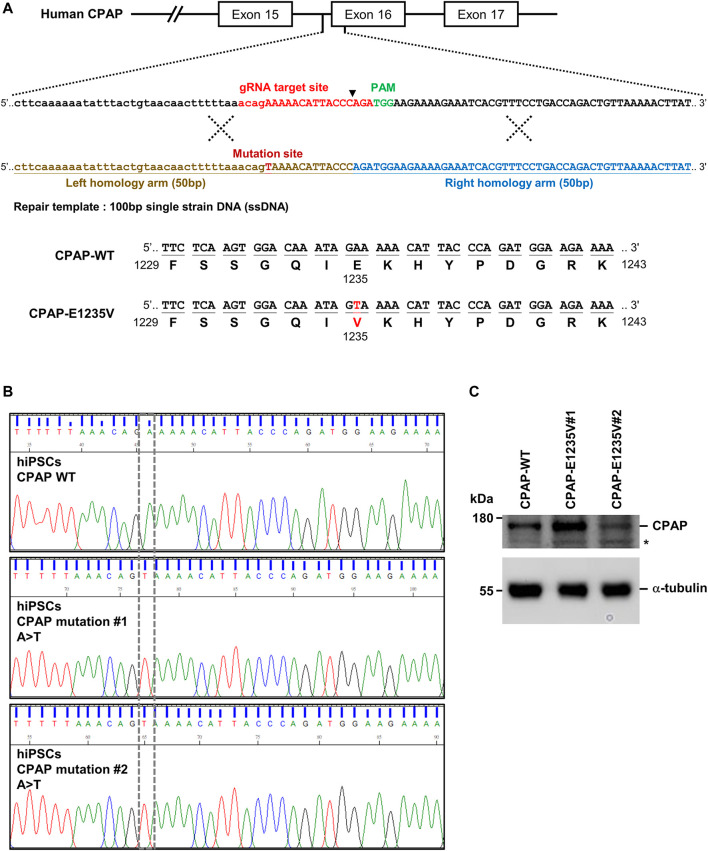
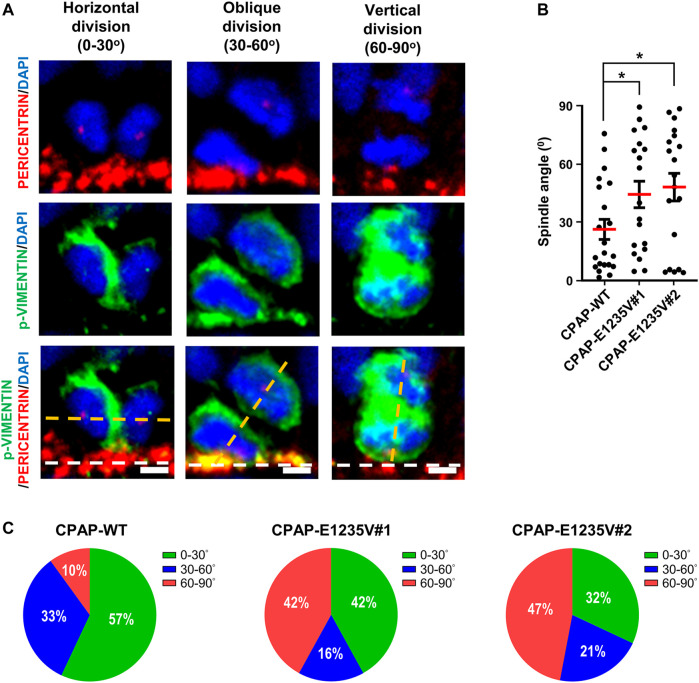
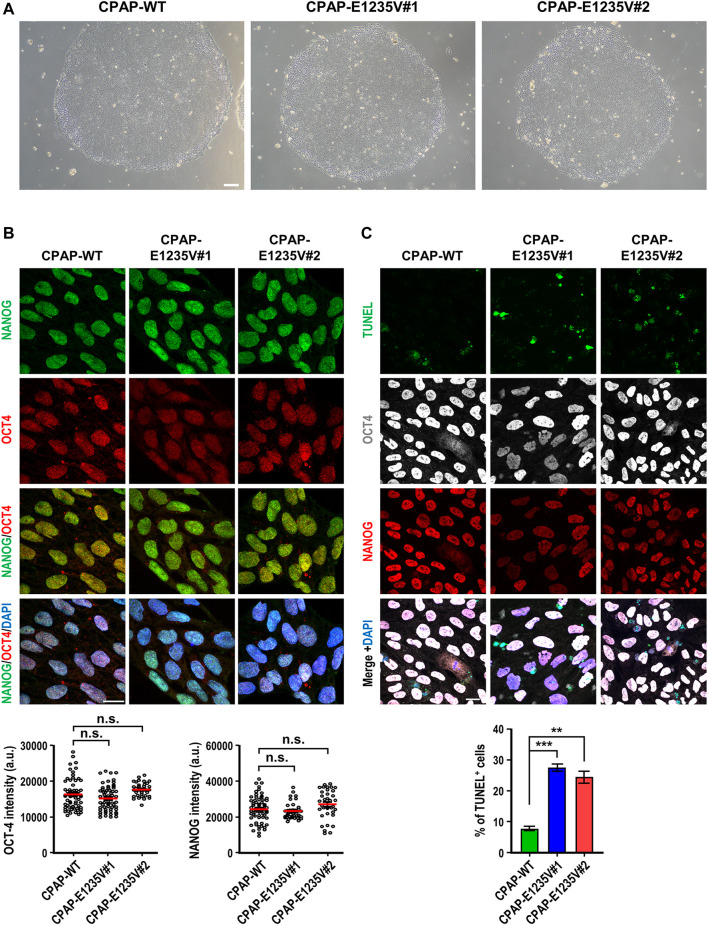
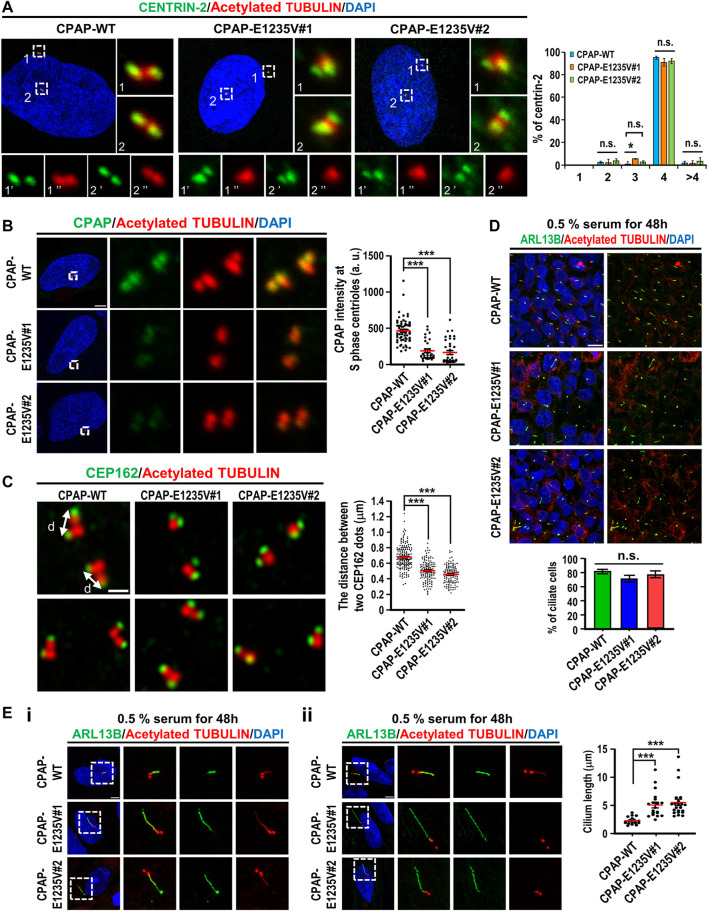
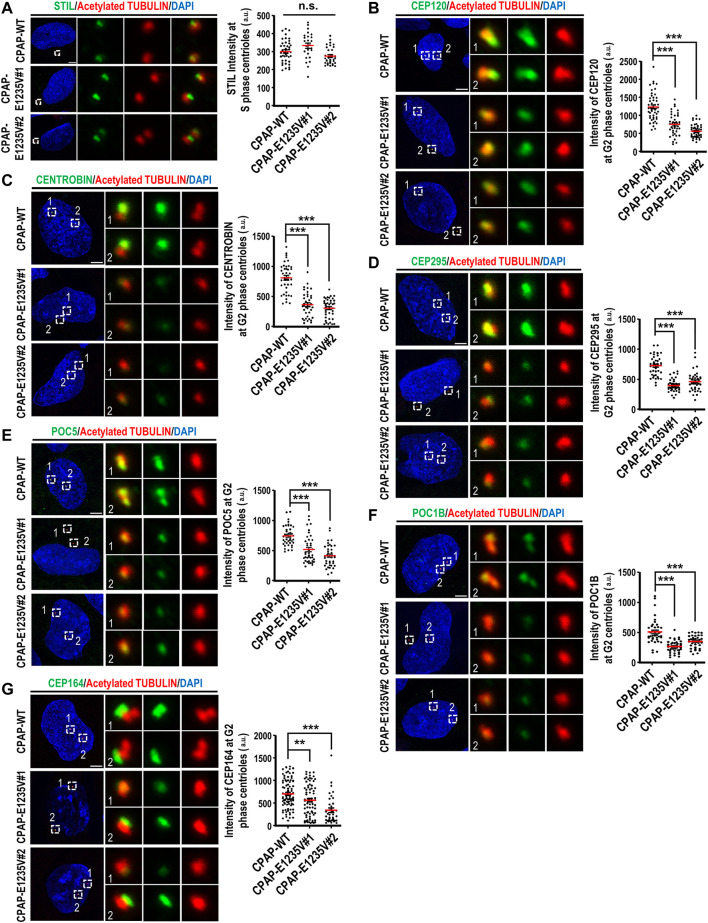
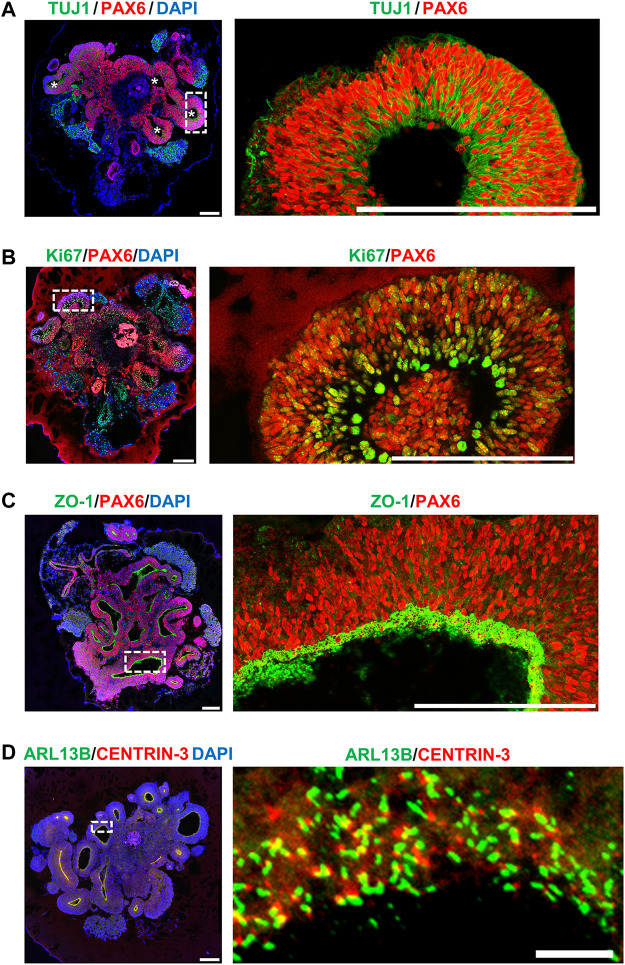
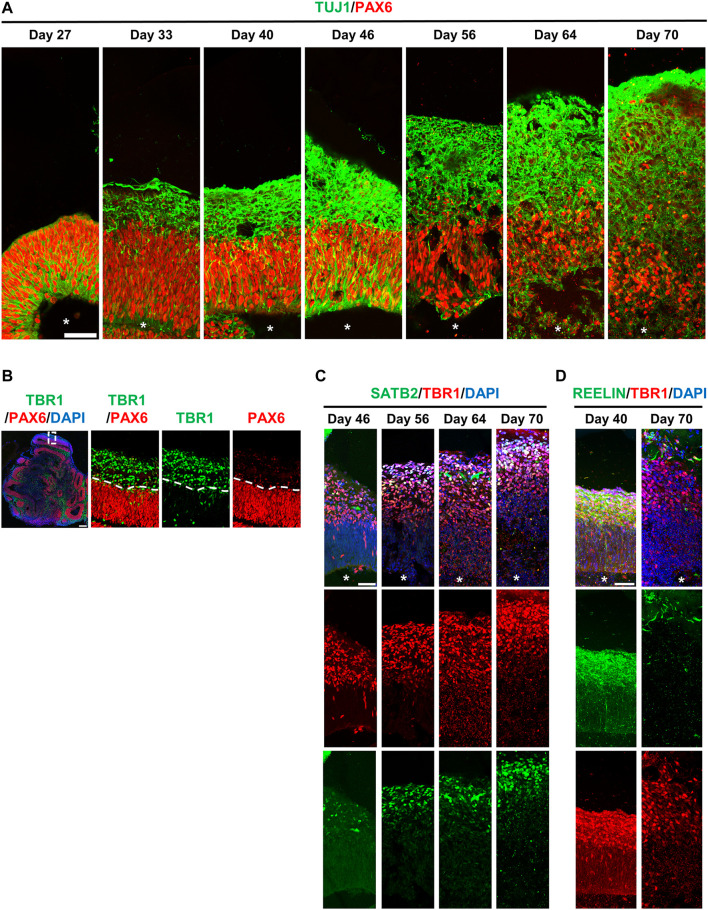
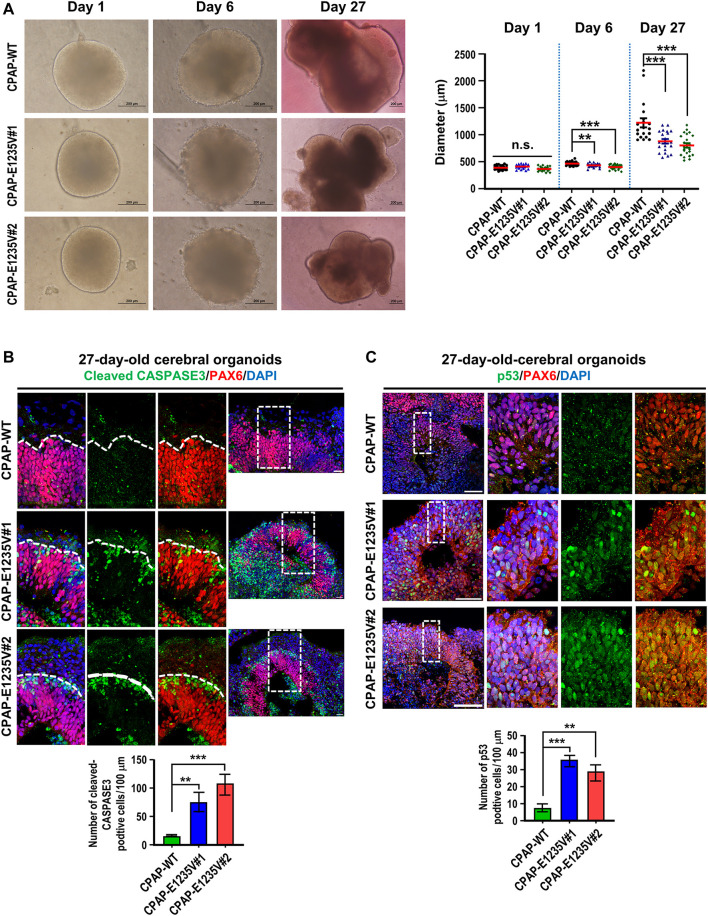
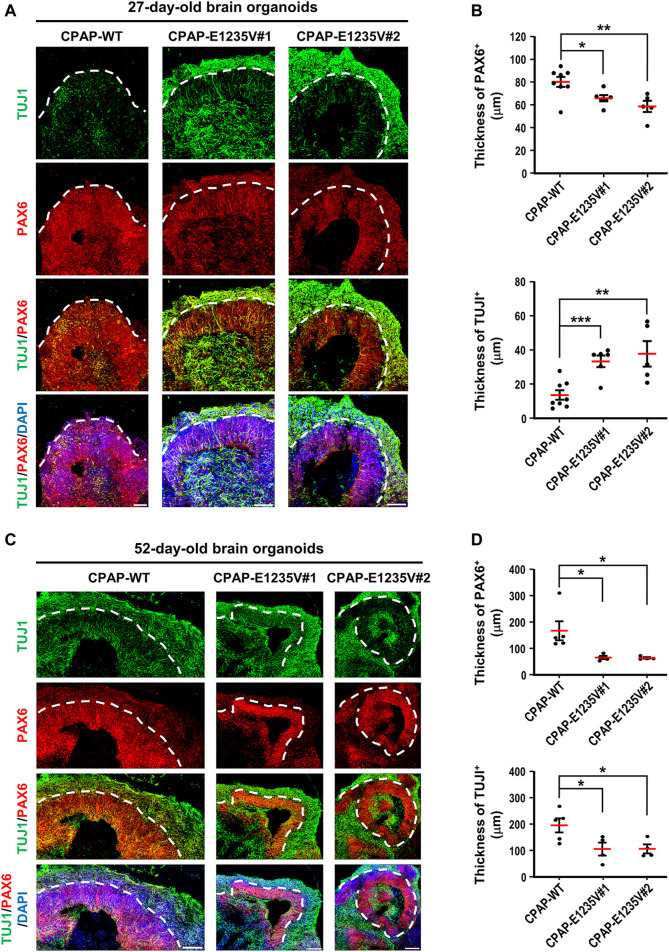
The centrosome is composed of a pair of centrioles and serves as the major microtubule-organizing center (MTOC) in cells. Centrosome dysfunction has been linked to autosomal recessive primary microcephaly (MCPH), which is a rare human neurodevelopmental disorder characterized by small brain size with intellectual disability. Recently, several mouse models carrying mutated genes encoding centrosomal proteins have been generated to address the genotype-phenotype relationships in MCPH. However, several human-specific features were not observed in the mouse models during brain development. Herein, we generated isogenic hiPSCs carrying the gene encoding centrosomal CPAP-E1235V mutant protein using the CRISPR-Cas9 genome editing system, and examined the phenotypic features of wild-type and mutant hiPSCs and their derived brain organoids. Our results showed that the CPAP-E1235V mutant perturbed the recruitment of several centriolar proteins involved in centriole elongation, including CEP120, CEP295, CENTROBIN, POC5, and POC1B, onto nascent centrioles, resulting in the production of short centrioles but long cilia. Importantly, our wild-type hiPSC-derived brain organoid recapitulated many cellular events seen in the developing human brain, including neuronal differentiation and cortical spatial lamination. Interestingly, hiPSC-CPAP-E1235V-derived brain organoids induced p53-dependent neuronal cell death, resulting in the production of smaller brain organoids that mimic the microcephaly phenotype. Furthermore, we observed that the CPAP-E1235V mutation altered the spindle orientation of neuronal progenitor cells and induced premature neuronal differentiation. In summary, we have shown that the hiPSC-derived brain organoid coupled with CRISPR/Cas9 gene editing technology can recapitulate the centrosome/centriole-associated MCPH pathological features. Possible mechanisms for MCPH with centriole/centrosome dysfunction are discussed.
中心体由一对中心粒组成,是细胞中主要的微管组织中心(MTOC)。中心体功能障碍与常染色体隐性原发性小头畸形(MCPH)有关,MCPH是一种罕见的人类神经发育障碍,其特征是脑容量小并伴有智力残疾。最近,已经构建了几种携带编码中心体蛋白的突变基因的小鼠模型,以研究MCPH中的基因型-表型关系。然而,在脑发育过程中,小鼠模型未观察到一些人类特有的特征。在此,我们使用CRISPR-Cas9基因组编辑系统构建了携带编码中心体CPAP-E1235V突变蛋白基因的同基因人诱导多能干细胞(hiPSC),并研究了野生型和突变型hiPSC及其衍生的脑类器官的表型特征。我们的结果表明,CPAP-E1235V突变体干扰了几种参与中心粒延长的中心粒蛋白(包括CEP120、CEP295、CENTROBIN、POC5和POC1B)在新生中心粒上的募集,导致产生短的中心粒但长的纤毛。重要的是,我们的野生型hiPSC衍生的脑类器官重现了发育中的人类大脑中出现的许多细胞事件。有趣的是,hiPSC-CPAP-E1235V衍生的脑类器官诱导了p53依赖的神经元细胞死亡,导致产生较小的脑类器官,模拟小头畸形表型。此外,我们观察到CPAP-E1235V突变改变了神经元祖细胞的纺锤体方向,并诱导了神经元过早分化。总之,我们已经表明,hiPSC衍生的脑类器官与CRISPR/Cas9基因编辑技术相结合可以重现与中心体/中心粒相关的MCPH病理特征。我们还讨论了中心粒/中心体功能障碍导致MCPH的可能机制。