Borden Elizabeth S, Buetow Kenneth H, Wilson Melissa A, Hastings Karen Taraszka
Department of Basic Medical Sciences, College of Medicine-Phoenix, University of Arizona, Phoenix, AZ, United States.
Department of Research and Internal Medicine (Dermatology), Phoenix Veterans Affairs Health Care System, Phoenix, AZ, United States.
Front Oncol. 2022 Mar 3;12:836821. doi: 10.3389/fonc.2022.836821. eCollection 2022.
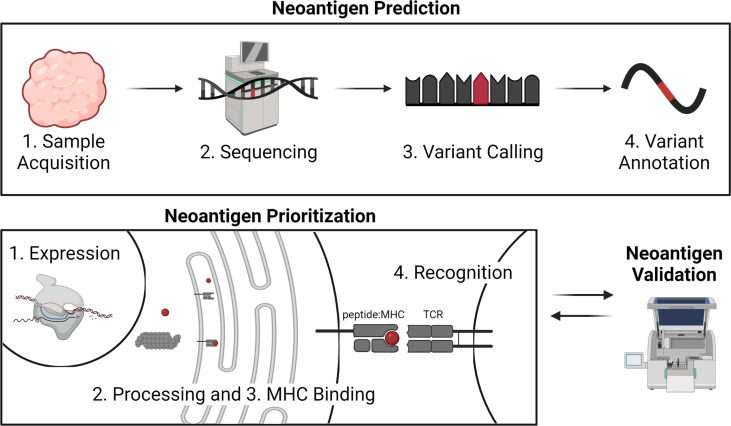
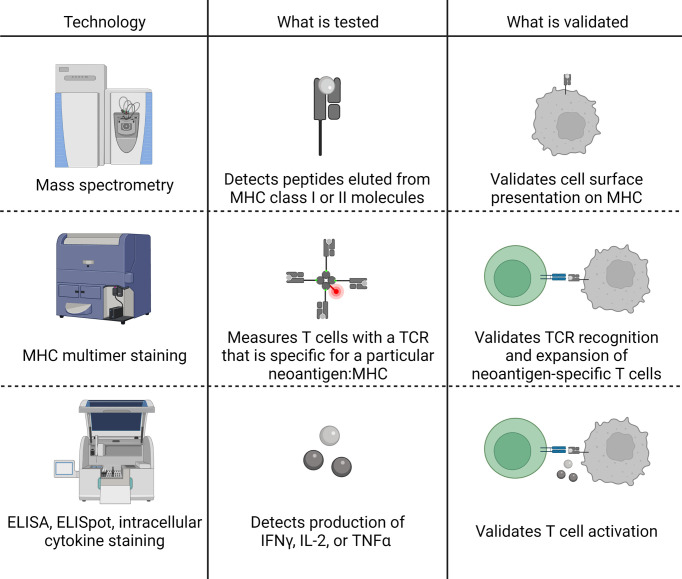
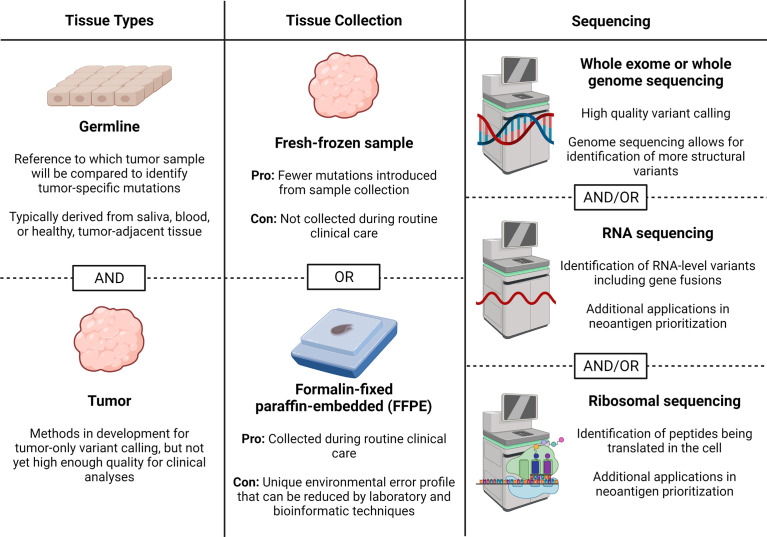
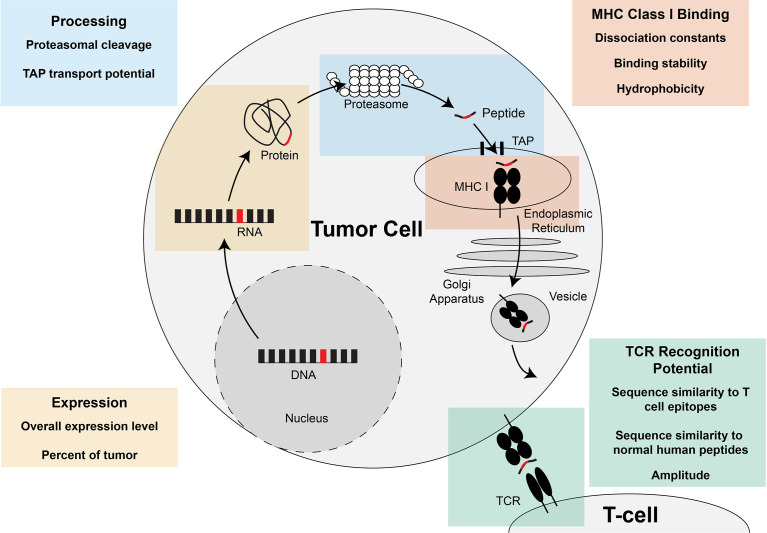
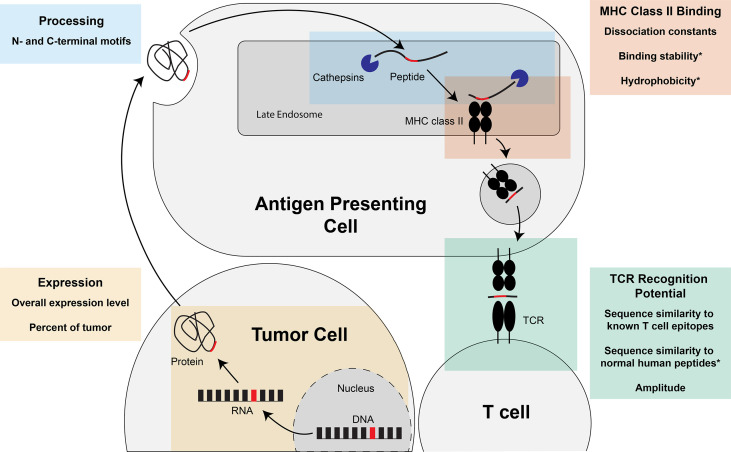
Prioritization of immunogenic neoantigens is key to enhancing cancer immunotherapy through the development of personalized vaccines, adoptive T cell therapy, and the prediction of response to immune checkpoint inhibition. Neoantigens are tumor-specific proteins that allow the immune system to recognize and destroy a tumor. Cancer immunotherapies, such as personalized cancer vaccines, adoptive T cell therapy, and immune checkpoint inhibition, rely on an understanding of the patient-specific neoantigen profile in order to guide personalized therapeutic strategies. Genomic approaches to predicting and prioritizing immunogenic neoantigens are rapidly expanding, raising new opportunities to advance these tools and enhance their clinical relevance. Predicting neoantigens requires acquisition of high-quality samples and sequencing data, followed by variant calling and variant annotation. Subsequently, prioritizing which of these neoantigens may elicit a tumor-specific immune response requires application and integration of tools to predict the expression, processing, binding, and recognition potentials of the neoantigen. Finally, improvement of the computational tools is held in constant tension with the availability of datasets with validated immunogenic neoantigens. The goal of this review article is to summarize the current knowledge and limitations in neoantigen prediction, prioritization, and validation and propose future directions that will improve personalized cancer treatment.
通过开发个性化疫苗、过继性T细胞疗法以及预测免疫检查点抑制反应,对免疫原性新抗原进行优先级排序是增强癌症免疫疗法的关键。新抗原是肿瘤特异性蛋白,可使免疫系统识别并摧毁肿瘤。癌症免疫疗法,如个性化癌症疫苗、过继性T细胞疗法和免疫检查点抑制,依赖于对患者特异性新抗原谱的了解,以指导个性化治疗策略。预测和优先排序免疫原性新抗原的基因组方法正在迅速扩展,为改进这些工具并增强其临床相关性带来了新机遇。预测新抗原需要获取高质量样本和测序数据,随后进行变异检测和变异注释。随后,对这些新抗原中哪些可能引发肿瘤特异性免疫反应进行优先级排序,需要应用和整合工具来预测新抗原的表达、加工、结合和识别潜力。最后,计算工具的改进与具有经过验证的免疫原性新抗原的数据集的可用性一直存在矛盾。这篇综述文章的目的是总结新抗原预测、优先级排序和验证方面的当前知识和局限性,并提出将改善个性化癌症治疗的未来方向。