Department of Industrial Economics and Technology Management (IØT), Norwegian University of Science and Technology (NTNU), Alfred Getz veg 3, 7491 Trondheim, Norway.
Scand J Work Environ Health. 2022 Jul 1;48(5):410-418. doi: 10.5271/sjweh.4023. Epub 2022 Mar 21.
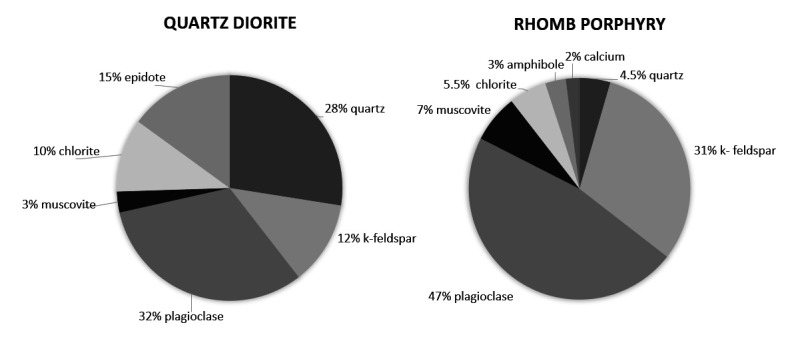
Stone minerals are a partially ignored environmental challenge but a significant contributor to urban air pollution. We examined if short-term exposure to two stone minerals - quartz diorite and rhomb porphyry - commonly used in asphalt pavement would affect lung function, promote pulmonary inflammation, and affect bronchial reactivity differently.
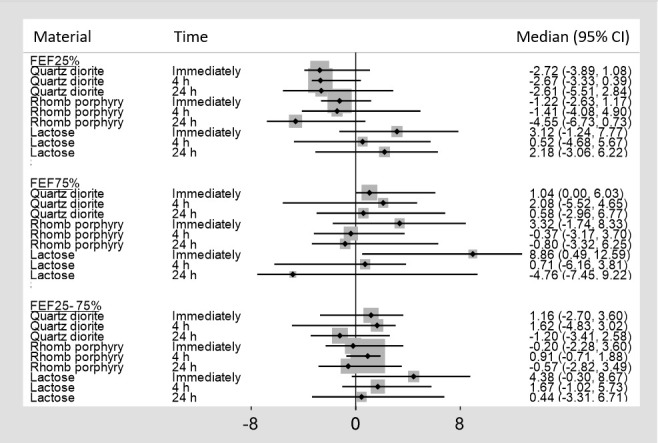
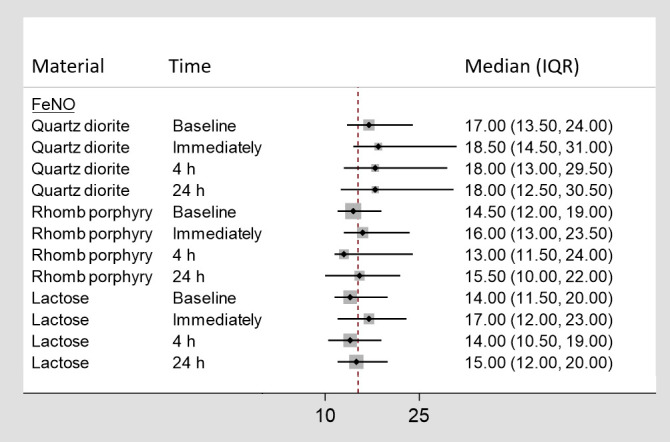
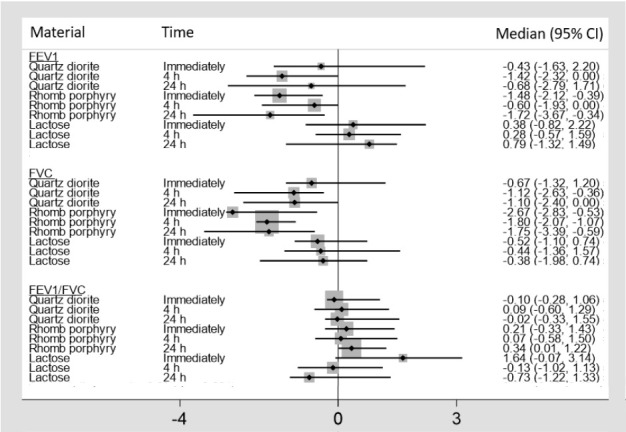
Our randomized crossover study included 24 healthy, non-smoking young adults exposed to the stone minerals quartz diorite, rhomb porphyry, and control dust (lactose). Exposure occurred in an exposure chamber, in three separate 4-hour exposure sessions. Fractional exhaled nitric oxide (FeNO) and lung function were monitored before exposure, then immediately following exposure, and 4 and 24 hours after exposure. In addition, methacholine was administered 4 hours following exposure, and exhaled breath condensate (EBC) was collected before exposure, then immediately and 4 hours after exposure. EBC was analyzed for pH, thiobarbituric acid reactive substances (TBARS), intercellular adhesion molecule 1 (ICAM-1), interleukin-6 (IL-6), IL-10, P-Selectin, surfactant protein D (SP-D), and tumor necrosis factor-α (TNF-α).
Our results showed significantly elevated concentrations of FeNO after exposure to quartz diorite compared to rhomb porphyry, suggesting that quartz diorite is more likely to trigger pulmonary inflammation after short-term exposure. Moreover, short-term exposure to rhomb porphyry was associated with a modest but statistically significant decline in forced vital capacity (FVC) compared to quartz diorite.
These results emphasize that using stone material in asphalt road construction should be reconsidered as it may affect lung inflammation and lung function in exposed subjects.
石材矿物质是一种被部分忽视的环境挑战,但却是城市空气污染的重要贡献者。我们研究了短期暴露于两种常用于沥青路面的石材矿物质——石英闪长岩和斜长斑岩——是否会对肺功能产生不同的影响,导致肺部炎症,并影响支气管反应性。
我们的随机交叉研究纳入了 24 名健康、不吸烟的年轻成年人,他们分别暴露于石材矿物质石英闪长岩、斜长斑岩和对照粉尘(乳糖)中。暴露在一个暴露室内,在三个单独的 4 小时暴露周期中进行。在暴露前、暴露后即刻以及暴露后 4 小时和 24 小时监测呼出气一氧化氮分数(FeNO)和肺功能。此外,在暴露后 4 小时给予乙酰甲胆碱,并在暴露前、暴露后即刻和暴露后 4 小时收集呼气冷凝液(EBC)。分析 EBC 的 pH 值、硫代巴比妥酸反应物质(TBARS)、细胞间黏附分子 1(ICAM-1)、白细胞介素-6(IL-6)、白细胞介素-10(IL-10)、P 选择素、表面活性蛋白 D(SP-D)和肿瘤坏死因子-α(TNF-α)。
我们的结果显示,暴露于石英闪长岩后 FeNO 的浓度明显升高,表明石英闪长岩在短期暴露后更有可能引发肺部炎症。此外,与石英闪长岩相比,短期暴露于斜长斑岩与用力肺活量(FVC)的适度但具有统计学意义的下降有关。
这些结果强调,在进行沥青道路施工时应重新考虑使用石材材料,因为它可能会影响暴露人群的肺部炎症和肺功能。