Section of Air Pollution and Noise, Department of Environmental Health, Domain of Infectious Disease Control and Environmental Health, Norwegian Institute of Public Health, PO Box 4404, Nydalen, N-0403, Oslo, Norway.
Geological Survey of Norway, Trondheim, Norway.
Part Fibre Toxicol. 2021 May 6;18(1):18. doi: 10.1186/s12989-021-00409-y.
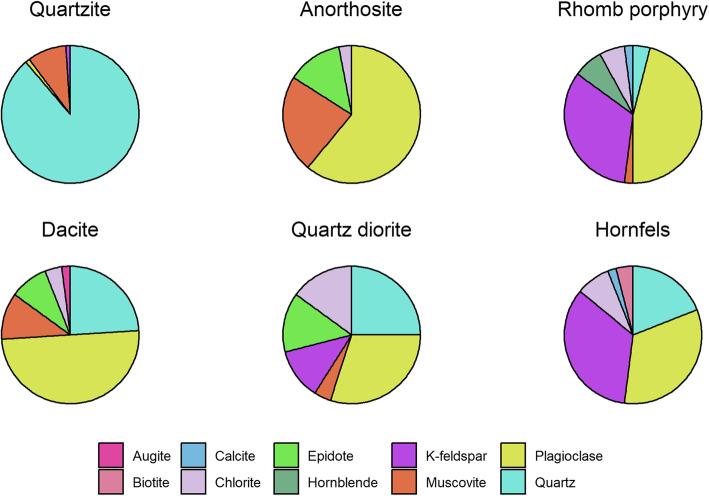
Respirable stone- and mineral particles may be a major constituent in occupational and ambient air pollution and represent a possible health hazard. However, with exception of quartz and asbestos, little is known about the toxic properties of mineral particles. In the present study, the pro-inflammatory and cytotoxic responses to six stone particle samples of different composition and with diameter below 10 μm were assessed in human bronchial epithelial cells (HBEC3-KT), THP-1 macrophages and a HBEC3-KT/THP-1 co-culture. Moreover, particle-induced lysis of human erythrocytes was assessed to determine the ability of the particles to lyse biological membranes. Finally, the role of the NLRP3 inflammasome was assessed using a NLRP3-specific inhibitor and detection of ASC oligomers and cleaved caspase-1 and IL-1β. A reference sample of pure α-quartz was included for comparison.
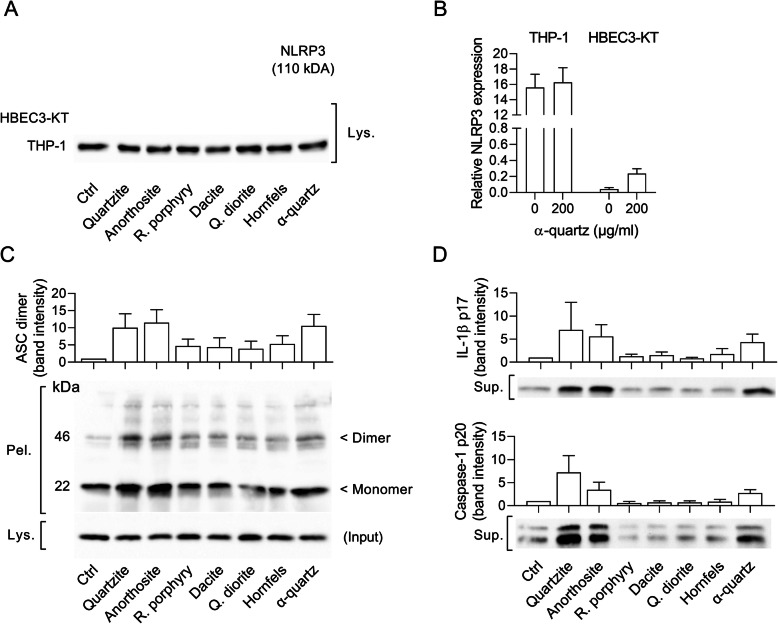
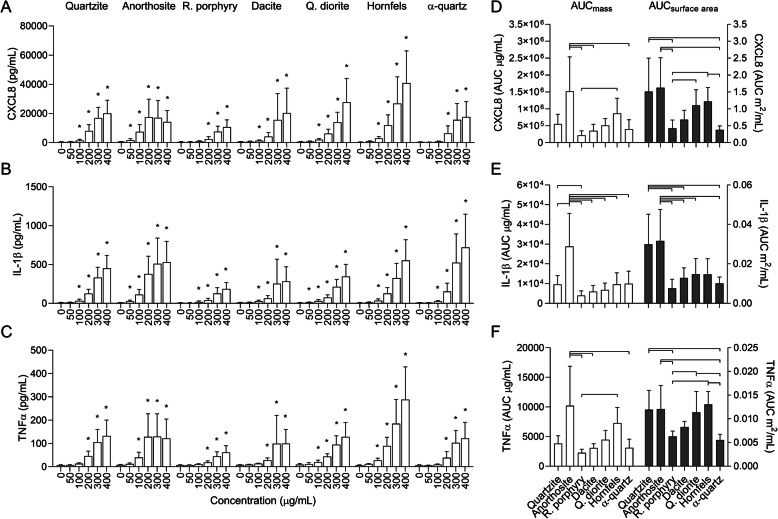
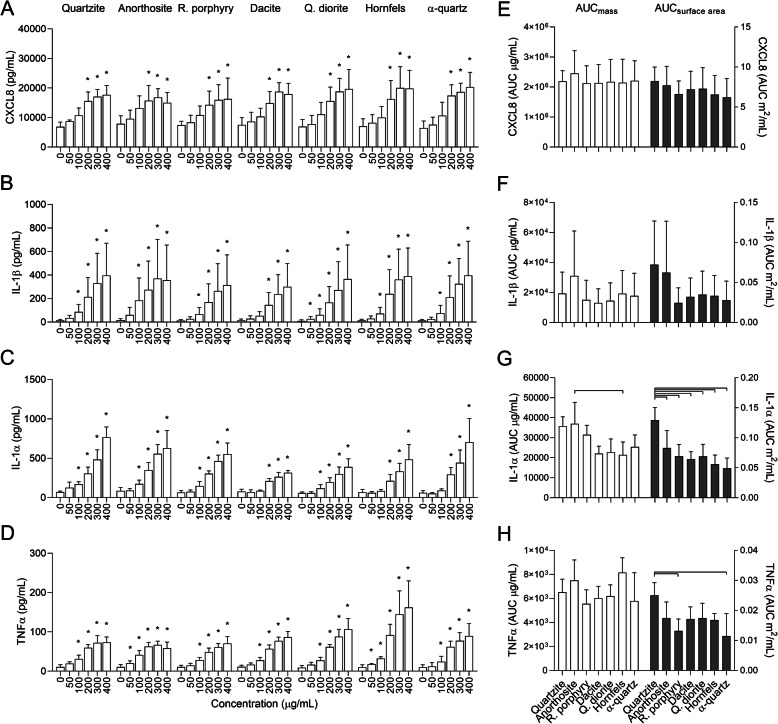
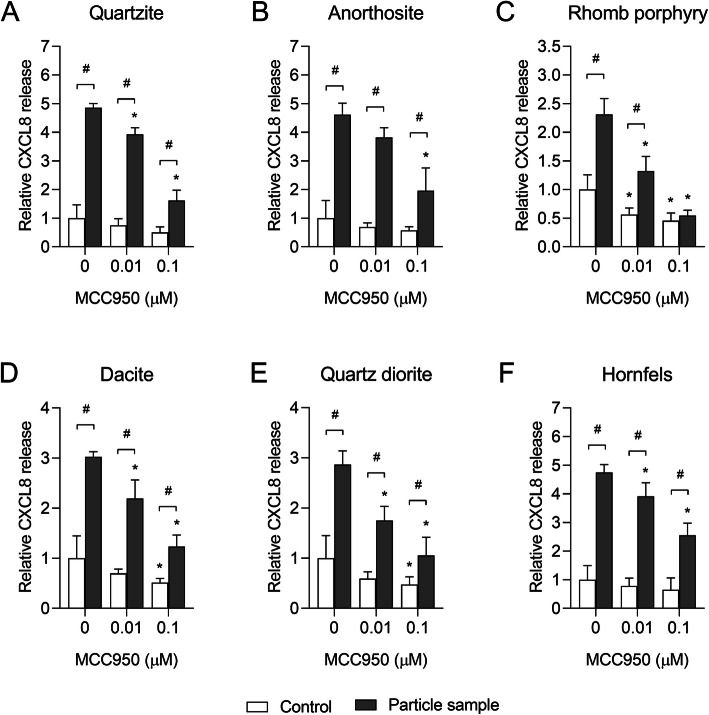
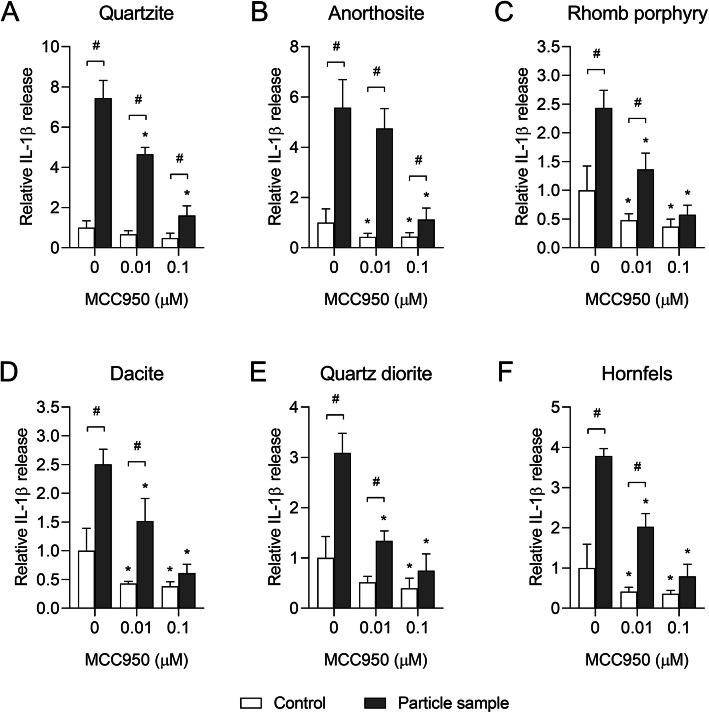
Several stone particle samples induced a concentration-dependent increase in cytotoxicity and secretion of the pro-inflammatory cytokines CXCL8, IL-1α, IL-1β and TNFα. In HBEC3-KT, quartzite and anorthosite were the most cytotoxic stone particle samples and induced the highest levels of cytokines. Quartzite and anorthosite were also the most cytotoxic samples in THP-1 macrophages, while anorthosite and hornfels induced the highest cytokine responses. In comparison, few significant differences between particle samples were detected in the co-culture. Adjusting responses for differences in surface area concentrations did not fully account for the differences between particle samples. Moreover, the stone particles had low hemolytic potential, indicating that the effects were not driven by membrane lysis. Pre-incubation with a NLRP3-specific inhibitor reduced stone particle-induced cytokine responses in THP-1 macrophages, but not in HBEC3-KT cells, suggesting that the effects are mediated through different mechanisms in epithelial cells and macrophages. Particle exposure also induced an increase in ASC oligomers and cleaved caspase-1 and IL-1β in THP-1 macrophages, confirming the involvement of the NLRP3 inflammasome.
The present study indicates that stone particles induce cytotoxicity and pro-inflammatory responses in human bronchial epithelial cells and macrophages, acting through NLRP3-independent and -dependent mechanisms, respectively. Moreover, some particle samples induced cytotoxicity and cytokine release to a similar or greater extent than α-quartz. Thus, these minerals warrant further attention in future research.
可吸入的石质和矿物质颗粒可能是职业和环境空气污染的主要成分,代表着一种潜在的健康危害。然而,除了石英和石棉之外,人们对矿物质颗粒的毒性特性知之甚少。在本研究中,评估了六种不同成分和直径小于 10μm 的石质颗粒样品对人支气管上皮细胞(HBEC3-KT)、THP-1 巨噬细胞和 HBEC3-KT/THP-1 共培养物的促炎和细胞毒性反应。此外,还评估了颗粒诱导的人红细胞裂解能力,以确定颗粒裂解生物膜的能力。最后,使用 NLRP3 特异性抑制剂和检测 ASC 寡聚体和裂解的 caspase-1 和 IL-1β 来评估 NLRP3 炎性小体的作用。还包括了纯α-石英的参考样品进行比较。
几种石质颗粒样品诱导了浓度依赖性的细胞毒性增加和促炎细胞因子 CXCL8、IL-1α、IL-1β 和 TNFα 的分泌。在 HBEC3-KT 中,石英岩和斜长岩是最具细胞毒性的石质颗粒样品,并诱导了最高水平的细胞因子。在 THP-1 巨噬细胞中,石英岩和斜长岩也是最具细胞毒性的样品,而斜长岩和角闪岩诱导了最高的细胞因子反应。相比之下,在共培养物中,颗粒样品之间的差异很少。通过表面积浓度调整反应并不能完全说明颗粒样品之间的差异。此外,这些石质颗粒的溶血能力较低,表明这些作用不是由膜裂解引起的。用 NLRP3 特异性抑制剂预处理可降低 THP-1 巨噬细胞中石质颗粒诱导的细胞因子反应,但不能降低 HBEC3-KT 细胞中的反应,表明这些作用通过上皮细胞和巨噬细胞中不同的机制介导。颗粒暴露还诱导了 THP-1 巨噬细胞中 ASC 寡聚体、裂解的 caspase-1 和 IL-1β 的增加,证实了 NLRP3 炎性小体的参与。
本研究表明,石质颗粒通过 NLRP3 依赖和不依赖的机制在人支气管上皮细胞和巨噬细胞中诱导细胞毒性和促炎反应。此外,一些颗粒样品诱导的细胞毒性和细胞因子释放与α-石英相似或更大。因此,这些矿物质在未来的研究中值得进一步关注。