Smith Amanda M, Verdoni Angela M, Abel Haley J, Chen David Y, Ketkar Shamika, Leight Elizabeth R, Miller Christopher A, Ley Timothy J
Division of Oncology, Section of Stem Cell Biology, Department of Internal Medicine, Washington University School of Medicine, St. Louis, MO 63110, USA.
Division of Dermatology, Department of Internal Medicine, Washington University School of Medicine, St. Louis, MO 63110, USA.
iScience. 2022 Mar 3;25(4):104004. doi: 10.1016/j.isci.2022.104004. eCollection 2022 Apr 15.
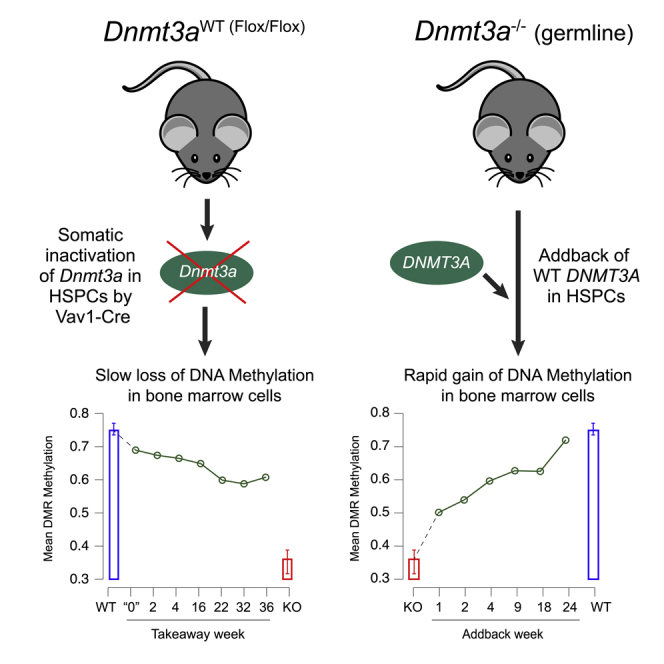
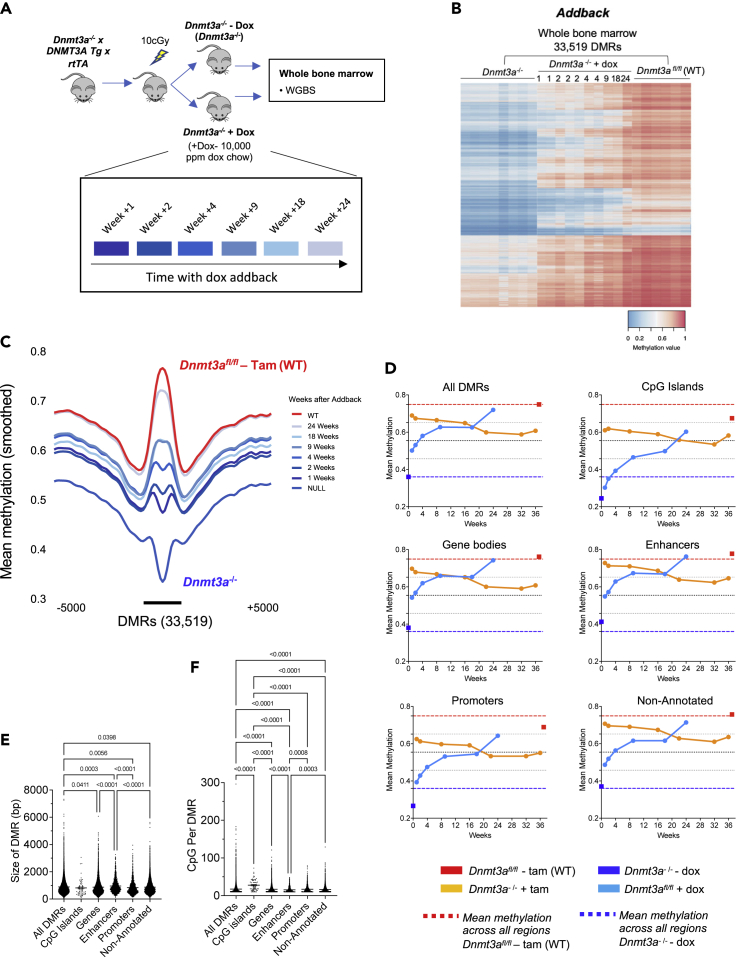
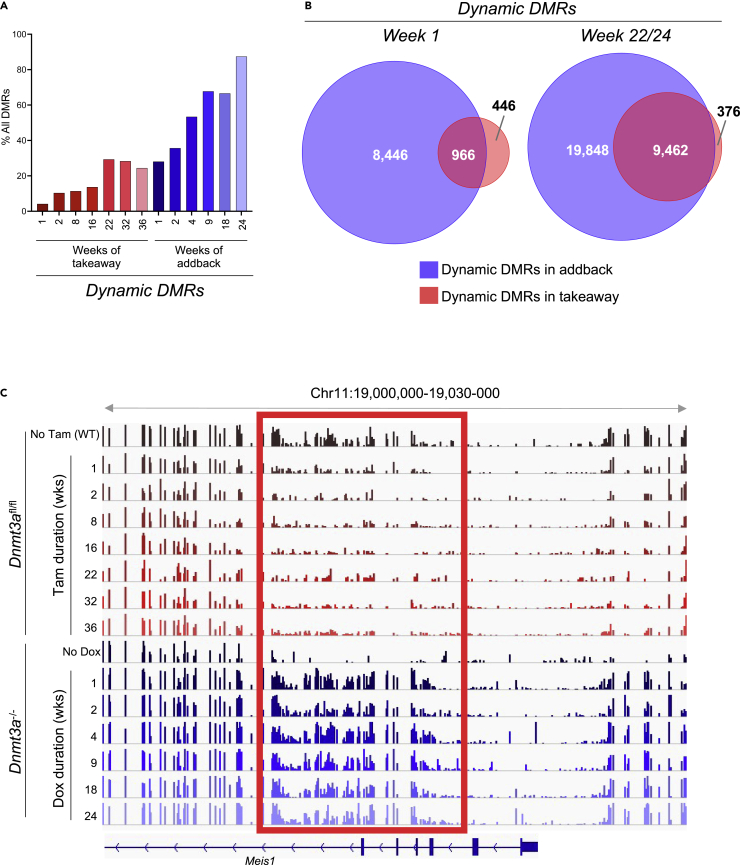
Mutations in the gene encoding DNA methyltransferase 3A () are the most common cause of clonal hematopoiesis and are among the most common initiating events of acute myeloid leukemia (AML). Studies in germline and somatic knockout mice have identified focal, canonical hypomethylation phenotypes in hematopoietic cells; however, the kinetics of methylation loss following acquired inactivation in hematopoietic cells is essentially unknown. Therefore, we evaluated a somatic, inducible model of hematopoietic loss, and show that inactivation of in murine hematopoietic cells results in a relatively slow loss of methylation at canonical sites throughout the genome; in contrast, remethylation of Dnmt3a deficient genomes in hematopoietic cells occurs much more quickly. This data suggests that slow methylation loss may contribute, at least in part, to the long latent period that characterizes clonal expansion and leukemia development in individuals with acquired mutations in hematopoietic stem cells.
编码DNA甲基转移酶3A(Dnmt3a)的基因突变是克隆性造血最常见的原因,也是急性髓系白血病(AML)最常见的起始事件之一。对种系和体细胞Dnmt3a基因敲除小鼠的研究已经在造血细胞中确定了局灶性、典型的低甲基化表型;然而,造血细胞中获得性Dnmt3a失活后甲基化丧失的动力学基本上是未知的。因此,我们评估了一种造血细胞中Dnmt3a缺失的体细胞诱导模型,并表明小鼠造血细胞中Dnmt3a的失活导致全基因组典型位点甲基化的相对缓慢丧失;相比之下,造血细胞中Dnmt3a缺陷基因组的重新甲基化发生得更快。这些数据表明,甲基化缓慢丧失可能至少部分地导致了造血干细胞获得性Dnmt3a突变个体中克隆性扩增和白血病发展所特有的长潜伏期。