Medical Department I, University Hospital Marien Hospital Herne, Ruhr-University Bochum, Hölkeskampring 40, 44625, Herne, Germany.
Department of Nephrology, Heidelberg University Hospital, Heidelberg, Germany.
Sci Rep. 2022 Mar 21;12(1):4801. doi: 10.1038/s41598-022-08853-2.
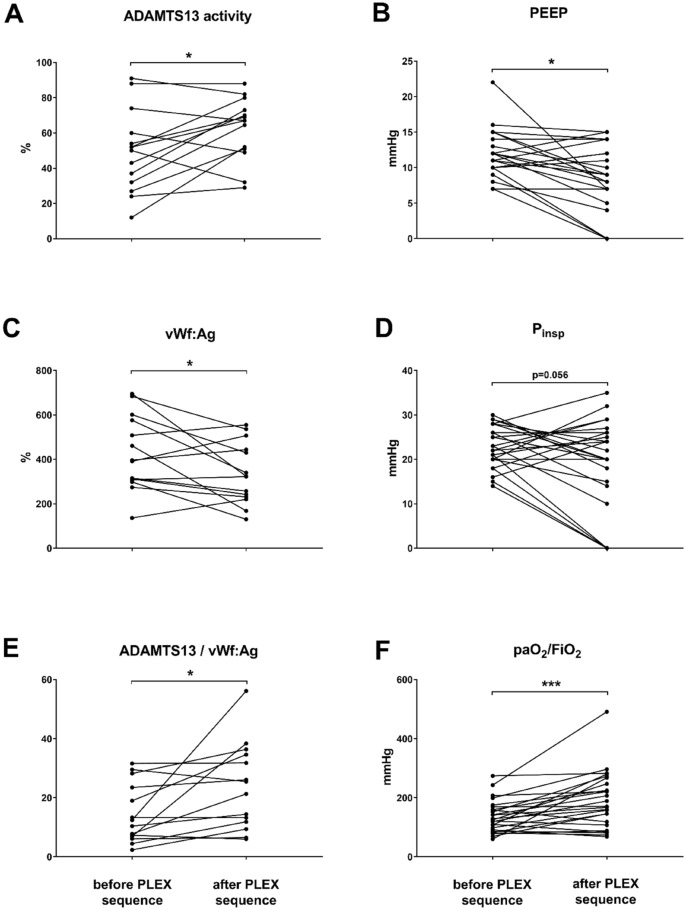
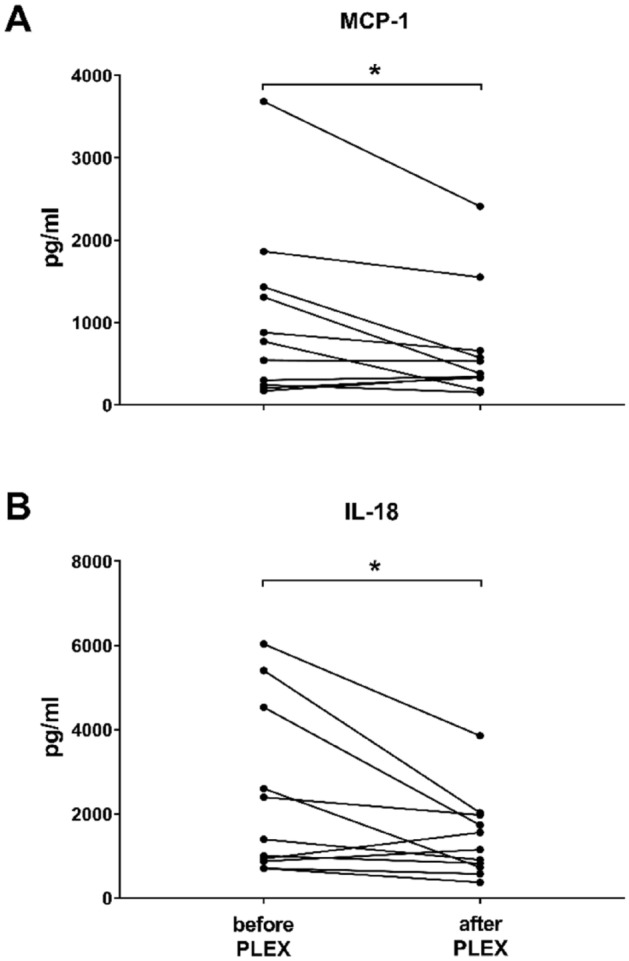
Ubiquitous microthromboses in the pulmonary vasculature play a crucial role in the pathogenesis of COVID-19 associated acute respiratory distress syndrome (ARDS). Excess of Willebrand factor (vWf) with intravascular multimer formation was identified as a key driver of this finding. Plasma exchange (PLEX) might be a therapeutic option to restore the disbalance between vWf and ADAMTS13. We report the effects of PLEX on vWf, ADAMTS13, inflammatory cytokines and parameters of ventilation. We investigated 25 patients, who were on mechanical ventilation for COVID-19 pneumonia with ARDS at two German university hospitals. All patients received PLEX as an ultima ratio measure for refractory ARDS. VWf antigen (vWf:Ag), ADAMTS13 activity, a cytokine panel mirroring the inflammatory situation and clinical parameters were assessed before and after three to six PLEX therapies with fresh frozen plasma. Before the PLEX sequence there was an excessive release of vWf:Ag (425.4 ± 167.5%) and mildly reduced ADAMTS13 activity (49.7 ± 23.3%). After the PLEX series, there was a significant increase of ADAMTS13 activity to 62.4 ± 17.7% (p = 0.029) and a significant decrease of vWf:Ag to 336.1 ± 138.2% (p = 0.041) resulting in a 63% improvement of the ADAMT13/vWf:Ag ratio from 14.5 ± 10.0 to 23.7 ± 14.6, p = 0.024. Comparison of parameters before and after individual PLEX sessions (n = 35) revealed a mean reduction of vWf from 387.8 ± 165.1 to 213.2 ± 62.3% (p = 0.001) and an increase of ADAMTS13 activity from 60.4 ± 20.1 to 70.5 ± 14.0% (p = 0.001). Parallelly, monocyte chemotactic protein-1 and interleukin-18 decreased significantly (p = 0.034 each). Along the PLEX sequence lactate dehydrogenase (p = 0.001), C-reactive protein (p = 0.001), and positive end expiratory pressure (p = 0.01) significantly decreased accompanied by an improvement of Horovitz index (p = 0.001). PLEX restores the disbalance between ADAMTS13 and vWf:Ag, a driver of immunothrombosis. Moreover, it reduces the inflammatory state and is associated with a benefit of ventilation parameters. These findings render a further rationale to regard PLEX as a therapeutic option in severe COVID-19.
在 COVID-19 相关的急性呼吸窘迫综合征(ARDS)的发病机制中,肺部血管中普遍存在的微血栓起着关键作用。血管性血友病因子(vWf)的过剩,伴有血管内多聚体的形成,被认为是这一发现的关键驱动因素。血浆置换(PLEX)可能是恢复 vWf 与 ADAMTS13 之间失衡的一种治疗选择。我们报告了 PLEX 对 vWf、ADAMTS13、炎症细胞因子和通气参数的影响。我们研究了 25 名在德国两所大学医院因 COVID-19 肺炎并发 ARDS 而接受机械通气的患者。所有患者均接受 PLEX 作为难治性 ARDS 的最后手段。在接受新鲜冰冻血浆的三到六次 PLEX 治疗前后,评估 vWf 抗原(vWf:Ag)、ADAMTS13 活性、反映炎症情况的细胞因子谱和临床参数。在 PLEX 序列之前,vWf:Ag 过度释放(425.4 ± 167.5%),ADAMTS13 活性轻度降低(49.7 ± 23.3%)。在 PLEX 系列之后,ADAMTS13 活性显著增加至 62.4 ± 17.7%(p=0.029),vWf:Ag 显著降低至 336.1 ± 138.2%(p=0.041),导致 ADAMT13/vWf:Ag 比值从 14.5 ± 10.0 提高到 23.7 ± 14.6,p=0.024。对 35 次单独 PLEX 治疗前后的参数进行比较(n=35),发现 vWf 平均从 387.8 ± 165.1%降至 213.2 ± 62.3%(p=0.001),ADAMTS13 活性从 60.4 ± 20.1%增加至 70.5 ± 14.0%(p=0.001)。同时,单核细胞趋化蛋白-1 和白细胞介素-18 显著降低(p=0.034)。随着 PLEX 序列的进行,乳酸脱氢酶(p=0.001)、C 反应蛋白(p=0.001)和呼气末正压(p=0.01)显著降低,同时 Horovitz 指数得到改善(p=0.001)。PLEX 恢复了 ADAMTS13 和 vWf:Ag 之间的失衡,这是免疫血栓形成的一个驱动因素。此外,它还降低了炎症状态,并与通气参数的改善相关。这些发现为将 PLEX 视为严重 COVID-19 的一种治疗选择提供了更多的依据。