Department of Orthopedics, Balgrist University Hospital, University of Zurich, Zurich, Switzerland.
Department of Orthopaedic Surgery, Royal Melbourne Hospital, Parkville, Australia.
Am J Sports Med. 2022 May;50(6):1495-1502. doi: 10.1177/03635465221079858. Epub 2022 Mar 22.
There are concerns that the Latarjet procedure results in loss of glenohumeral rotation and strength and in subscapularis dysfunction. The long-term effects of this procedure on subscapularis quality, glenohumeral rotation, and strength are unknown.
PURPOSE/HYPOTHESIS: To analyze the long-term effect of the primary open Latarjet procedure using a muscle-splitting approach on internal and external rotation and strength, as well as subscapularis muscle quality as compared with the healthy contralateral side. We hypothesized that the primary open Latarjet procedure is associated with a reduction of long-term shoulder strength and function and decreased subscapularis quality.
Case series; Level of evidence, 4.
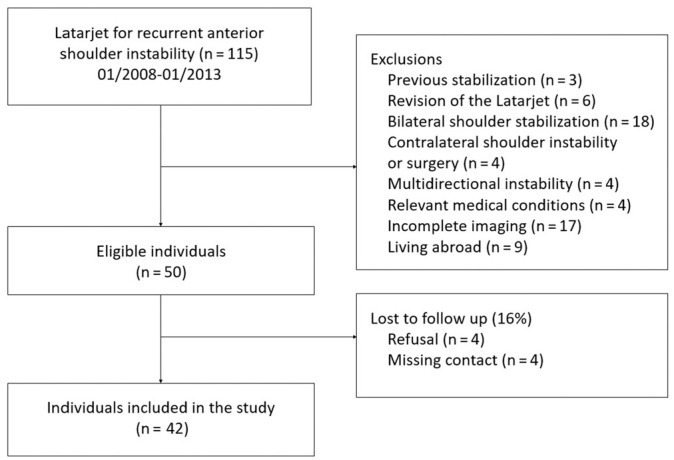
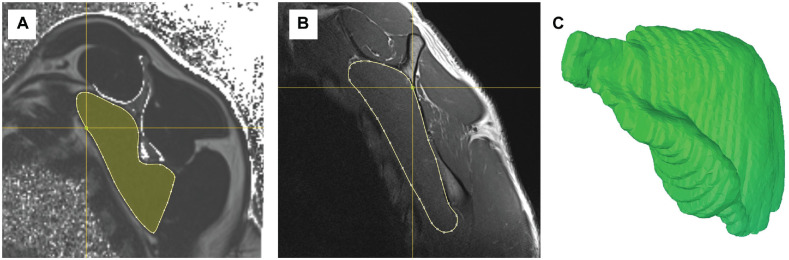
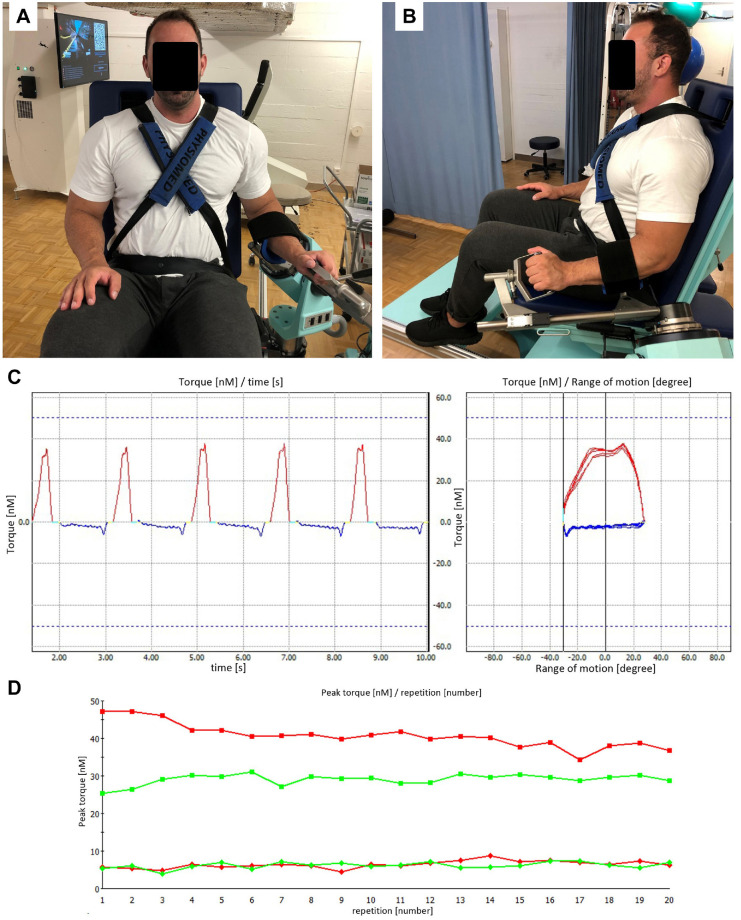
A total of 42 patients who underwent a primary open Latarjet procedure for recurrent anterior shoulder instability at a mean age of 26 years (range, 18-36) were reviewed after a mean follow-up of 8.4 years (range, 5-12). The subscapularis muscle volume and fat fraction of both shoulders were assessed. Bilateral active internal rotation (IR) and external rotation (ER), as well as IR and ER strength, were assessed by isokinetic testing (concentric, eccentric, and fatigability).
Active IR (0.6-point difference, < .001) and ER (4° difference, = .010) were significantly greater in healthy contralateral shoulders. The IR strength of the operated shoulder was significantly less than that of the healthy shoulder in concentric and eccentric testing (range of deficit, 4%-6%; < .05). Also, the ER strength of the operated shoulder was significantly less than that of the healthy shoulder in concentric testing (11% deficit, < .05). Subscapularis muscle volume was significantly greater in the operated shoulder (4% difference, = .022), and there was no significant difference in fat fraction ( = .114).
The primary open Latarjet procedure was associated with significantly decreased active IR and ER and strength when compared with the healthy contralateral shoulder. The clinical influence of these findings is yet to be defined. There was no increased subscapularis muscle fatty degeneration but a minimal hypertrophy on the operated side at long-term follow-up.
有观点认为 Latarjet 手术会导致肩盂肱旋转和力量丧失,以及肩胛下肌功能障碍。该手术对肩胛下肌质量、肩盂肱旋转和力量的长期影响尚不清楚。
目的/假设:分析经三角肌劈开入路初次开放式 Latarjet 手术对内部和外部旋转以及力量的长期影响,以及与健侧相比肩胛下肌质量的变化。我们假设初次开放式 Latarjet 手术与长期肩力和功能下降以及肩胛下肌质量下降有关。
病例系列;证据等级,4 级。
回顾性分析 42 例因复发性肩关节前向不稳定而接受初次开放式 Latarjet 手术的患者,平均年龄 26 岁(18-36 岁),平均随访 8.4 年(5-12 年)。评估了双侧肩的肩胛下肌体积和脂肪分数。通过等速测试(向心、离心和疲劳)评估双侧主动内旋(IR)和外旋(ER)以及 IR 和 ER 力量。
健侧肩的主动 IR(相差 0.6 点, <.001)和 ER(相差 4°, =.010)显著更大。在向心和离心测试中,手术肩的 IR 力量明显小于健侧肩(缺损范围为 4%-6%; <.05)。此外,在向心测试中,手术肩的 ER 力量明显小于健侧肩(缺损 11%, <.05)。手术肩的肩胛下肌体积明显大于健侧肩(相差 4%, =.022),脂肪分数无显著差异( =.114)。
与健侧相比,初次开放式 Latarjet 手术明显降低了主动 IR 和 ER 以及力量。这些发现的临床影响尚待确定。在长期随访中,手术侧没有增加肩胛下肌肌肉脂肪变性,但有轻微的肥大。