Department of Earth & Planetary Sciences, Yale University, New Haven, United States.
Scripps Institution of Oceanography, University of California San Diego, La Jolla, United States.
Elife. 2022 Mar 22;11:e72460. doi: 10.7554/eLife.72460.
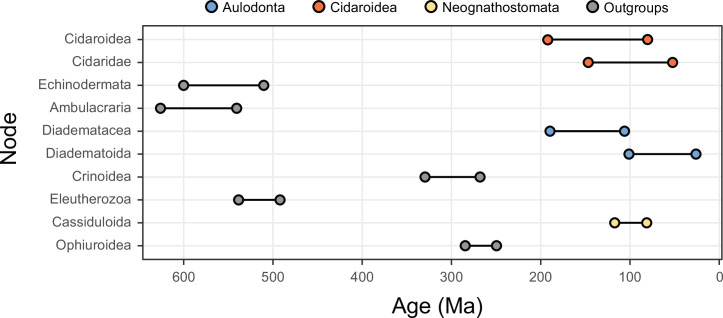
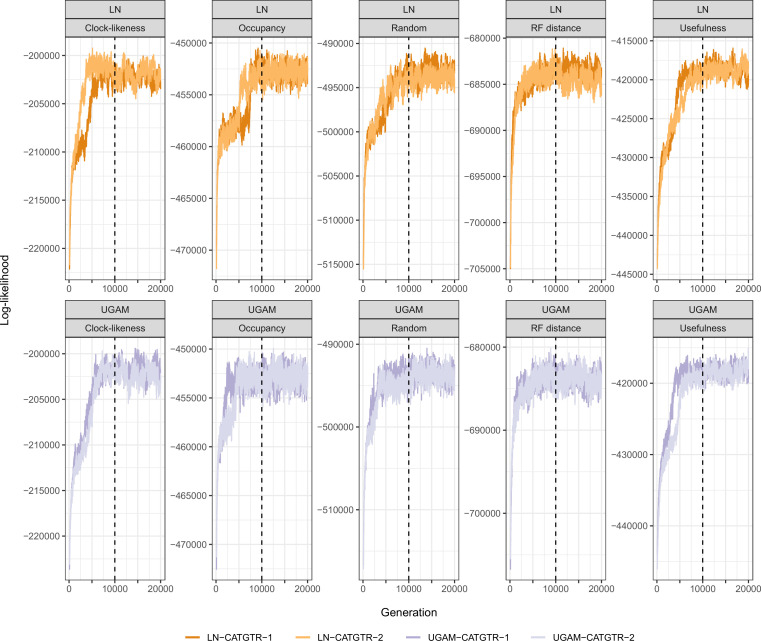
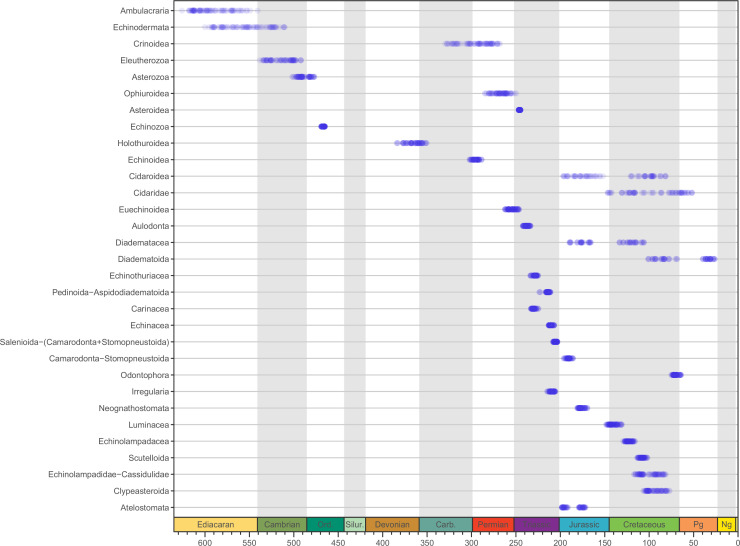
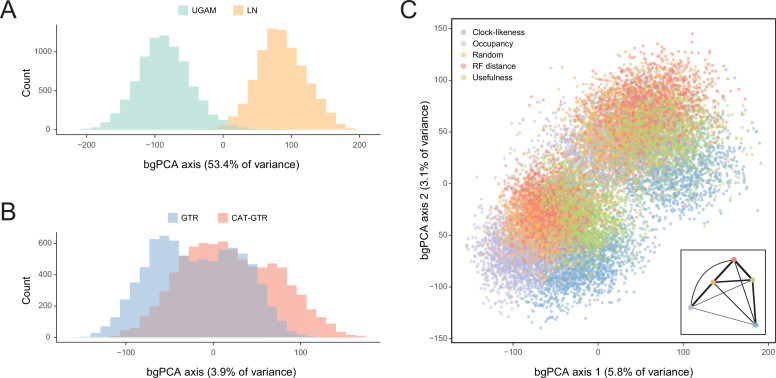
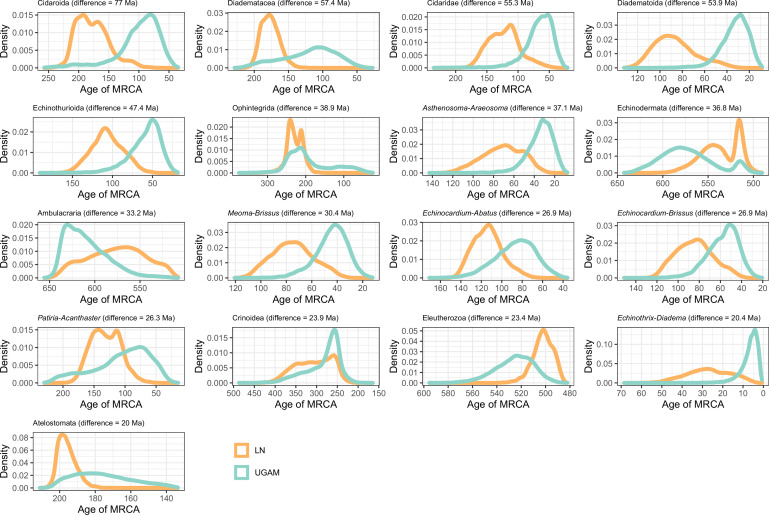
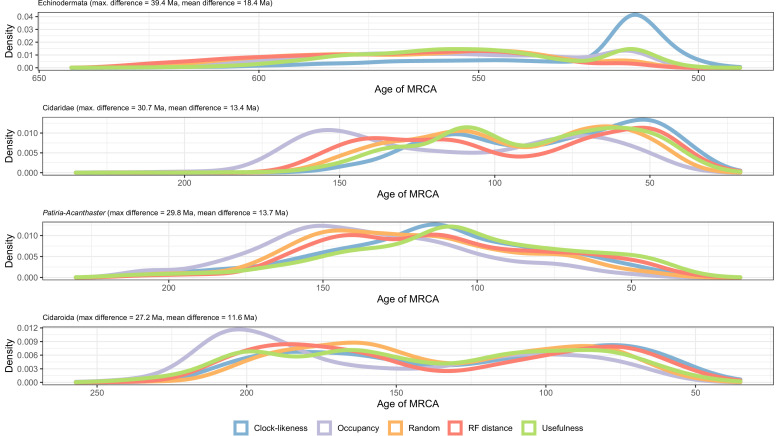
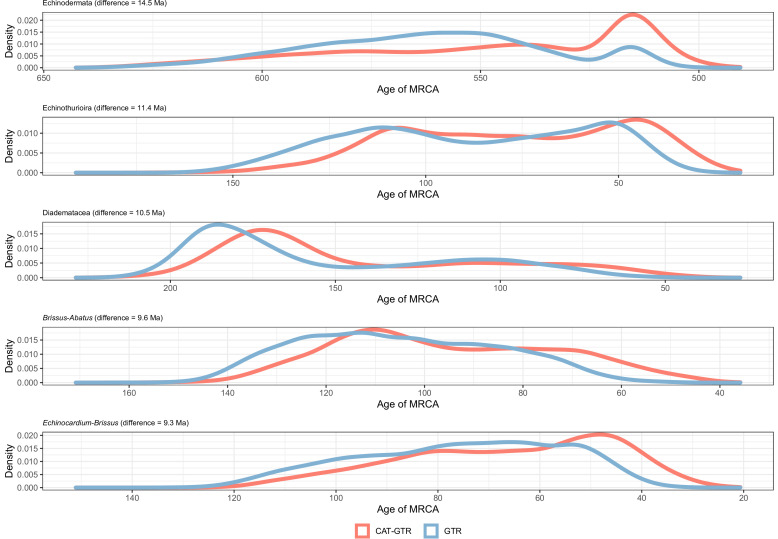
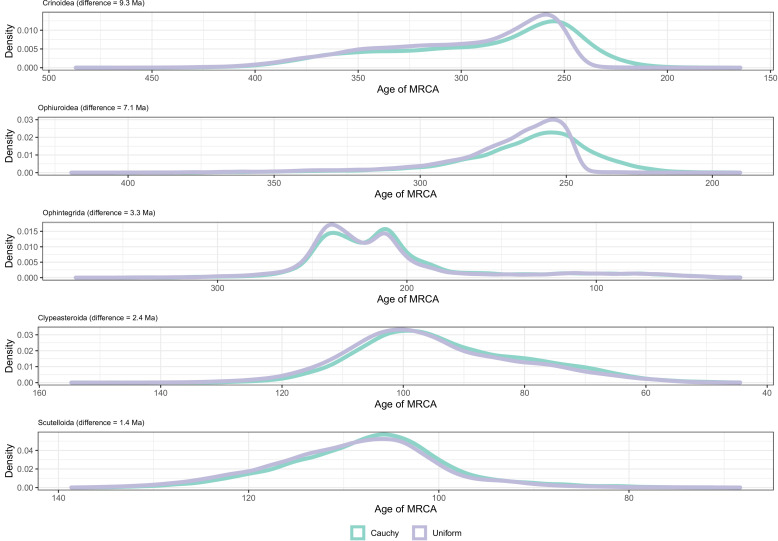
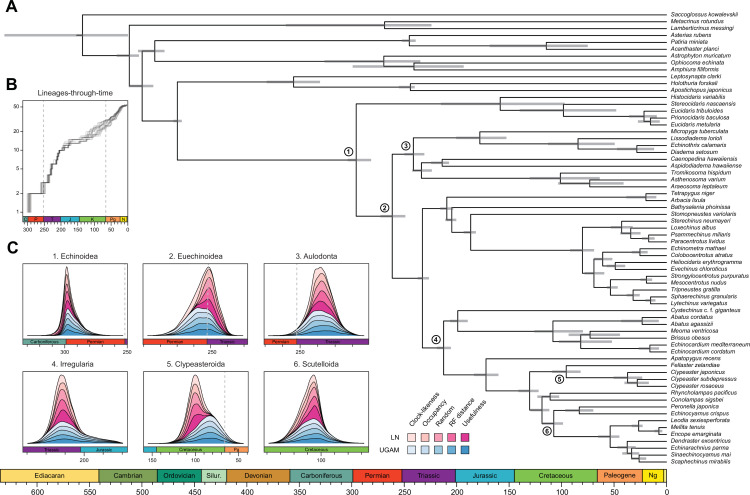
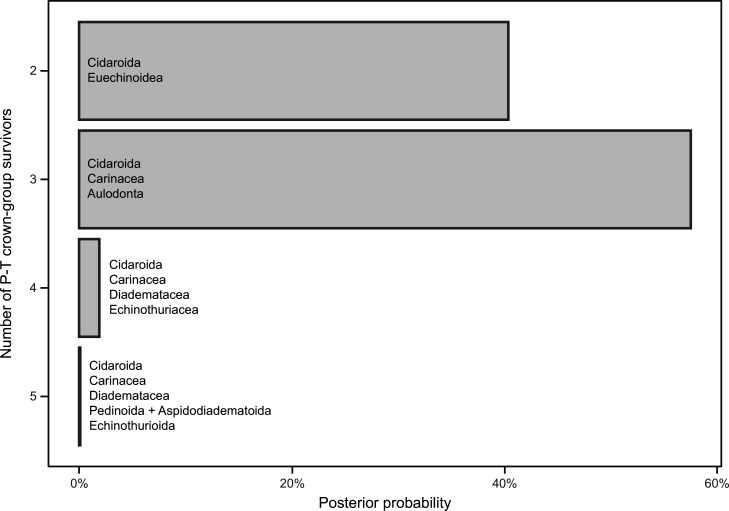
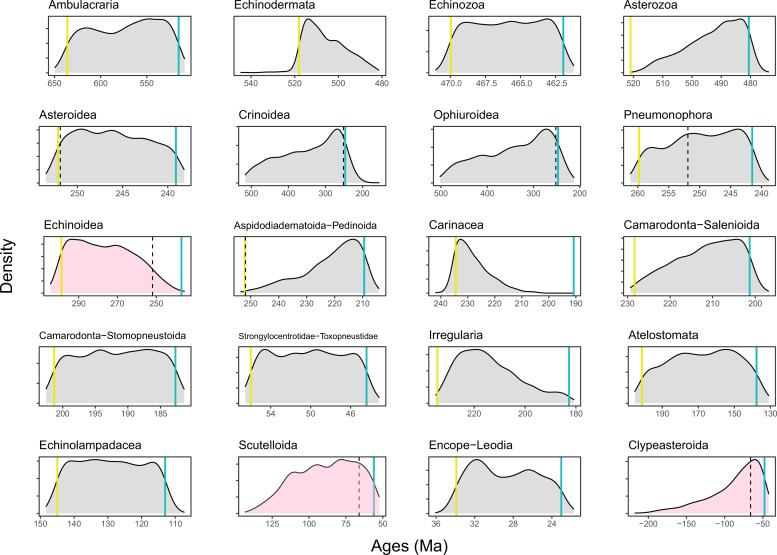
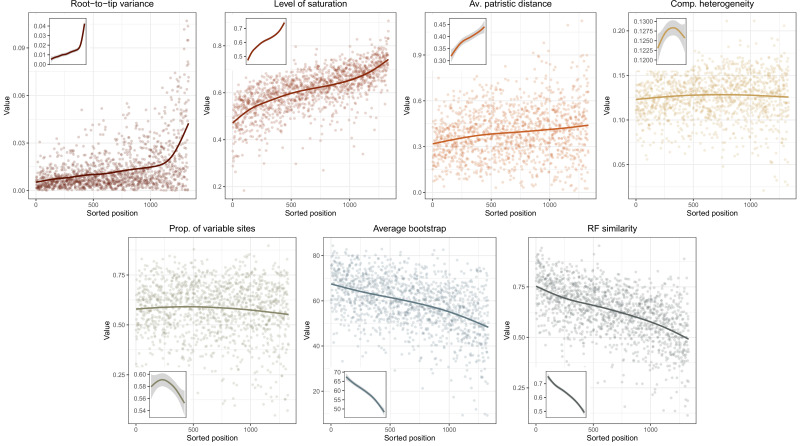
Echinoids are key components of modern marine ecosystems. Despite a remarkable fossil record, the emergence of their crown group is documented by few specimens of unclear affinities, rendering their early history uncertain. The origin of sand dollars, one of its most distinctive clades, is also unclear due to an unstable phylogenetic context. We employ 18 novel genomes and transcriptomes to build a phylogenomic dataset with a near-complete sampling of major lineages. With it, we revise the phylogeny and divergence times of echinoids, and place their history within the broader context of echinoderm evolution. We also introduce the concept of a chronospace - a multidimensional representation of node ages - and use it to explore methodological decisions involved in time calibrating phylogenies. We find the choice of clock model to have the strongest impact on divergence times, while the use of site-heterogeneous models and alternative node prior distributions show minimal effects. The choice of loci has an intermediate impact, affecting mostly deep Paleozoic nodes, for which clock-like genes recover dates more congruent with fossil evidence. Our results reveal that crown group echinoids originated in the Permian and diversified rapidly in the Triassic, despite the relative lack of fossil evidence for this early diversification. We also clarify the relationships between sand dollars and their close relatives and confidently date their origins to the Cretaceous, implying ghost ranges spanning approximately 50 million years, a remarkable discrepancy with their rich fossil record.
海胆是现代海洋生态系统的重要组成部分。尽管化石记录丰富,但它们的冠群的出现只有少数亲缘关系不明的标本记录,因此其早期历史仍不确定。由于系统发育背景不稳定,其最具特色的分支之一——砂钱的起源也不清楚。我们利用 18 个新的基因组和转录组构建了一个近完整采样的主要谱系的基因组数据集。利用该数据集,我们修正了海胆的系统发育和分化时间,并将其历史置于棘皮动物进化的更广泛背景下。我们还引入了时间空间的概念——节点年龄的多维表示——并利用它来探索在系统发育时间校准中涉及的方法决策。我们发现,钟模型的选择对分化时间的影响最大,而使用位点异质模型和替代节点先验分布的影响最小。基因座的选择具有中等影响,主要影响古生代的深层节点,对于这些节点,类钟基因恢复的日期与化石证据更一致。我们的研究结果表明,冠群海胆起源于二叠纪,并在三叠纪迅速多样化,尽管这一早期多样化的化石证据相对较少。我们还澄清了砂钱与其近亲之间的关系,并自信地将其起源日期确定为白垩纪,这意味着它们的幽灵范围跨越了大约 5000 万年,与它们丰富的化石记录存在显著差异。