Departments of Rehabilitation Sciences and Health Science and Research, Medical University of South Carolina, Charleston, and Ralph H. Johnson VA Medical Center, Charleston, South Carolina (N.J.S.); Shirley Ryan AbilityLab, Chicago, Illinois (A.B., K.M.T., M.E.S., L.V. E.R.); Joint Department of Biomedical Engineering, North Carolina State University/University of North Carolina at Chapel Hill, Raleigh, Chapel Hill (M.G., D.G.K); and Department of Physical Medicine and Rehabilitation, Northwestern University Feinberg School of Medicine, Chicago, Illinois (M.E.S., L.V., E.R.).
J Neurol Phys Ther. 2022 Jul 1;46(3):198-205. doi: 10.1097/NPT.0000000000000398. Epub 2022 Mar 22.
BACKGROUND/PURPOSE: To determine the feasibility of training with electromyographically (EMG) controlled games to improve control of muscle activation patterns in stroke survivors.
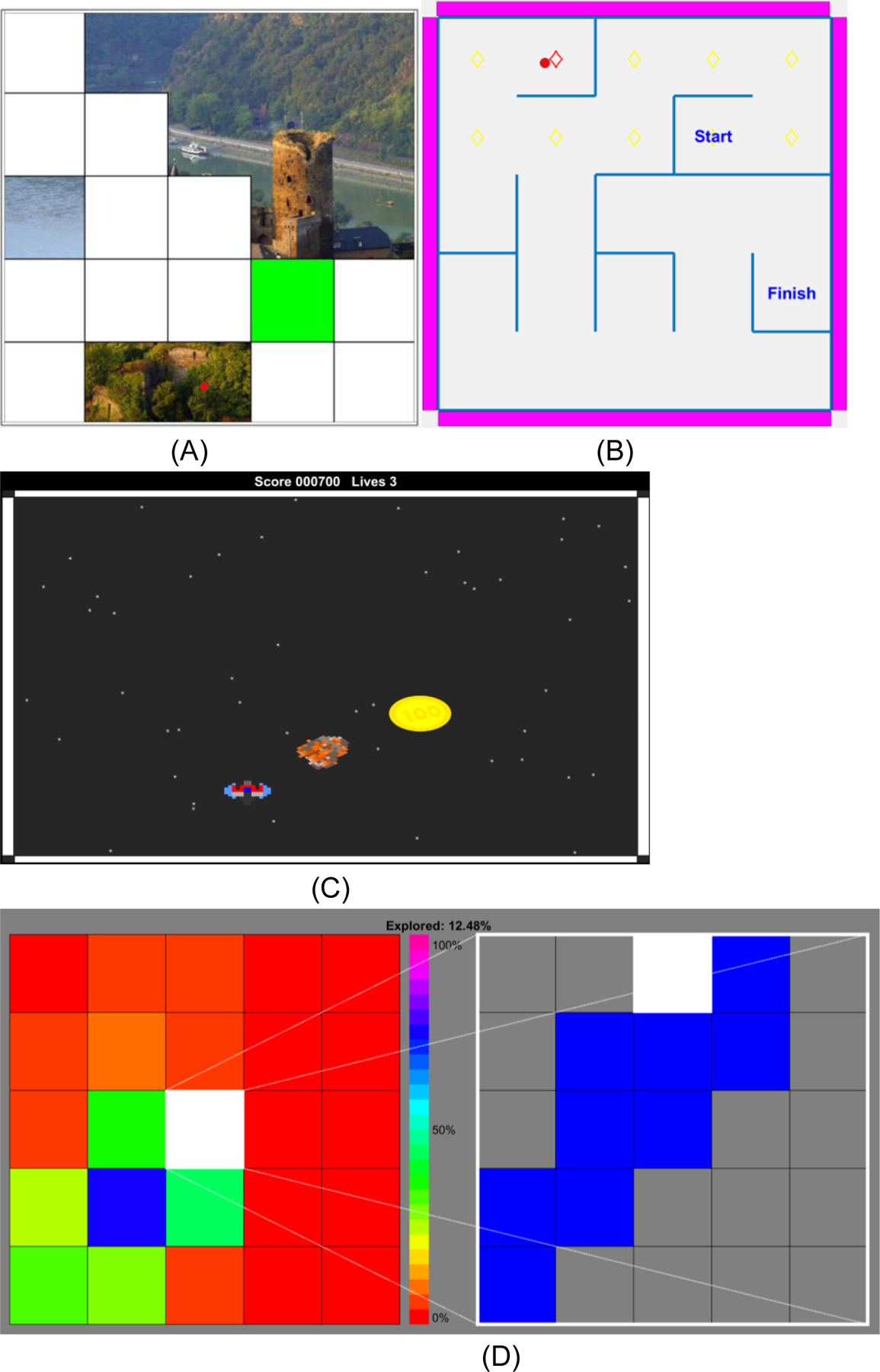
Twenty chronic stroke survivors (>6 months) with moderate hand impairment were randomized to train either unilaterally (paretic only) or bilaterally over 9 one-hour training sessions. EMG signals from the unilateral or bilateral limbs controlled a cursor location on a computer screen for gameplay. The EMG muscle activation vector was projected onto the plane defined by the first 2 principal components of the activation workspace for the nonparetic hand. These principal components formed the x- and y-axes of the computer screen.
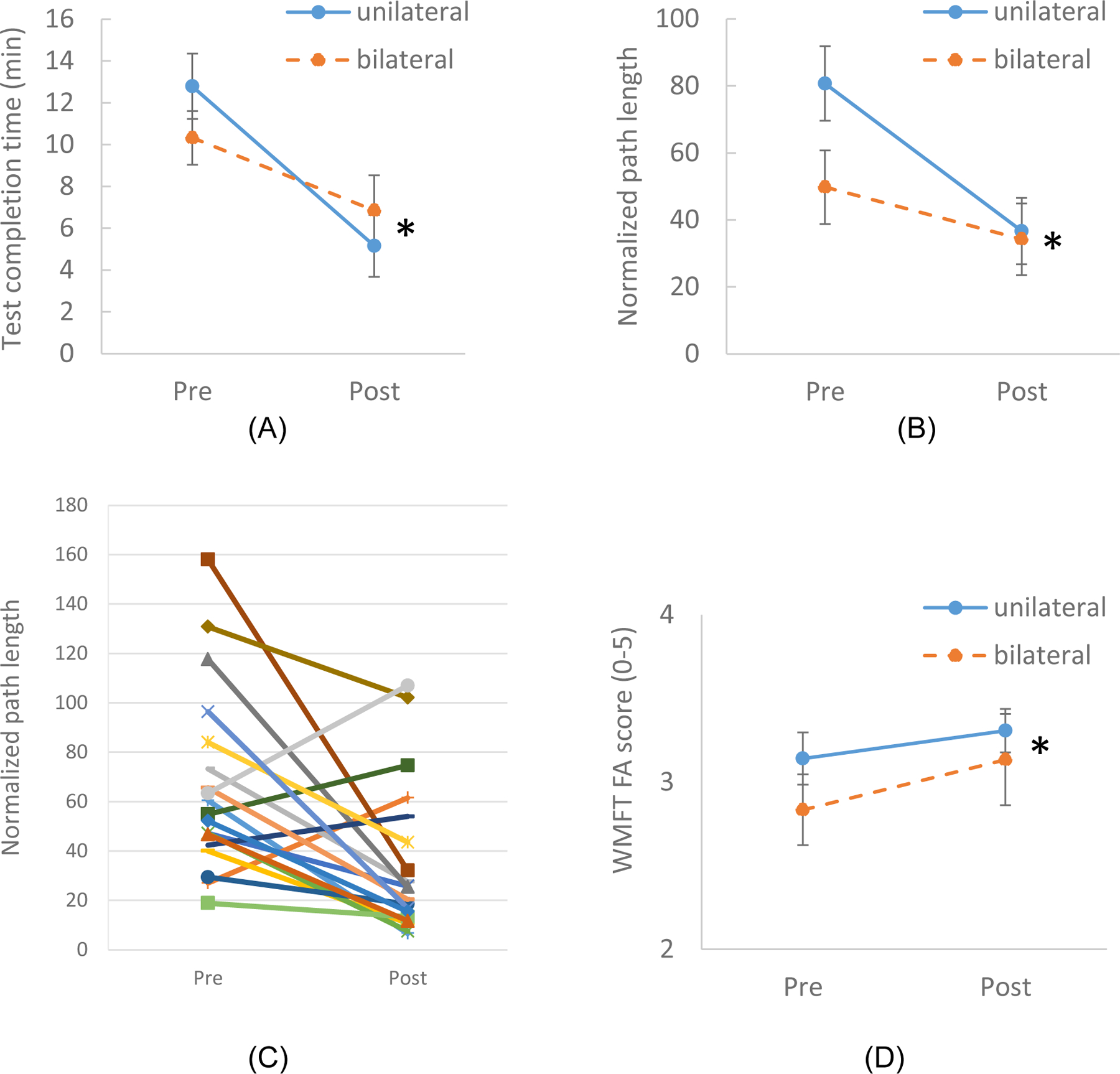
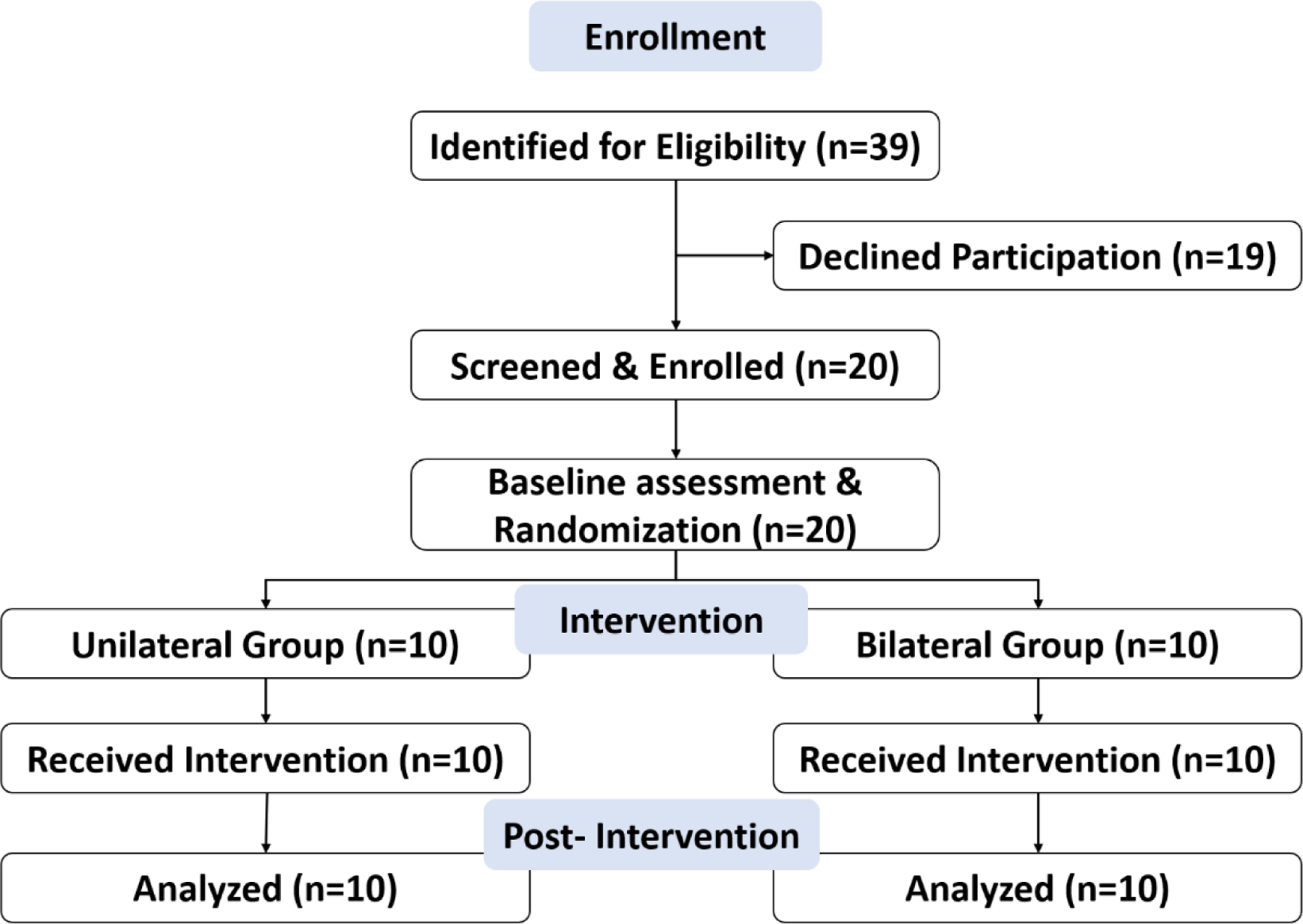
The recruitment goal (n = 20) was met over 9 months, with no screen failure, no attrition, and 97.8% adherence rate. After training, both groups significantly decreased the time to move the cursor to a novel sequence of targets (P = 0.006) by reducing normalized path length of the cursor movement (P = 0.005), and improved the Wolf Motor Function Test (WMFT) quality score (P = 0.01). No significant group difference was observed. No significant change was seen in the WMFT time or Box and Block Test.
DISCUSSION/CONCLUSIONS: Stroke survivors could successfully use the EMG-controlled games to train control of muscle activation patterns. While the nonparetic limb EMG was used in this study to create target EMG patterns, the system supports various means for creating target patterns per user desires. Future studies will employ training with the EMG-controlled games in conjunction with functional task practice for a longer intervention duration to improve overall hand function.Video Abstract available for more insights from the authors (see the Video, Supplemental Digital Content 1, available at: http://links.lww.com/JNPT/A379).
背景/目的:确定使用肌电图(EMG)控制游戏进行训练以改善脑卒中幸存者肌肉激活模式控制的可行性。
20 名慢性脑卒中幸存者(>6 个月)手功能中度受损,随机分为单侧(仅患侧)或双侧训练组,每组 9 个 1 小时的训练课程。EMG 信号来自单侧或双侧肢体,用于控制计算机屏幕上光标位置的游戏。EMG 肌肉激活矢量投影到非患侧手激活工作空间的前两个主成分定义的平面上。这些主成分构成了计算机屏幕的 x 轴和 y 轴。
经过 9 个月的训练,招募目标(n=20)完成,没有屏幕故障、没有人员流失,并且依从率为 97.8%。训练后,两组均显著缩短了将光标移动到新目标序列的时间(P=0.006),减少了光标运动的归一化路径长度(P=0.005),并提高了 Wolf 运动功能测试(WMFT)质量评分(P=0.01)。两组间无显著差异。WMFT 时间或箱式和木块测试无明显变化。
讨论/结论:脑卒中幸存者可以成功地使用 EMG 控制游戏来训练肌肉激活模式的控制。虽然在这项研究中使用了非患侧肢体的 EMG 来创建目标 EMG 模式,但该系统支持根据用户需求创建目标模式的各种方法。未来的研究将采用 EMG 控制游戏训练与功能性任务练习相结合,进行更长时间的干预,以提高整体手部功能。视频摘要可供作者提供更多见解(请观看视频,补充数字内容 1,可在 http://links.lww.com/JNPT/A379 获得)。