Gad Mohammed M, Alshehri Saleh Z, Alhamid Shahad A, Albarrak Alanoud, Khan Soban Q, Alshahrani Faris A, Alqarawi Firas K
Department of Substitutive Dental Sciences, College of Dentistry, Imam Abdulrahman Bin Faisal University, P.O. Box 1982, Dammam 31441, Saudi Arabia.
College of Dentistry, Imam Abdulrahman Bin Faisal University, P.O. Box 1982, Dammam 31441, Saudi Arabia.
Dent J (Basel). 2022 Mar 9;10(3):42. doi: 10.3390/dj10030042.
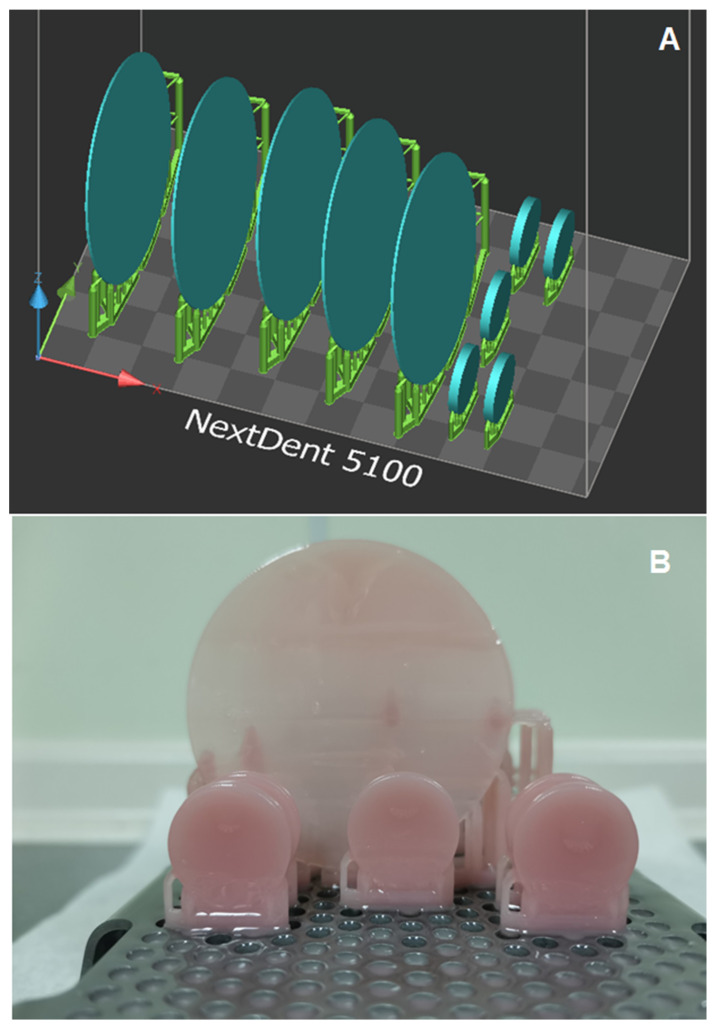
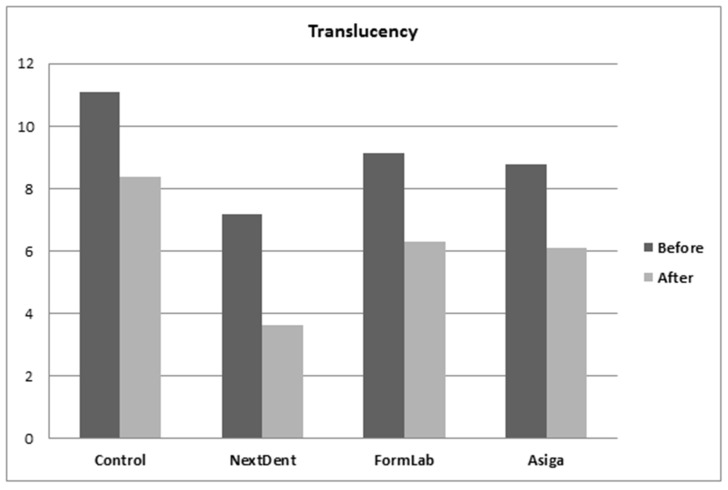
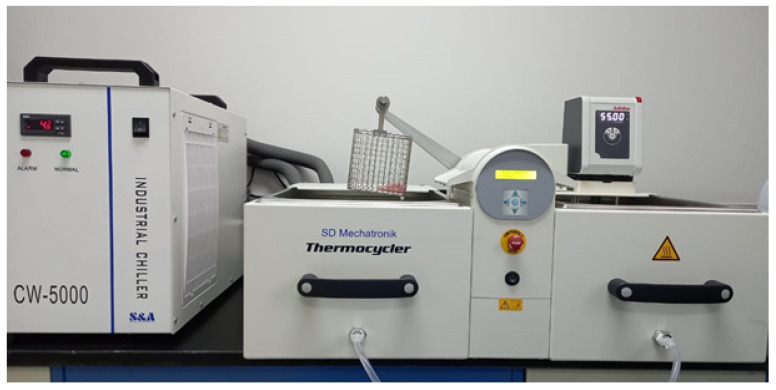
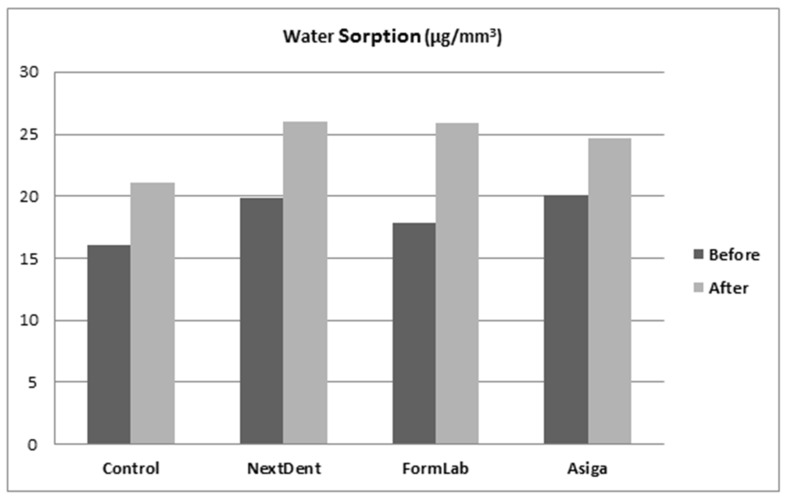
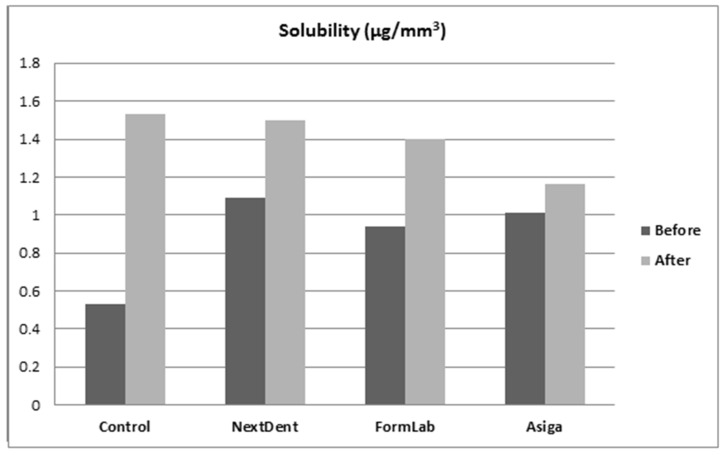
This study aimed to evaluate the water sorption, solubility, and translucency of 3D-printed denture base resins (NextDent, FormLabs, and Asiga), compare them to heat-polymerized acrylic denture base resins, and assess their performance under the effects of thermal cycling. A total of 80 acrylic disc specimens were used in the current study, categorized into four groups (n = 10); in one group, the samples were fabricated conventionally with a heat-polymerizing process (control), while the other three groups were fabricated digitally from different 3D-printed reins (NextDent, FormLabs, and Asiga). Specimens were fabricated according to the manufacturers’ recommendations and immersed in distilled water for 48 h at 37 °C. Data on water sorption, solubility, and translucency measurements (T1) were obtained. All the specimens were subjected to 5000 thermal cycles, and then the measures were repeated using the same method (T2). Data analysis was attained via ANOVA and the post hoc Tukey test (α = 0.05). The type of resin significantly affected the values of water sorption, solubility, and translucency (p < 0.001). The water sorption of 3D-printed resins was increased significantly in comparison to control with or without a thermal cycling effect. In terms of solubility, a significant increase in 3D-printed resins before thermocycling was observed; however, after thermocycling, Asiga had a significantly low value compared to the other groups (p < 0.001). Thermal cycling increased the water sorption and solubility of all tested materials. In comparison to control, the translucency of the 3D-printed resins was significantly decreased (p < 0.001). The translucency was significantly decreased per material in terms of the thermal cycling effect (before and after). NextDent showed significantly low translucency values (p < 0.001) compared to the other groups. All 3D-printed resin groups had higher water sorption and solubility and lower translucency values in comparison to the heat-polymerized resin group. Regardless of resin types, thermal cycling adversely affected all tested properties.
本研究旨在评估3D打印义齿基托树脂(NextDent、FormLabs和Asiga)的吸水性、溶解性和透明度,将它们与热聚合丙烯酸义齿基托树脂进行比较,并评估它们在热循环影响下的性能。本研究共使用了80个丙烯酸圆盘样本,分为四组(n = 10);其中一组样本采用传统热聚合工艺制作(对照组),而其他三组则由不同的3D打印树脂(NextDent、FormLabs和Asiga)数字化制作。样本按照制造商的建议制作,并在37℃下于蒸馏水中浸泡48小时。获取了关于吸水性、溶解性和透明度测量(T1)的数据。所有样本均经历5000次热循环,然后使用相同方法重复测量(T2)。数据分析通过方差分析和事后Tukey检验进行(α = 0.05)。树脂类型对吸水性、溶解性和透明度值有显著影响(p < 0.001)。与对照组相比,无论有无热循环影响,3D打印树脂的吸水性均显著增加。在溶解性方面,观察到热循环前3D打印树脂的溶解性显著增加;然而,热循环后,与其他组相比,Asiga的溶解性值显著较低(p < 0.001)。热循环增加了所有测试材料的吸水性和溶解性。与对照组相比,3D打印树脂的透明度显著降低(p < 0.001)。就热循环影响而言(热循环前后),每种材料的透明度均显著降低。与其他组相比,NextDent的透明度值显著较低(p < 0.001)。与热聚合树脂组相比,所有3D打印树脂组的吸水性和溶解性更高,透明度值更低。无论树脂类型如何,热循环均对所有测试性能产生不利影响。