Vertadier Nicolas, Trzepizur Wojciech, Faure Sébastien
Département Pharmacie, Faculté de Santé, University Angers, F-9000 Angers, France.
Mitovasc, University Angers, Inserm, CNRS, SFR ICAT, CHU Angers, F-49000 Angers, France.
Sports (Basel). 2022 Mar 2;10(3):36. doi: 10.3390/sports10030036.
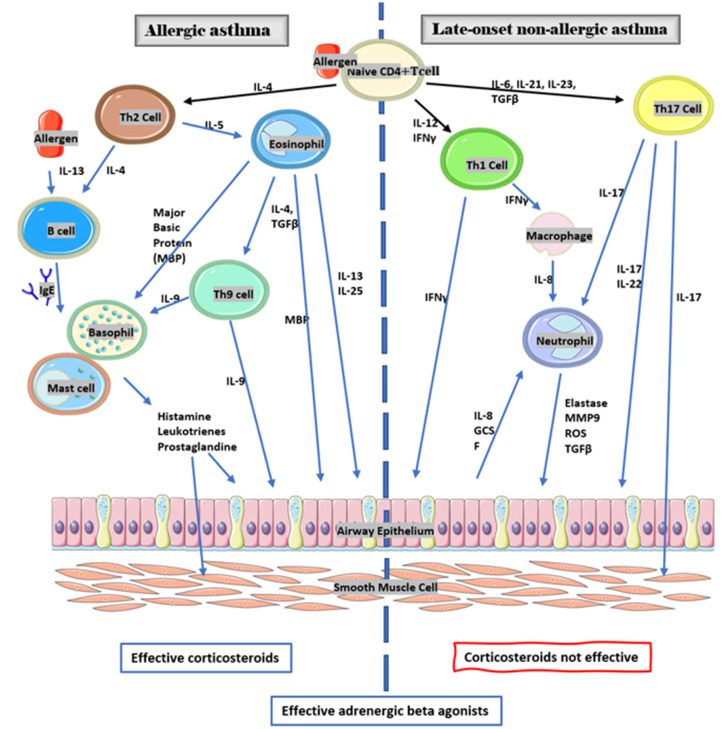
The use of short-acting beta-2 agonists (SABAs) is more common in elite athletes than in the general population, especially in endurance sports. The World Anti-Doping Code places some restrictions on prescribing inhaled β2-agonists. These drugs are used in respiratory diseases (such as asthma) that might reduce athletes' performances. Recently, studies based on the results of the Olympic Games revealed that athletes with confirmed asthma/airway hyperresponsiveness (AHR) or exercise-induced bronchoconstriction (EIB) outperformed their non-asthmatic rivals. This overuse of SABA by high-level athletes, therefore, raises some questions, and many explanatory hypotheses are proposed. Asthma and EIB have a high prevalence in elite athletes, especially within endurance sports. It appears that many years of intensive endurance training can provoke airway injury, EIB, and asthma in athletes without any past history of respiratory diseases. Some sports lead to a higher risk of asthma than others due to the hyperventilation required over long periods of time and/or the high environmental exposure while performing the sport (for example swimming and the associated chlorine exposure). Inhaled corticosteroids (ICS) have a low efficacy in the treatment of asthma and EIB in elite athletes, leading to a much greater use of SABAs. A significant proportion of these high-level athletes suffer from non-allergic asthma, involving the th1-th17 pathway.
短效β2激动剂(SABAs)在精英运动员中的使用比在普通人群中更为普遍,尤其是在耐力运动项目中。《世界反兴奋剂条例》对吸入性β2激动剂的处方有一些限制。这些药物用于可能会降低运动员成绩的呼吸系统疾病(如哮喘)。最近,基于奥运会结果的研究表明,确诊患有哮喘/气道高反应性(AHR)或运动诱发支气管收缩(EIB)的运动员表现优于非哮喘对手。因此,高水平运动员对SABA的这种过度使用引发了一些问题,并提出了许多解释性假设。哮喘和EIB在精英运动员中,尤其是在耐力运动项目中,发病率很高。似乎多年的高强度耐力训练会在没有任何既往呼吸系统疾病史的运动员中引发气道损伤、EIB和哮喘。由于长时间需要过度换气和/或在进行运动时(例如游泳及相关的氯暴露)环境暴露程度高,一些运动导致哮喘的风险比其他运动更高。吸入性糖皮质激素(ICS)在精英运动员哮喘和EIB的治疗中疗效较低,导致SABAs的使用量要大得多。这些高水平运动员中有很大一部分患有非过敏性哮喘,涉及Th1-Th17途径。