Department of Drug Assessment and Pharmacovigilance, Federico Gómez Children's Hospital of Mexico, Mexico City, Mexico.
Department of Hemato-oncology, Federico Gómez Children's Hospital of Mexico, Mexico City, Mexico.
PLoS One. 2022 Mar 24;17(3):e0265450. doi: 10.1371/journal.pone.0265450. eCollection 2022.
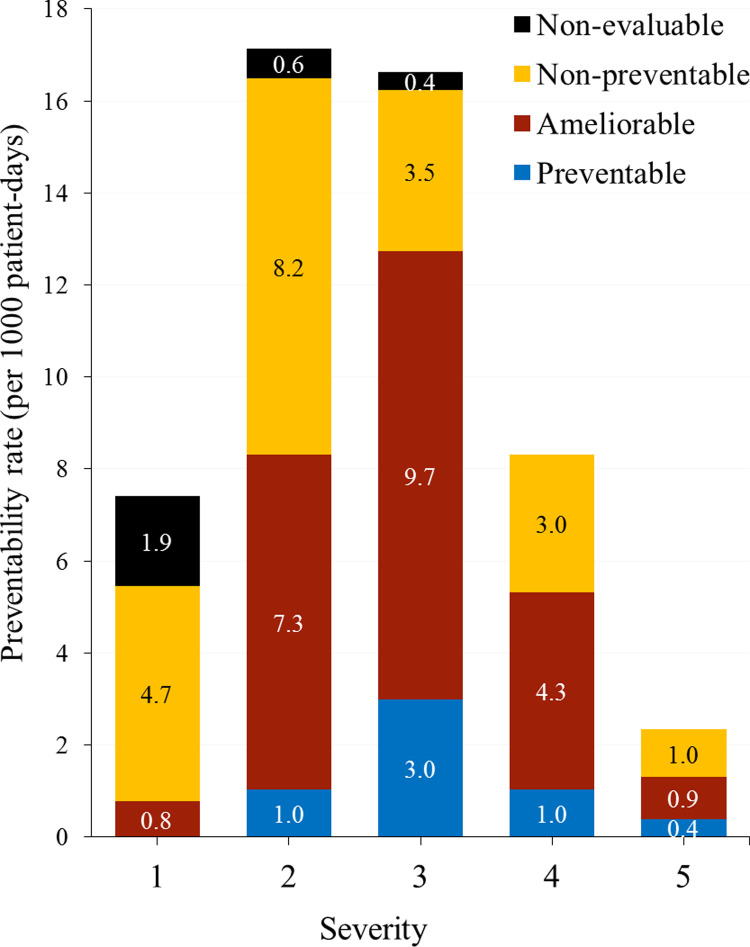
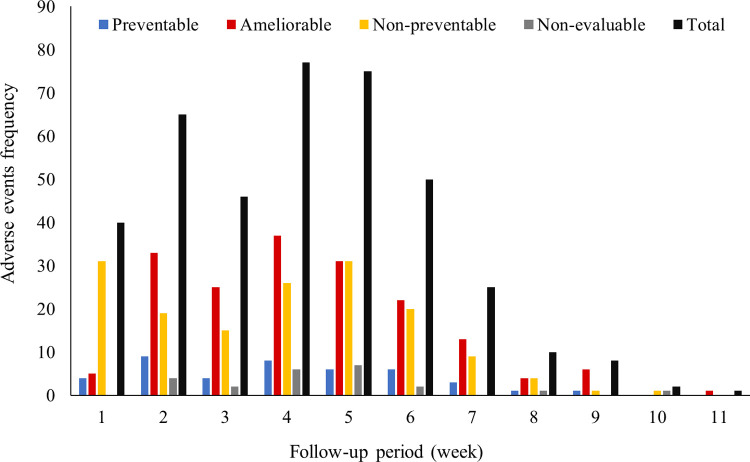
Healthcare-associated adverse events represent a heavy burden of symptoms for pediatric oncology patients. Their description allows knowing the safety and quality of the care processes in countries with limited resources. This study aimed to describe the incidence, types, severity, and preventability of adverse events occurring in pediatric patients with acute lymphoblastic leukemia during the induction phase in a tertiary care pediatric hospital in Mexico. This study analyzed a cohort based on medical records of between 2015 and 2017. Initially, information on patients and adverse events was collected; subsequently, two pediatric oncologist reviewers independently classified adverse events, severity and preventability. Agreement between reviewers was evaluated. Adverse events incidence rates were estimated by type, severity, and preventability. One-hundred and eighty-one pediatric patients pediatric patients with acute lymphoblastic leukemia were studied. An overall adverse events rate of 51.8 per 1000 patient-days was estimated, involving 81.2% of patients during induction. Most adverse events were severe or higher (52.6%). Infectious processes were the most common severe or higher adverse event (30.5%). The presence of adverse events caused 80.2% of hospital readmissions. Of the adverse events, 10.5% were considered preventable and 53.6% could be ameliorable in severity. Improving the safety and quality of the care processes of children with acute lymphoblastic leukemia is possible, and this should contribute to the mitigation and prevention of adverse events associated morbidity and mortality during the remission induction phase.
医疗保健相关不良事件是儿科肿瘤患者的沉重负担。对其进行描述可以了解资源有限的国家的护理过程的安全性和质量。本研究旨在描述墨西哥一家三级儿科医院儿科急性淋巴细胞白血病患者诱导期发生的不良事件的发生率、类型、严重程度和可预防程度。本研究基于 2015 年至 2017 年的病历进行了队列分析。首先收集了患者和不良事件的信息;随后,两名儿科肿瘤医生独立对不良事件、严重程度和可预防程度进行分类。评估了审稿人之间的一致性。通过类型、严重程度和可预防程度估计不良事件的发生率。共研究了 181 名儿科患者。估计每 1000 个患者日的不良事件总发生率为 51.8%,诱导期有 81.2%的患者发生不良事件。大多数不良事件为严重或更高(52.6%)。感染过程是最常见的严重或更高的不良事件(30.5%)。不良事件导致 80.2%的患者再次住院。其中,10.5%的不良事件被认为可预防,53.6%的不良事件可降低严重程度。提高儿童急性淋巴细胞白血病护理过程的安全性和质量是可行的,这有助于减轻和预防缓解诱导期与不良事件相关的发病率和死亡率。