Basson Annie, Strydom Phillip E, van Marle-Köster Esté, Webb Edward C, Frylinck Lorinda
Animal Production, Agricultural Research Council, Private Bag X2, Irene 0062, South Africa.
Department of Animal Science, Faculty of Natural and Agricultural Sciences, University of Pretoria, Pretoria 0002, South Africa.
Animals (Basel). 2022 Mar 9;12(6):686. doi: 10.3390/ani12060686.
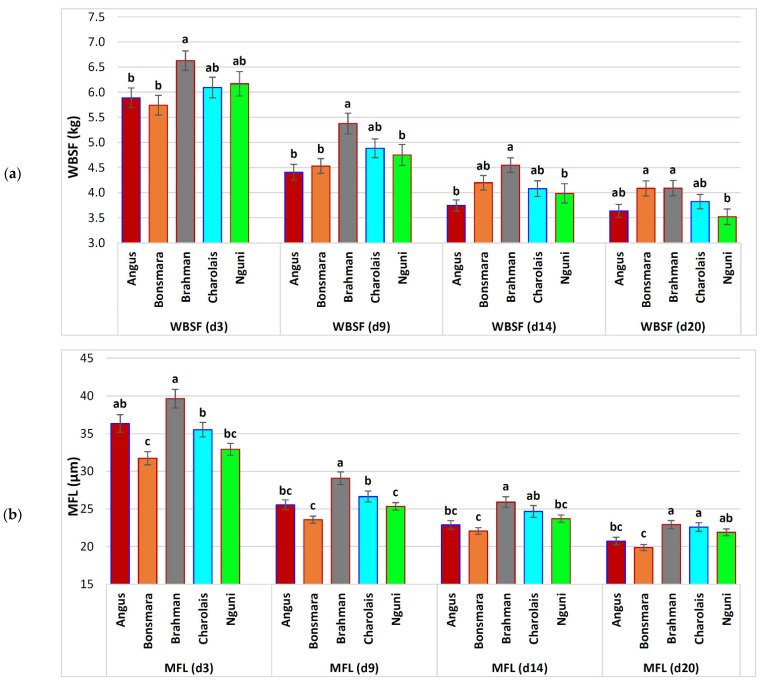
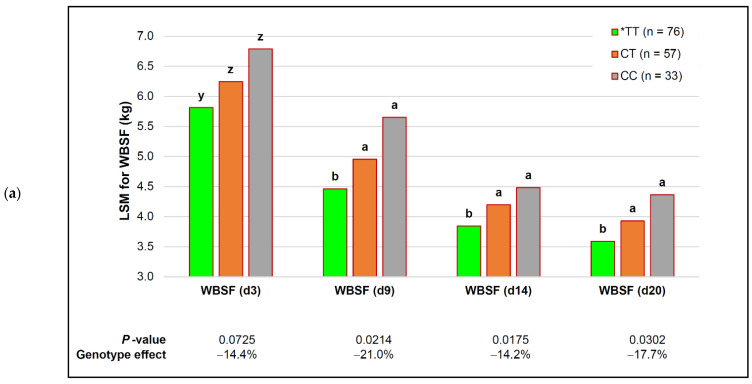
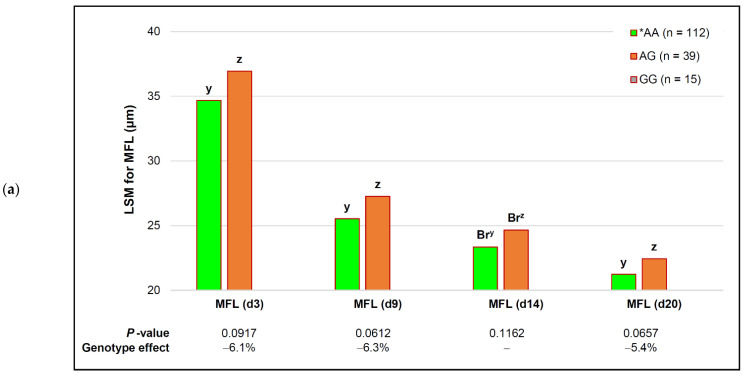
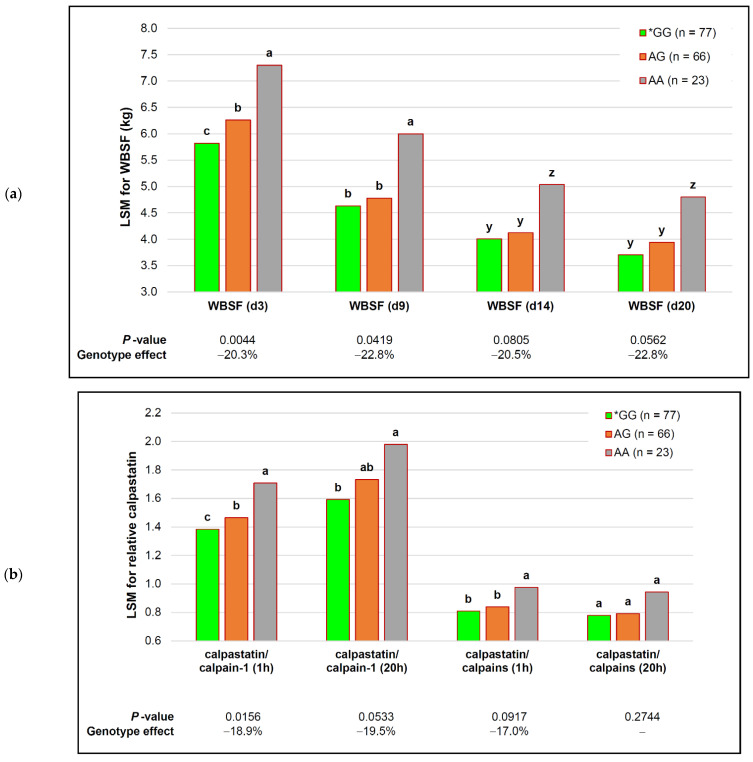
The most important factor that determines beef tenderness is its proteolytic activity, and the balance between calpain-1 protease activity and calpastatin inhibition is especially important, while contributions can also arise from calpain-2 and, possibly, calpain-3. The meat ageing process itself affects these processes. To determine whether genotypes in the calpain-calpastatin system can enhance tenderness through a 20-day ageing period, South African purebred beef bulls ( = 166) were genotyped using the Illumina BovineHD SNP BeadChip through a gene-based association analysis targeting the , , and genes. The Warner-Bratzler shear force (WBSF) and myofibril fragment length (MFL) of (LTL) steaks were evaluated between d 3 and d 20 of ageing, with protease enzyme activity in the first 20 h post-mortem. Although several of the 134 SNPs are associated with tenderness, only seven SNP in the , and genes sustained genetic associations, additive to the ageing-associated increases in tenderness for at least three of the four ageing periods. While most genomic associations were relatively stable over time, some genotypes within the SNP responded differently to ageing, resulting in altered genomic effects over time. The level of ageing at which genomic associations are performed is an important factor that determines whether SNPs affect tenderness phenotypes.
决定牛肉嫩度的最重要因素是其蛋白水解活性,钙蛋白酶-1的蛋白酶活性与钙蛋白酶抑制蛋白的抑制作用之间的平衡尤为重要,同时钙蛋白酶-2甚至可能还有钙蛋白酶-3也有作用。肉的成熟过程本身会影响这些过程。为了确定钙蛋白酶-钙蛋白酶抑制蛋白系统中的基因型是否能在20天的成熟过程中提高嫩度,使用Illumina BovineHD SNP芯片对166头南非纯种肉用公牛进行基因分型,通过基于基因的关联分析靶向钙蛋白酶-1、钙蛋白酶-2、钙蛋白酶抑制蛋白和钙蛋白酶-3基因。在成熟的第3天到第20天评估腰大肌(LTL)牛排的沃纳-布拉茨勒剪切力(WBSF)和肌原纤维片段长度(MFL),并在宰后最初20小时测定蛋白酶活性。虽然134个单核苷酸多态性(SNP)中有几个与嫩度相关,但只有钙蛋白酶-1、钙蛋白酶-2和钙蛋白酶抑制蛋白基因中的7个SNP保持了遗传关联,在四个成熟阶段中的至少三个阶段对与成熟相关的嫩度增加具有加性效应。虽然大多数基因组关联随时间相对稳定,但SNP内的一些基因型对成熟的反应不同,导致基因组效应随时间改变。进行基因组关联分析时的成熟水平是决定SNP是否影响嫩度表型的一个重要因素。