Bauset Cristina, Lis-Lopez Lluis, Coll Sandra, Gisbert-Ferrándiz Laura, Macias-Ceja Dulce C, Seco-Cervera Marta, Navarro Francisco, Esplugues Juan V, Calatayud Sara, Ortiz-Masia Dolores, Barrachina Maria D, Cosín-Roger Jesús
Departamento de Farmacología, Facultad de Medicina, Universidad de Valencia, 46010 Valencia, Spain.
Hospital Dr. Peset, FISABIO, 46017 Valencia, Spain.
Biomedicines. 2022 Feb 24;10(3):532. doi: 10.3390/biomedicines10030532.
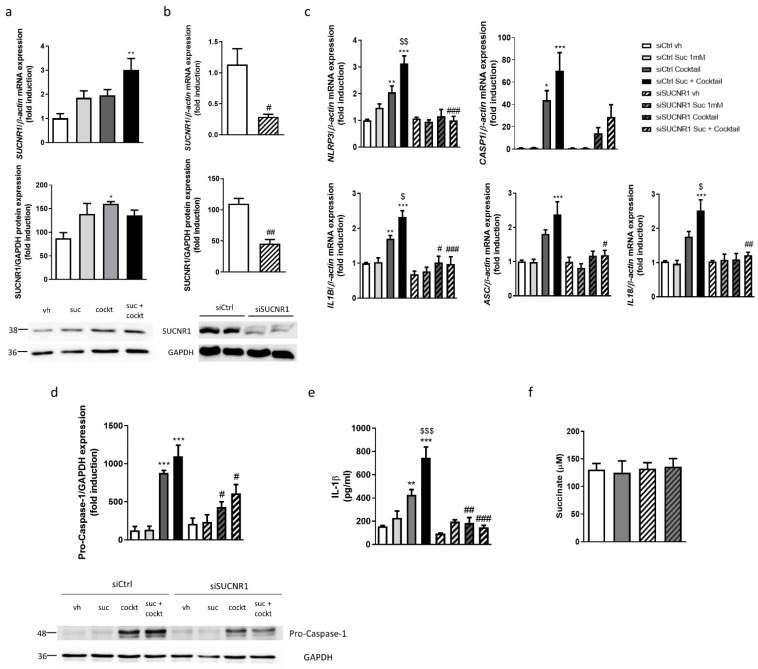
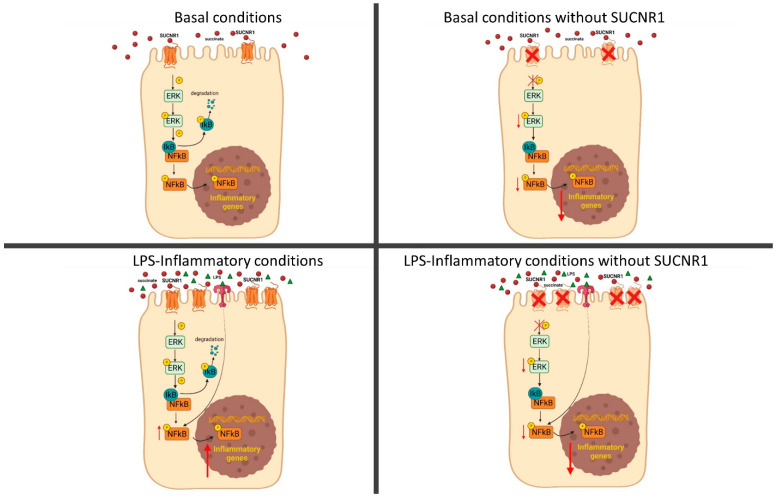
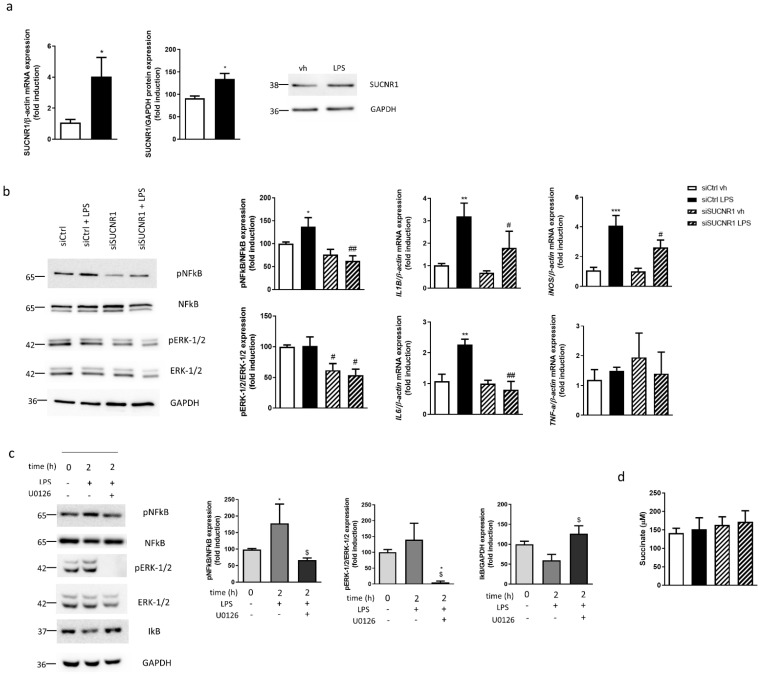
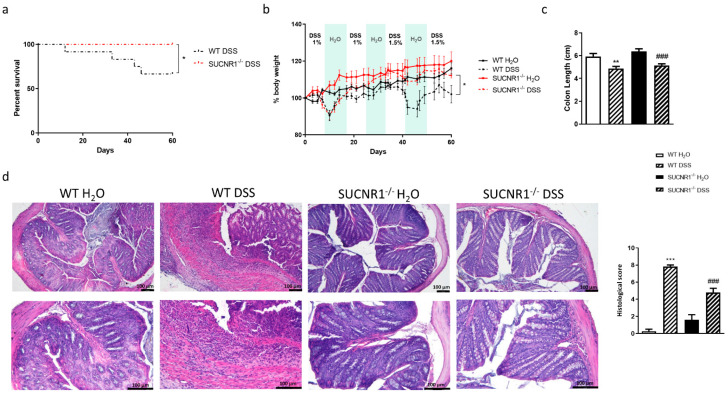
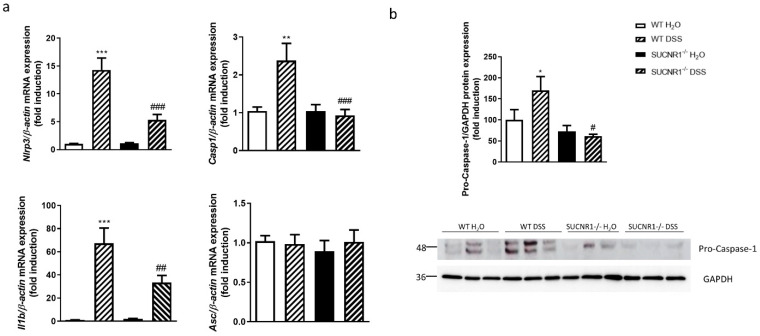
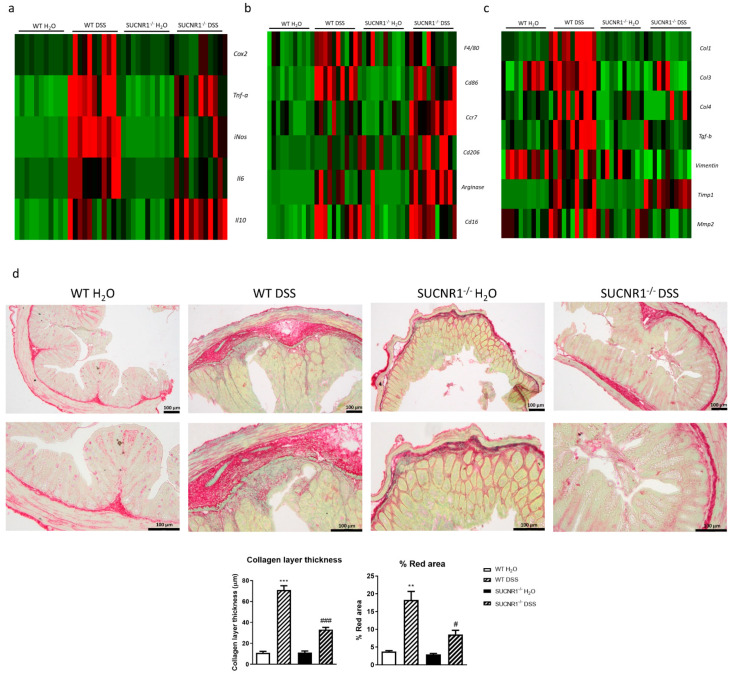
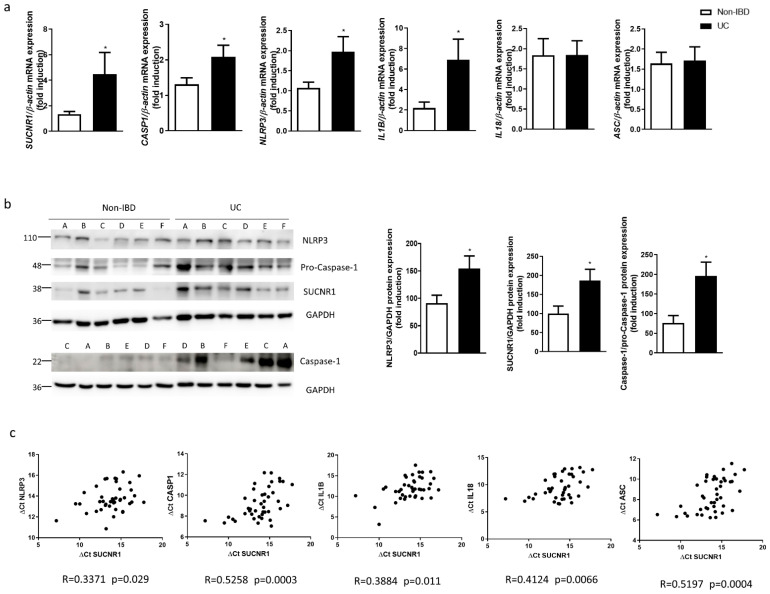
Intestinal epithelial cells (IECs) constitute a defensive physical barrier in mucosal tissues and their disruption is involved in the etiopathogenesis of several inflammatory pathologies, such as Ulcerative Colitis (UC). Recently, the succinate receptor SUCNR1 was associated with the activation of inflammatory pathways in several cell types, but little is known about its role in IECs. We aimed to analyze the role of SUCNR1 in the inflammasome priming and its relevance in UC. Inflammatory and inflammasome markers and SUCNR1 were analyzed in HT29 cells treated with succinate and/or an inflammatory cocktail and transfected with SUCNR1 siRNA in a murine DSS model, and in intestinal resections from 15 UC and non-IBD patients. Results showed that this receptor mediated the inflammasome, priming both in vitro in HT29 cells and in vivo in a murine chronic DSS-colitis model. Moreover, SUNCR1 was also found to be involved in the activation of the inflammatory pathways NFкB and ERK pathways, even in basal conditions, since the transient knock-down of this receptor significantly reduced the constitutive levels of pERK-1/2 and pNFкB and impaired LPS-induced inflammation. Finally, UC patients showed a significant increase in the expression of SUCNR1 and several inflammasome components which correlated positively and significantly. Therefore, our results demonstrated a role for SUCNR1 in basal and stimulated inflammatory pathways in intestinal epithelial cells and suggested a pivotal role for this receptor in inflammasome activation in UC.
肠上皮细胞(IECs)在黏膜组织中构成一道防御性物理屏障,其破坏与多种炎症性疾病的发病机制有关,如溃疡性结肠炎(UC)。最近,琥珀酸受体SUCNR1与多种细胞类型中炎症信号通路的激活有关,但对其在肠上皮细胞中的作用知之甚少。我们旨在分析SUCNR1在炎性小体启动中的作用及其在溃疡性结肠炎中的相关性。在用琥珀酸和/或炎性混合物处理并用SUCNR1 siRNA转染的HT29细胞中,以及在15例溃疡性结肠炎患者和非炎症性肠病患者的肠道切除标本中,分析了炎症和炎性小体标志物以及SUCNR1。结果表明,该受体介导了炎性小体的启动,在体外HT29细胞和体内小鼠慢性葡聚糖硫酸钠(DSS)结肠炎模型中均如此。此外,即使在基础条件下,也发现SUCNR1参与炎症信号通路NFкB和ERK通路的激活,因为该受体的瞬时敲低显著降低了pERK-1/2和pNFкB的组成水平,并损害了脂多糖(LPS)诱导的炎症。最后,溃疡性结肠炎患者中SUCNR1和几种炎性小体成分的表达显著增加,且呈显著正相关。因此,我们的结果证明了SUCNR1在肠上皮细胞基础和刺激的炎症信号通路中的作用,并表明该受体在溃疡性结肠炎炎性小体激活中起关键作用。