Li Heng, Fan Chen, Lu Huimin, Feng Chunlan, He Peilan, Yang Xiaoqian, Xiang Caigui, Zuo Jianping, Tang Wei
Laboratory of Anti-inflammation and Immunopharmacology, State Key Laboratory of Drug Research, Shanghai Institute of Materia Medica, Chinese Academy of Sciences, Shanghai 201203, China.
School of Pharmacy, University of Chinese Academy of Sciences, Beijing 100049, China.
Acta Pharm Sin B. 2020 Mar;10(3):447-461. doi: 10.1016/j.apsb.2019.08.006. Epub 2019 Sep 5.
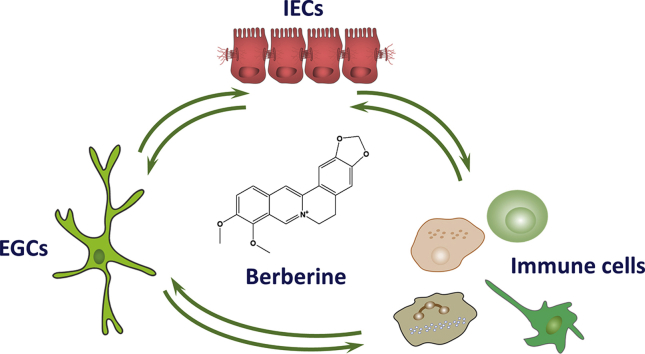
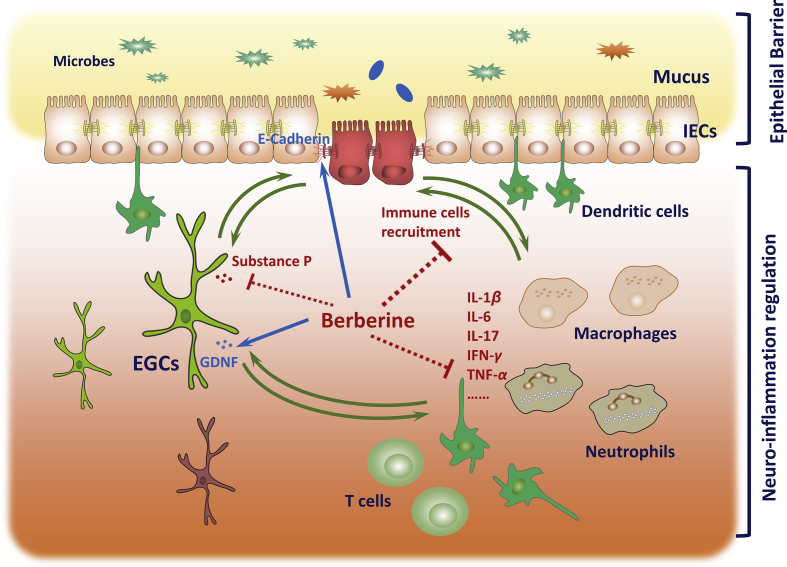
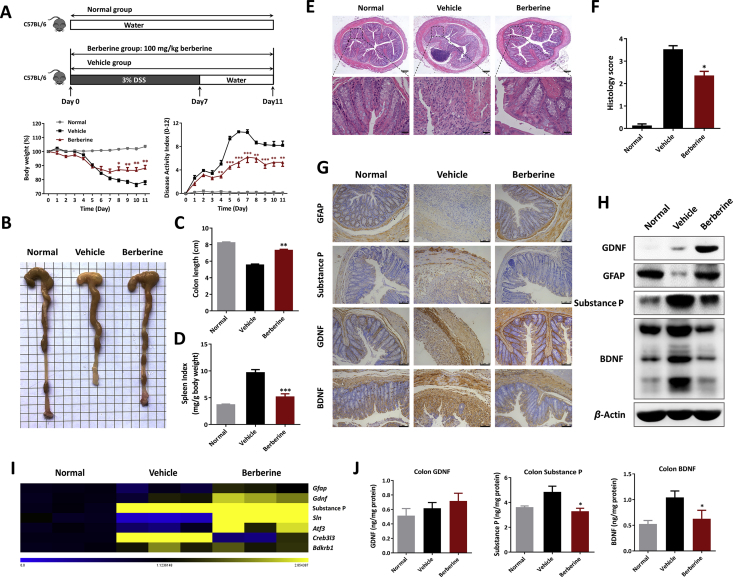
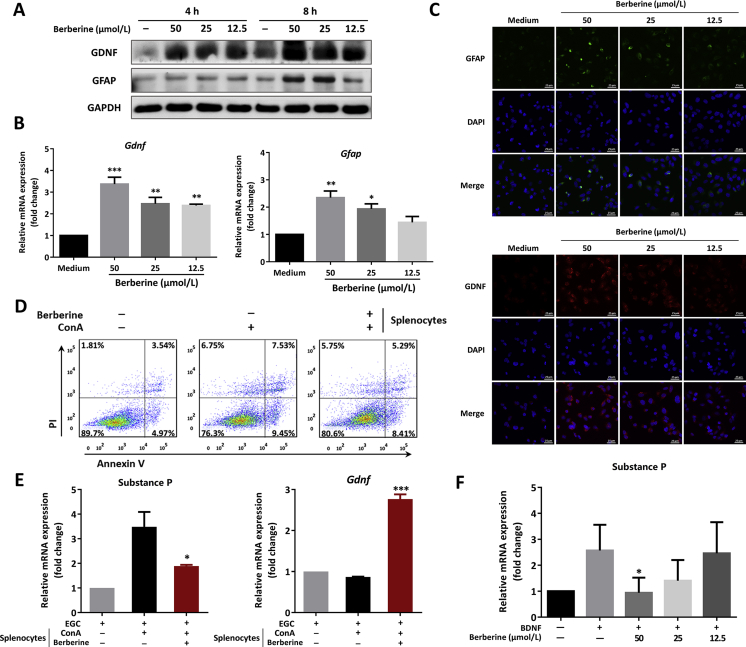
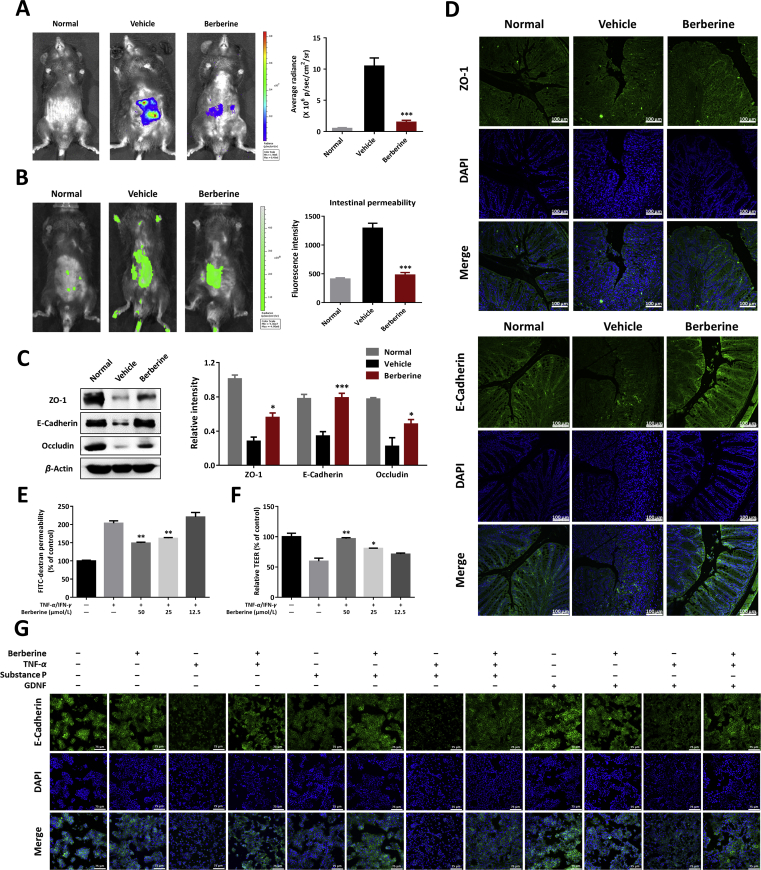
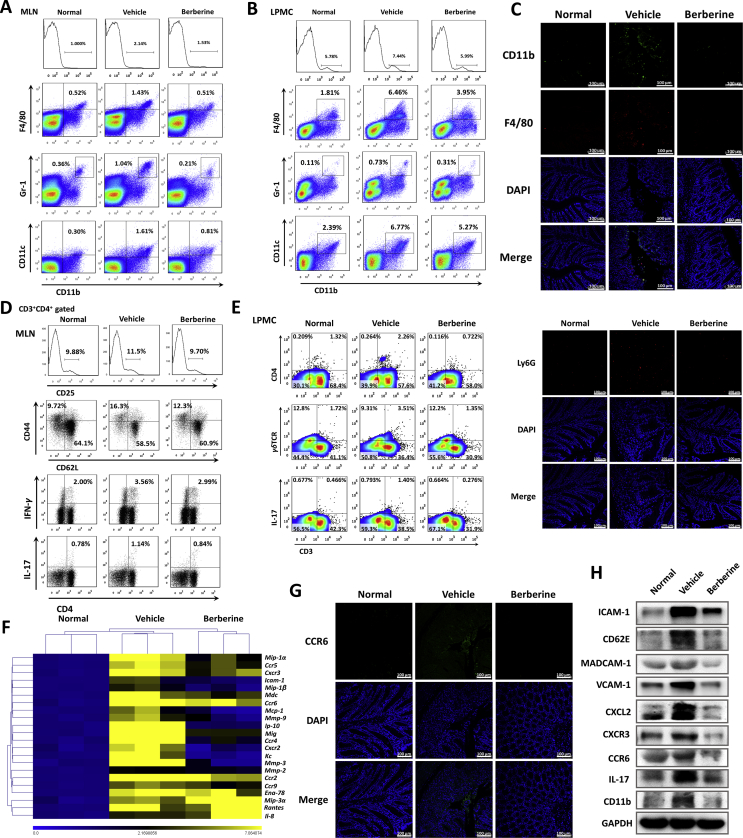
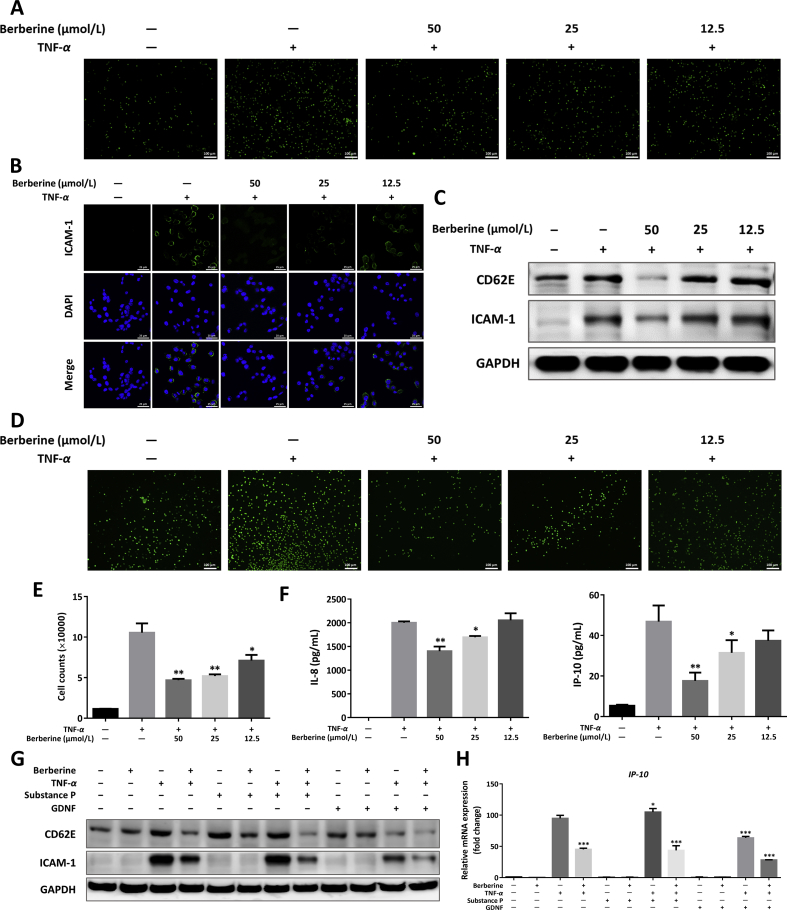
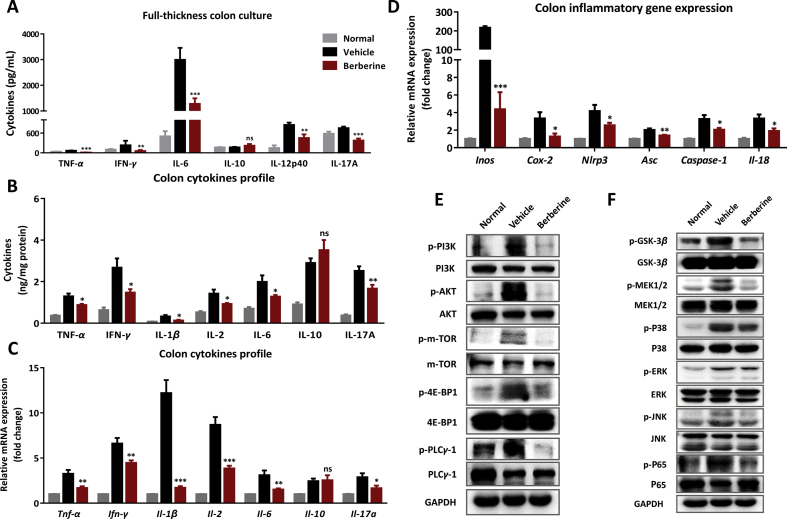
Ulcerative colitis (UC) manifests as an etiologically complicated and relapsing gastrointestinal disease. The enteric nervous system (ENS) plays a pivotal role in rectifying and orchestrating the inflammatory responses in gut tract. Berberine, an isoquinoline alkaloid, is known as its anti-inflammatory and therapeutic effects in experimental colitis. However, little research focused on its regulatory function on ENS. Therefore, we set out to explore the pathological role of neurogenic inflammation in UC and the modulating effects of berberine on neuro-immune interactions. Functional defects of enteric glial cells (EGCs), with decreased glial fibrillary acidic protein (GFAP) and increased substance P expression, were observed in DSS-induced murine UC. Administration of berberine can obviously ameliorate the disease severity and restore the mucosal barrier homeostasis of UC, closely accompanying by maintaining the residence of EGCs and attenuating inflammatory infiltrations and immune cells overactivation. , berberine showed direct protective effects on monoculture of EGCs, bone marrow-derived dendritic cells (BMDCs), T cells, and intestinal epithelial cells (IECs) in the simulated inflammatory conditions. Furthermore, berberine could modulate gut EGCs-IECs-immune cell interactions in the co-culture systems. In summary, our study indicated the EGCs-IECs-immune cell interactions might function as a crucial paradigm in mucosal inflammation and provided an infusive mechanism of berberine in regulating enteric neurogenic inflammation.
溃疡性结肠炎(UC)是一种病因复杂且易复发的胃肠道疾病。肠神经系统(ENS)在调节和协调肠道炎症反应中起关键作用。小檗碱是一种异喹啉生物碱,已知其在实验性结肠炎中具有抗炎和治疗作用。然而,很少有研究关注其对ENS的调节功能。因此,我们着手探讨神经源性炎症在UC中的病理作用以及小檗碱对神经免疫相互作用的调节作用。在葡聚糖硫酸钠(DSS)诱导的小鼠UC中,观察到肠胶质细胞(EGC)的功能缺陷,胶质纤维酸性蛋白(GFAP)减少,P物质表达增加。给予小檗碱可明显改善疾病严重程度,恢复UC的黏膜屏障稳态,同时维持EGC的驻留,减轻炎症浸润和免疫细胞过度激活。此外,在模拟炎症条件下,小檗碱对EGC、骨髓来源的树突状细胞(BMDC)、T细胞和肠上皮细胞(IEC)的单一培养物具有直接保护作用。此外,小檗碱可在共培养系统中调节肠道EGC-IEC-免疫细胞相互作用。总之,我们的研究表明EGC-IEC-免疫细胞相互作用可能是黏膜炎症中的关键模式,并提供了小檗碱调节肠道神经源性炎症的作用机制。