Bögl Thomas, Mlynek Franz, Himmelsbach Markus, Sepp Norbert, Buchberger Wolfgang, Geroldinger-Simić Marija
Institute of Analytical and General Chemistry, Johannes Kepler University Linz, 4040 Linz, Austria.
Department of Dermatology, Ordensklinikum Linz Elisabethinen, 4020 Linz, Austria.
Biomedicines. 2022 Mar 4;10(3):607. doi: 10.3390/biomedicines10030607.
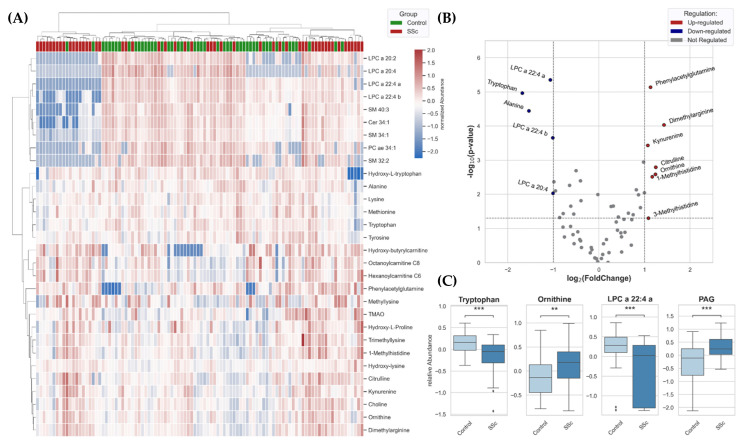
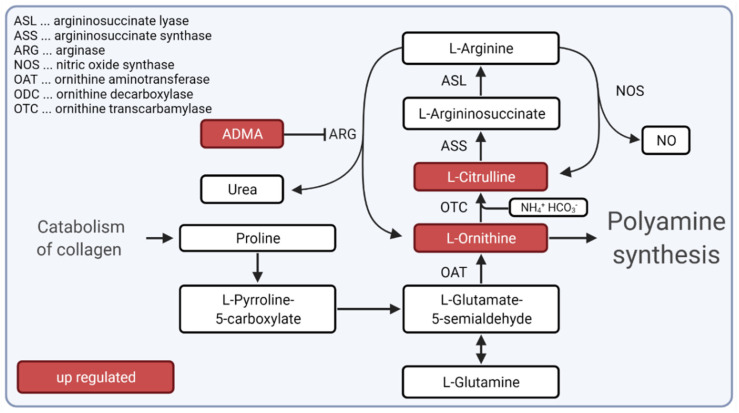
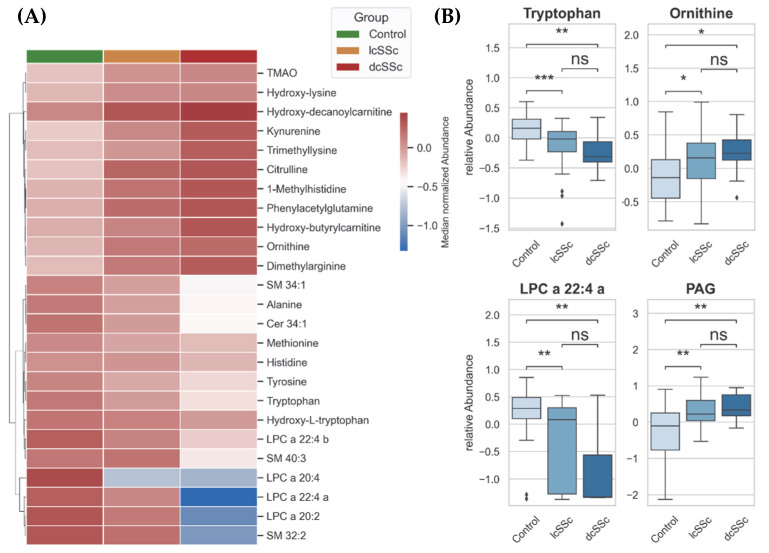
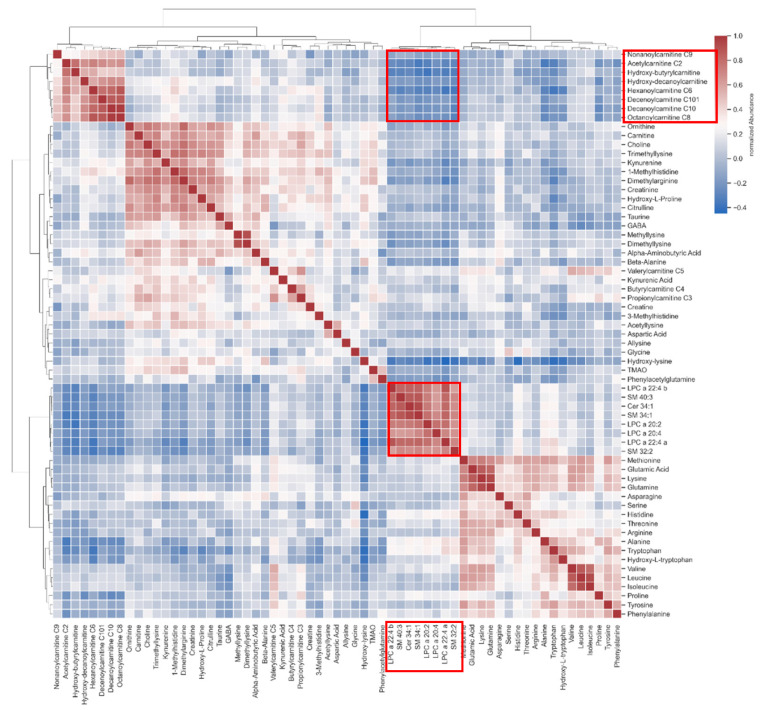
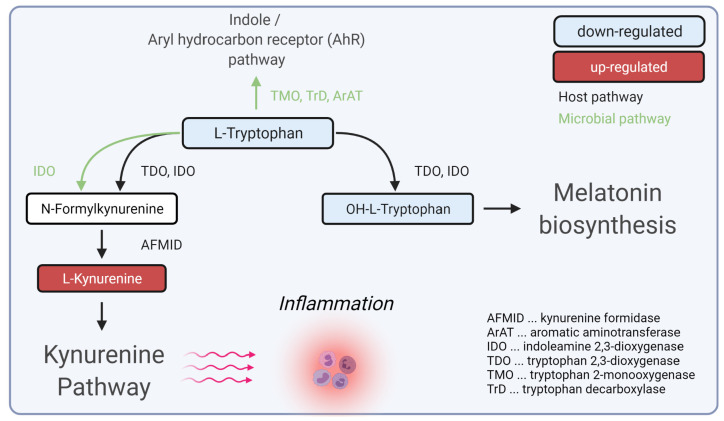
Systemic sclerosis (SSc) is a rare systemic autoimmune disorder marked by high morbidity and increased risk of mortality. Our study aimed to analyze metabolomic profiles of plasma from SSc patients by using targeted and untargeted metabolomics approaches. Furthermore, we aimed to detect biochemical mechanisms relevant to the pathophysiology of SSc. Experiments were performed using high-performance liquid chromatography coupled to mass spectrometry technology. The investigation of plasma samples from SSc patients ( = 52) compared to a control group ( = 48) allowed us to identify four different dysfunctional metabolic mechanisms, which can be assigned to the kynurenine pathway, the urea cycle, lipid metabolism, and the gut microbiome. These significantly altered metabolic pathways are associated with inflammation, vascular damage, fibrosis, and gut dysbiosis and might be relevant for the pathophysiology of SSc. Further studies are needed to explore the role of these metabolomic networks as possible therapeutic targets of SSc.
系统性硬化症(SSc)是一种罕见的全身性自身免疫性疾病,其特征为高发病率和死亡率增加。我们的研究旨在通过靶向和非靶向代谢组学方法分析SSc患者血浆的代谢组学特征。此外,我们旨在检测与SSc病理生理学相关的生化机制。实验采用高效液相色谱-质谱联用技术进行。对52例SSc患者的血浆样本与48例对照组进行比较研究,使我们能够识别出四种不同的功能失调代谢机制,它们分别与犬尿氨酸途径、尿素循环、脂质代谢和肠道微生物群有关。这些显著改变的代谢途径与炎症、血管损伤、纤维化和肠道生态失调相关,可能与SSc的病理生理学有关。需要进一步研究来探索这些代谢组学网络作为SSc可能治疗靶点的作用。