Institute of Environmental Medicine, Karolinska Institutet, SE-17177 Stockholm, Sweden.
Division of Sustainable Health, Department of Public Health and Clinical Medicine, Umeå University, SE-90187 Umeå, Sweden.
Biomolecules. 2022 Feb 24;12(3):360. doi: 10.3390/biom12030360.
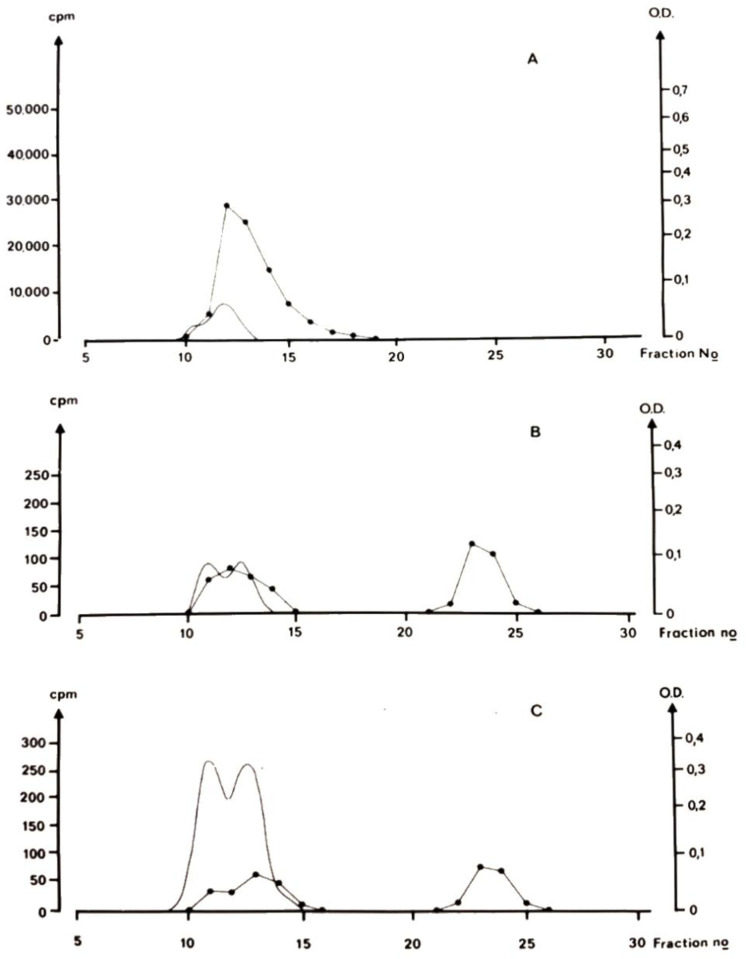
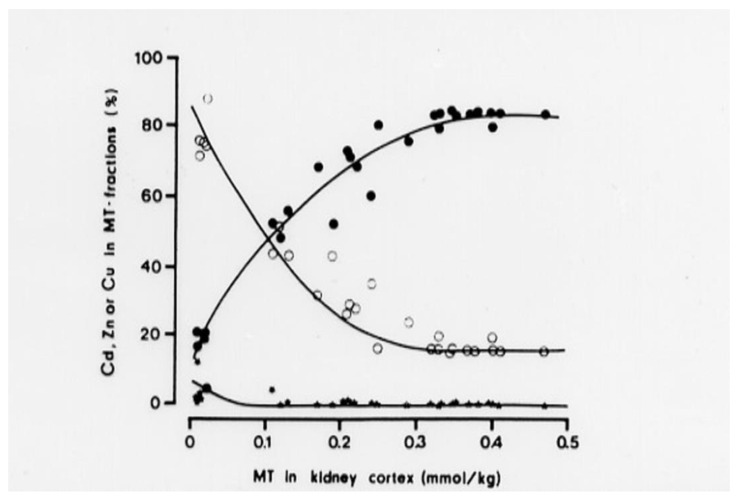
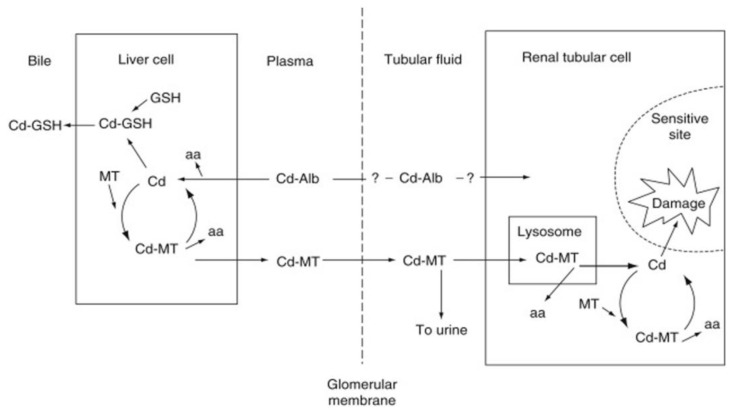
More than one and a half centuries ago, adverse human health effects were reported after use of a cadmium-containing silver polishing agent. Long-term cadmium exposure gives rise to kidney or bone disease, reproductive toxicity and cancer in animals and humans. At present, high human exposures to cadmium occur in small-scale mining, underlining the need for preventive measures. This is particularly urgent in view of the growing demand for minerals and metals in global climate change mitigation. This review deals with a specific part of cadmium toxicology that is important for understanding when toxic effects appear and, thus, is crucial for risk assessment. The discovery of the low-molecular-weight protein metallothionein (MT) in 1957 was an important milestone because, when this protein binds cadmium, it modifies cellular cadmium toxicity. The present authors contributed evidence in the 1970s concerning cadmium binding to MT and synthesis of the protein in tissues. We showed that binding of cadmium to metallothionein in tissues prevented some toxic effects, but that metallothionein can increase the transport of cadmium to the kidneys. Special studies showed the importance of the Cd/Zn ratio in MT for expression of toxicity in the kidneys. We also developed models of cadmium toxicokinetics based on our MT-related findings. This model combined with estimates of tissue levels giving rise to toxicity, made it possible to calculate expected risks in relation to exposure. Other scientists developed these models further and international organizations have successfully used these amended models in recent publications. Our contributions in recent decades included studies in humans of MT-related biomarkers showing the importance of MT gene expression in lymphocytes and MT autoantibodies for risks of Cd-related adverse effects in cadmium-exposed population groups. In a study of the impact of zinc status on the risk of kidney dysfunction in a cadmium-exposed group, the risks were low when zinc status was good and high when zinc status was poor. The present review summarizes this evidence in a risk assessment context and calls for its application in order to improve preventive measures against adverse effects of cadmium exposures in humans and animals.
一个半多世纪以前,人们在使用含镉的银抛光剂后报告了对人类健康的不良影响。长期接触镉会导致动物和人类的肾脏或骨骼疾病、生殖毒性和癌症。目前,小规模采矿导致人类接触镉的程度很高,这突显出需要采取预防措施。鉴于全球气候变化缓解对矿物和金属的需求不断增长,这一点尤其紧迫。本综述涉及镉毒理学的一个特定部分,对于了解毒性作用何时出现非常重要,因此对于风险评估至关重要。1957 年发现低分子量蛋白金属硫蛋白(MT)是一个重要的里程碑,因为当这种蛋白结合镉时,它会改变细胞内镉的毒性。作者在 20 世纪 70 年代就证明了镉与 MT 的结合以及组织中该蛋白的合成。我们表明,组织中镉与金属硫蛋白的结合可以防止一些毒性作用,但金属硫蛋白可以增加镉向肾脏的转运。特别研究表明 MT 中 Cd/Zn 比值对肾脏毒性表达的重要性。我们还根据我们与 MT 相关的发现,建立了镉毒代动力学模型。该模型结合了导致毒性的组织水平估计,使得能够计算与暴露相关的预期风险。其他科学家进一步发展了这些模型,国际组织在最近的出版物中成功使用了这些修正模型。我们在最近几十年的贡献包括对 MT 相关生物标志物的人类研究,这些研究表明 MT 基因表达在淋巴细胞和 MT 自身抗体中的重要性,以及 MT 自身抗体在镉暴露人群中与 Cd 相关不良影响风险的关系。在一项关于锌状态对镉暴露组肾功能障碍风险影响的研究中,当锌状态良好时,风险较低,当锌状态较差时,风险较高。本综述总结了这一证据在风险评估背景下的应用,并呼吁应用这些证据,以改善人类和动物因接触镉而产生不良影响的预防措施。