Furnica Cristina, Chistol Raluca Ozana, Chiran Dragos Andrei, Stan Cristinel Ionel, Sargu Gabriela Dumachita, Girlescu Nona, Tinica Grigore
Faculty of Medicine, "Grigore T. Popa" University of Medicine and Pharmacy, 700115 Iasi, Romania.
Institute of Forensic Medicine, 700455 Iasi, Romania.
Diagnostics (Basel). 2022 Feb 25;12(3):588. doi: 10.3390/diagnostics12030588.
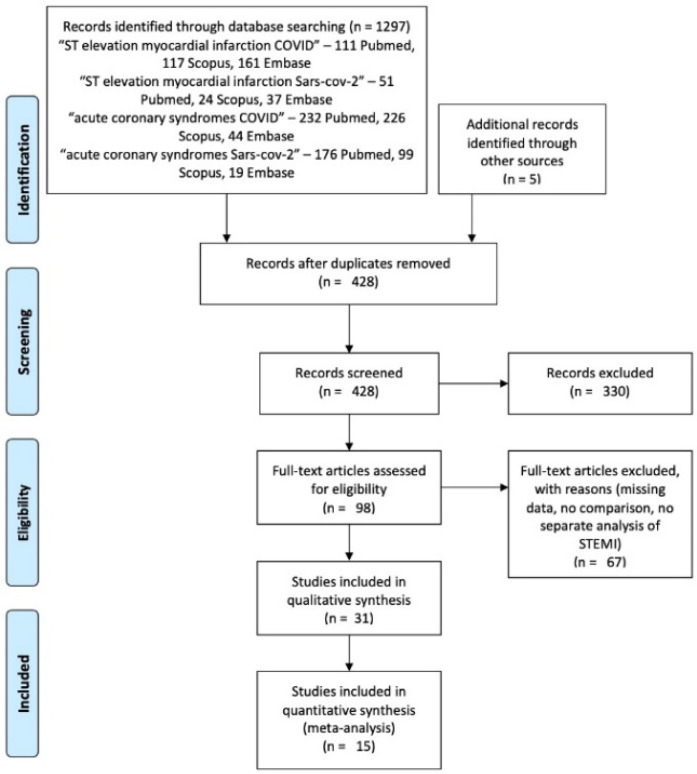
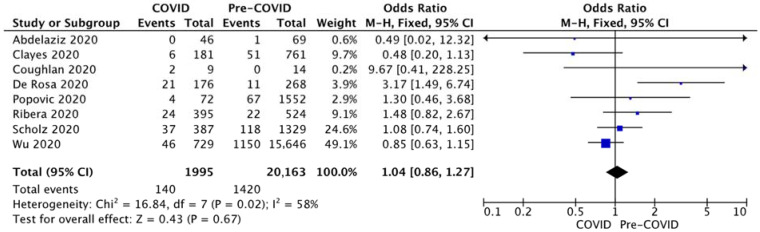
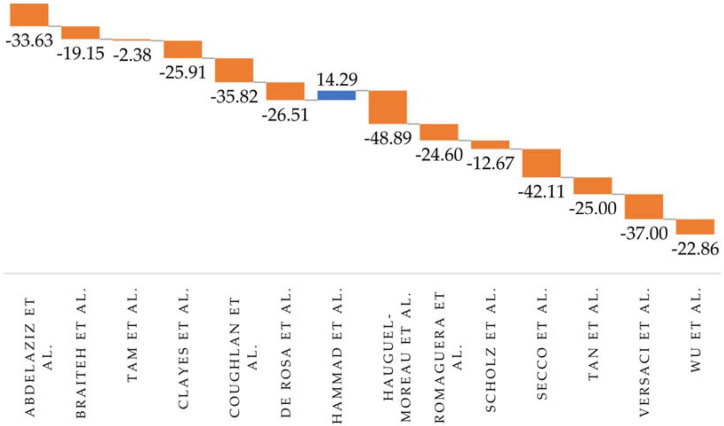
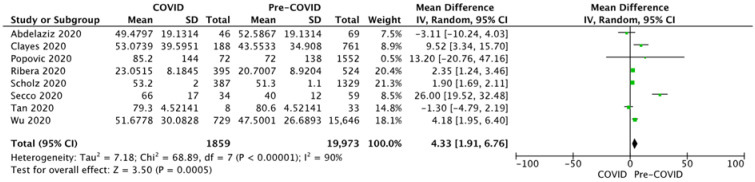
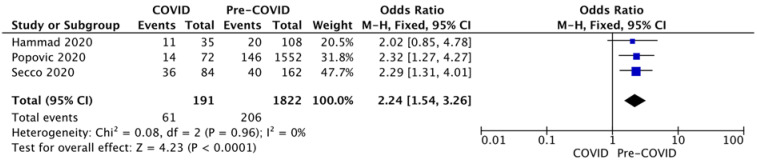
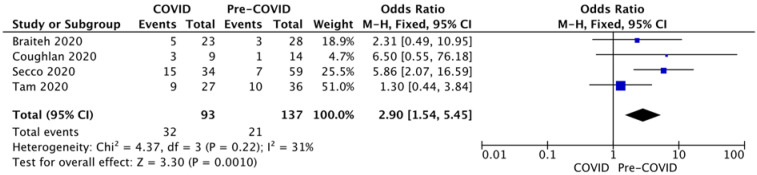
Background: The influence of the early COVID-19 pandemic on non-COVID-19 emergencies is uncertain. We conducted a systematic review and a meta-analysis to evaluate the impact of the first months of the COVID-19 pandemic on the presentation, management, and prognosis of patients presenting with ST-segment elevation myocardial infarction (STEMI). Methods: We searched the PubMed, Scopus, and Embase databases from January to August 2020. A meta-analysis of studies comparing the profile, STEMI severity at presentation, reperfusion delay, and in-hospital mortality for patients presenting before and during the early COVID-19 pandemic was conducted. Fifteen cross-sectional observational studies including 20,528 STEMI patients from the pre-COVID period and 2190 patients diagnosed and treated during the first months of the COVID-19 pandemic met the inclusion criteria. Results: Patients presenting with STEMI during the pandemic were younger and had a higher comorbidity burden. The time interval between symptoms and first medical contact increased from 93.22 ± 137.37 min to 142 ± 281.60 min (p < 0.001). Door-to-balloon time did not differ significantly between the two periods (p = 0.293). The pooled odds ratio (OR) for low left ventricular ejection fraction at presentation during the pandemic was 2.24 (95% confidence interval (CI) 1.54−3.26) and for a presentation delay >24 h was 2.9 (95% CI 1.54−5.45) relative to before the pandemic. In-hospital mortality did not increase significantly during the outbreak (p = 0.97). Conclusion: During the first months of the COVID-19 pandemic, patients presenting with STEMI were addressed later in the course of the disease with more severe left ventricular impairment. In-hospital emergency circuits and care functioned properly with no increase in door-to-balloon time and early mortality.
2019冠状病毒病(COVID-19)大流行早期对非COVID-19紧急情况的影响尚不确定。我们进行了一项系统评价和荟萃分析,以评估COVID-19大流行最初几个月对ST段抬高型心肌梗死(STEMI)患者的就诊、治疗及预后的影响。方法:检索2020年1月至8月的PubMed、Scopus和Embase数据库。对比较COVID-19大流行早期之前和期间就诊的患者的特征、就诊时STEMI严重程度、再灌注延迟和院内死亡率的研究进行荟萃分析。15项横断面观察性研究符合纳入标准,共纳入20528例COVID-19大流行前时期的STEMI患者以及2190例在COVID-19大流行最初几个月诊断和治疗的患者。结果:大流行期间出现STEMI的患者更年轻,合并症负担更高。症状出现至首次医疗接触的时间间隔从93.22±137.37分钟增加到142±281.60分钟(p<0.001)。两个时期的门球时间无显著差异(p=0.293)。与大流行前相比,大流行期间就诊时左心室射血分数低的合并比值比(OR)为2.24(95%置信区间(CI)1.54−3.26),就诊延迟>24小时的合并比值比为2.9(95%CI 1.54−5.45)。疫情期间院内死亡率没有显著增加(p=0.97)。结论:在COVID-19大流行的最初几个月,出现STEMI的患者在疾病过程中就诊时间更晚,左心室损害更严重。医院内的急救流程和护理正常运作,门球时间和早期死亡率没有增加。