Carlà Matteo Mario, Boselli Francesco, Giannuzzi Federico, Gambini Gloria, Caporossi Tomaso, De Vico Umberto, Mosca Luigi, Guccione Laura, Baldascino Antonio, Rizzo Clara, Kilian Raphael, Rizzo Stanislao
Ophthalmology Department, Fondazione Policlinico Universitario A. Gemelli, IRCCS, 00168 Rome, Italy.
Ophthalmology Department, Catholic University "Sacro Cuore", 00168 Rome, Italy.
Diagnostics (Basel). 2022 Mar 17;12(3):727. doi: 10.3390/diagnostics12030727.
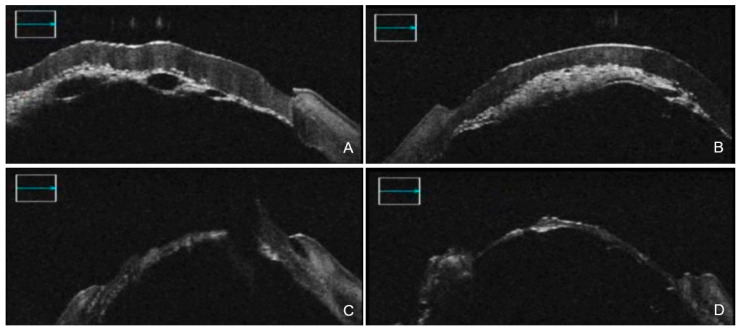
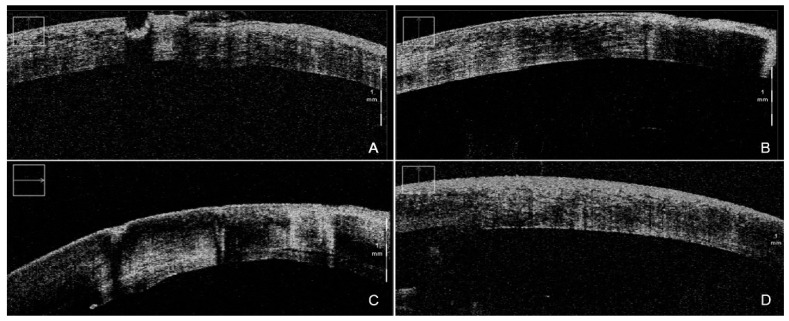
Intraoperative optical coherence tomography (iOCT) is a noninvasive imaging technique that gives real-time dynamic feedback on surgical procedures. iOCT was first employed in vitreoretinal surgery, but successively served as a guidance in several anterior segment surgical approaches: keratoplasty, implantable Collamer lens (ICL) implantation, and cataract surgery. Among all of those approaches, the unbeatable features of iOCT are fully exploited in anterior and posterior lamellar keratoplasty, and the purpose of this review is to focus on the advantages and shortfalls of iOCT in these techniques, in order to assess whether this technology could be a real step forward. In deep anterior lamellar keratoplasty (DALK), iOCT is useful to evaluate the needle depth into the corneal stroma, the big bubble dissection plane, and residual stromal bed, thus aiding the standardization of the technique and the reduction of failures. In Descemet stripping automated endothelial keratoplasty (DSAEK), iOCT allowed for clear visibility of fluid at the graft/host interface, allowing for immediate rescue maneuvers and granting the best graft apposition. In Descemet membrane endothelial keratoplasty (DMEK), iOCT can track the lenticule unfolding in real time and assess graft orientation even in severe hazy corneas, thus optimizing surgical times, as well as avoiding the use of potentially hazardous exterior markers (such as the "S" stamp) and preventing unnecessary manipulation of the graft. Overall, the role of iOCT appeared crucial in several complicated cases, overcoming the difficulties of poor visualization in a fast, non-invasive way, thus raising this approach as possible gold standard for challenging conditions. Further improvements in the technology may enable autonomous centering and tracking, overcoming the current constraint of instrument-induced shadowing.
术中光学相干断层扫描(iOCT)是一种非侵入性成像技术,可为手术过程提供实时动态反馈。iOCT最初用于玻璃体视网膜手术,但随后在几种眼前节手术方法中发挥了指导作用:角膜移植术、可植入式角膜接触镜(ICL)植入术和白内障手术。在所有这些手术方法中,iOCT无与伦比的特性在前板层和后板层角膜移植术中得到了充分利用,本综述的目的是关注iOCT在这些技术中的优点和不足,以评估这项技术是否真的是向前迈出的一大步。在深板层角膜移植术(DALK)中,iOCT有助于评估针进入角膜基质的深度、大气泡剥离平面和剩余基质床,从而有助于技术的标准化并减少失败率。在Descemet膜剥除自动内皮角膜移植术(DSAEK)中,iOCT可以清晰显示移植物/宿主界面处的液体,便于立即采取挽救措施并实现最佳的移植物贴合。在Descemet膜内皮角膜移植术(DMEK)中,iOCT可以实时跟踪薄片展开情况,即使在严重浑浊的角膜中也能评估移植物的方向,从而优化手术时间,避免使用潜在危险的外部标记(如“S”形标记),并防止对移植物进行不必要的操作。总体而言,iOCT在一些复杂病例中的作用似乎至关重要,它以快速、非侵入性的方式克服了可视化不佳的困难,从而使这种方法成为挑战性情况下可能的金标准。该技术的进一步改进可能实现自动定心和跟踪,克服当前仪器造成阴影的限制。