Department of Obstetrics and Gynaecology, Medical Faculty, Cologne University, 50931 Cologne, Germany.
Institute of Biology and Immunology of Reproduction of Bulgarian Academy of Sciences, Tsarigradsko Highway 73A, 1113 Sofia, Bulgaria.
Int J Mol Sci. 2022 Mar 11;23(6):3047. doi: 10.3390/ijms23063047.
Spermatozoa cryopreservation is an important technique to preserve fertility for males. This study aimed at exploring the stability of epigenetics information in human spermatozoa, manipulated by two different technologies, freezing and vitrification.
Spermatozoa samples were distributed into three groups: 1. Fresh spermatozoa (control group), 2. Frozen spermatozoa, 3. Vitrified spermatozoa. Epigenetic differences of fresh and cryopreserved spermatozoa were evaluated using high-throughput RNA sequencing.
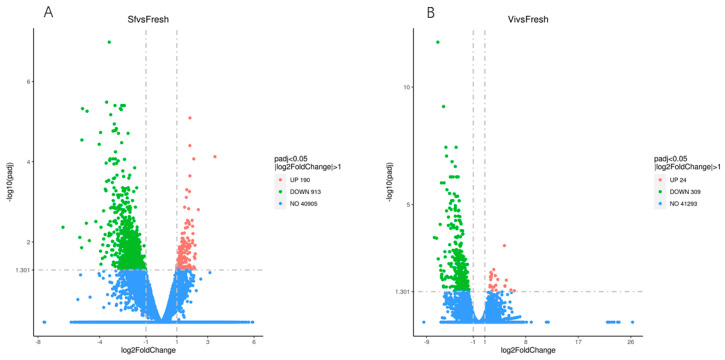
Differentially expressed genes (DEGs) in frozen (1103 genes) and vitrified (333 genes) spermatozoa were evaluated. The bioinformatical analysis identified 8 and 15 significant pathways in groups of frozen and vitrified spermatozoa, respectively. The majority of these pathways are most relevant to immune and infectious diseases. The DEGs of the fertilization process are not detected during vitrification. The freezing process induces more down-regulation of genes and is relevant to apoptosis changes and immune response.
Cryopreservation of human spermatozoa is an epigenetically safe method for male fertility preservation. Cryoprotectant-free vitrification can induce more minor biological changes in human spermatozoa, in comparison with conventional freezing.
精子冷冻保存是男性保存生育能力的一项重要技术。本研究旨在探索两种不同的冷冻技术(冷冻和玻璃化)对人类精子表观遗传信息稳定性的影响。
将精子样本分为三组:1.新鲜精子(对照组),2.冷冻精子,3.玻璃化精子。使用高通量 RNA 测序评估新鲜和冷冻保存的精子的表观遗传差异。
评估了冷冻(1103 个基因)和玻璃化(333 个基因)精子中的差异表达基因(DEGs)。生物信息学分析分别鉴定出冷冻和玻璃化精子组中的 8 个和 15 个显著途径。这些途径大多数与免疫和传染病最相关。在玻璃化过程中没有检测到受精过程中的 DEGs。冷冻过程诱导更多的基因下调,与细胞凋亡变化和免疫反应相关。
人类精子的冷冻保存是一种男性生育力保存的表观遗传安全方法。与传统的冷冻相比,无冷冻保护剂的玻璃化可在人类精子中引起更小的生物学变化。