Department of Precision Medicine, University of Campania Luigi Vanvitelli, Via L. de Crecchio 7, 80138 Naples, Italy.
Istituto Zooprofilattico Sperimentale del Mezzogiorno, U.O.C. Food Control and Food Safety, 80055 Portici, Italy.
Int J Mol Sci. 2022 Mar 16;23(6):3212. doi: 10.3390/ijms23063212.
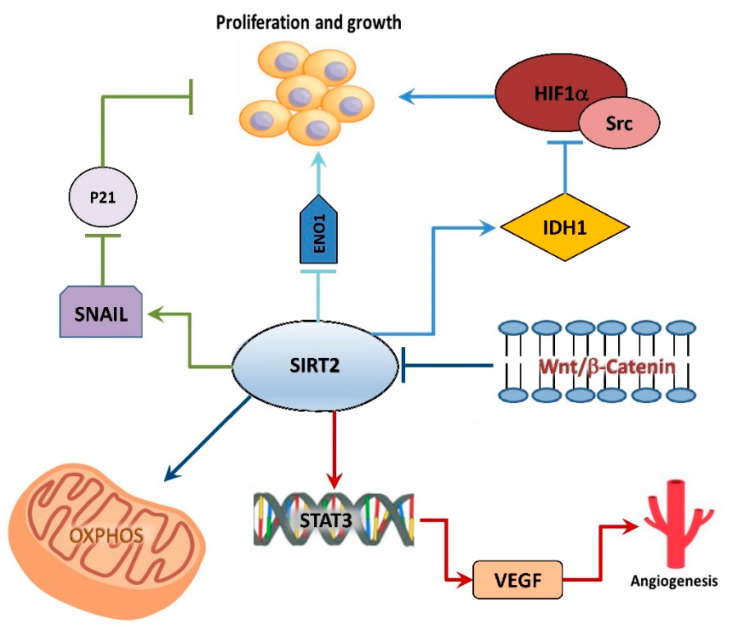
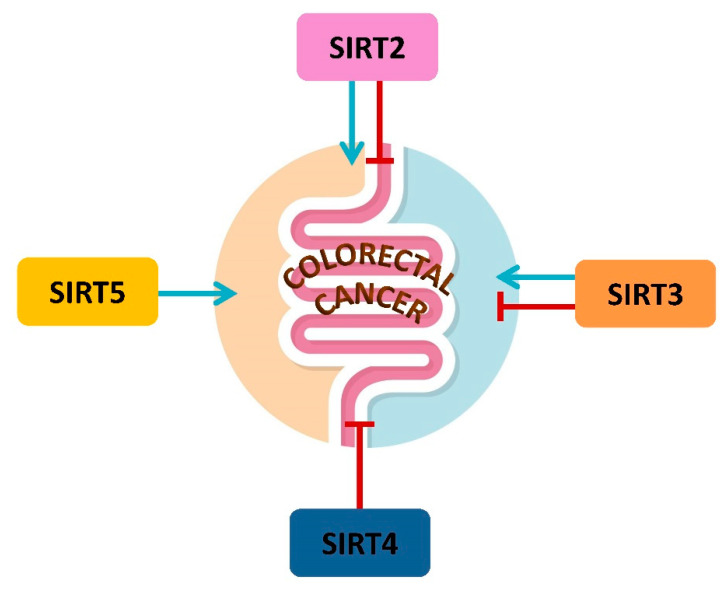
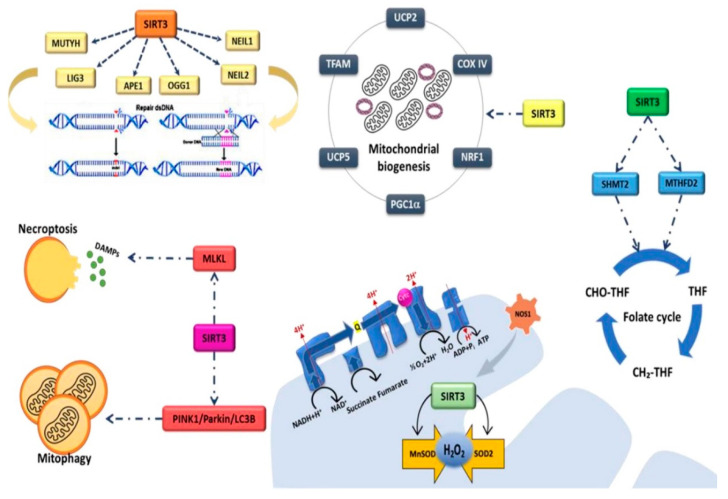
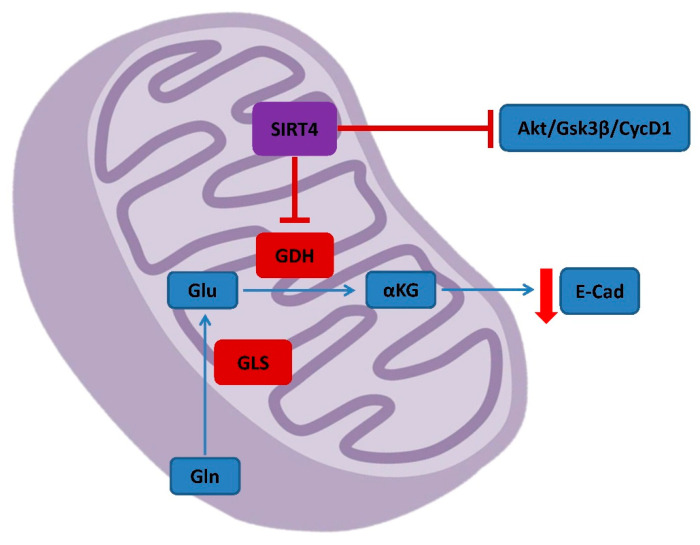
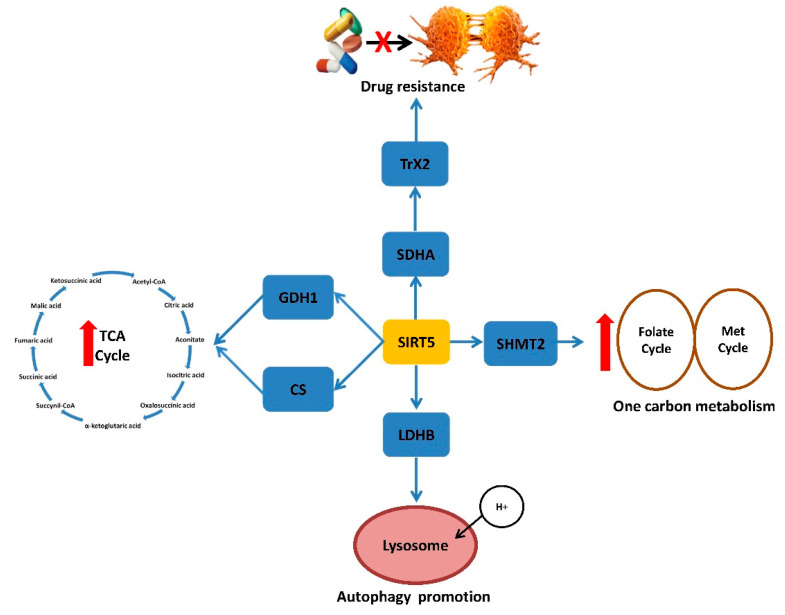
Sirtuins (SIRTs) are a family of class III histone deacetylases (HDACs) consisting of seven members, widely expressed in mammals. SIRTs mainly participate in metabolic homeostasis, DNA damage repair, cell survival, and differentiation, as well as other cancer-related biological processes. Growing evidence shows that SIRTs have pivotal roles in chronic degenerative diseases, including colorectal cancer (CRC), the third most frequent malignant disease worldwide. Metabolic alterations are gaining attention in the context of CRC development and progression, with mitochondrion representing a crucial point of complex and intricate molecular mechanisms. Mitochondrial SIRTs, SIRT2, SIRT3, SIRT4 and SIRT5, control mitochondrial homeostasis and dynamics. Here, we provide a comprehensive review on the latest advances on the role of mitochondrial SIRTs in the initiation, promotion and progression of CRC. A deeper understanding of the pathways by which mitochondrial SIRTs control CRC metabolism may provide new molecular targets for future innovative strategies for CRC prevention and therapy.
Sirtuins(SIRTs)是一类组蛋白去乙酰化酶(HDACs)家族,由七个成员组成,在哺乳动物中广泛表达。SIRTs 主要参与代谢稳态、DNA 损伤修复、细胞存活和分化以及其他与癌症相关的生物学过程。越来越多的证据表明,SIRTs 在慢性退行性疾病中具有关键作用,包括结直肠癌(CRC),这是全球第三大常见恶性疾病。在 CRC 的发展和进展过程中,代谢改变受到关注,线粒体是复杂和错综复杂的分子机制的关键。线粒体 SIRTs,即 SIRT2、SIRT3、SIRT4 和 SIRT5,控制着线粒体的稳态和动力学。在这里,我们全面综述了线粒体 SIRTs 在 CRC 起始、促进和进展中的作用的最新进展。深入了解线粒体 SIRTs 控制 CRC 代谢的途径可能为未来预防和治疗 CRC 的创新策略提供新的分子靶点。