
植物激素信号中的磷脂酸:从靶蛋白到膜构象。
Phosphatidic Acid in Plant Hormonal Signaling: From Target Proteins to Membrane Conformations.
机构信息
V.P. Kukhar Institute of Bioorganic Chemistry and Petrochemistry National Academy of Sciences of Ukraine, Murmanska Street, 1, 02660 Kiev, Ukraine.
Sorbonne Universités, Génie Enzymatique et Cellulaire, UMR CNRS 7025, Université de Technologie de Compiègne, CEDEX, 60203 Compiègne, France.
出版信息
Int J Mol Sci. 2022 Mar 17;23(6):3227. doi: 10.3390/ijms23063227.
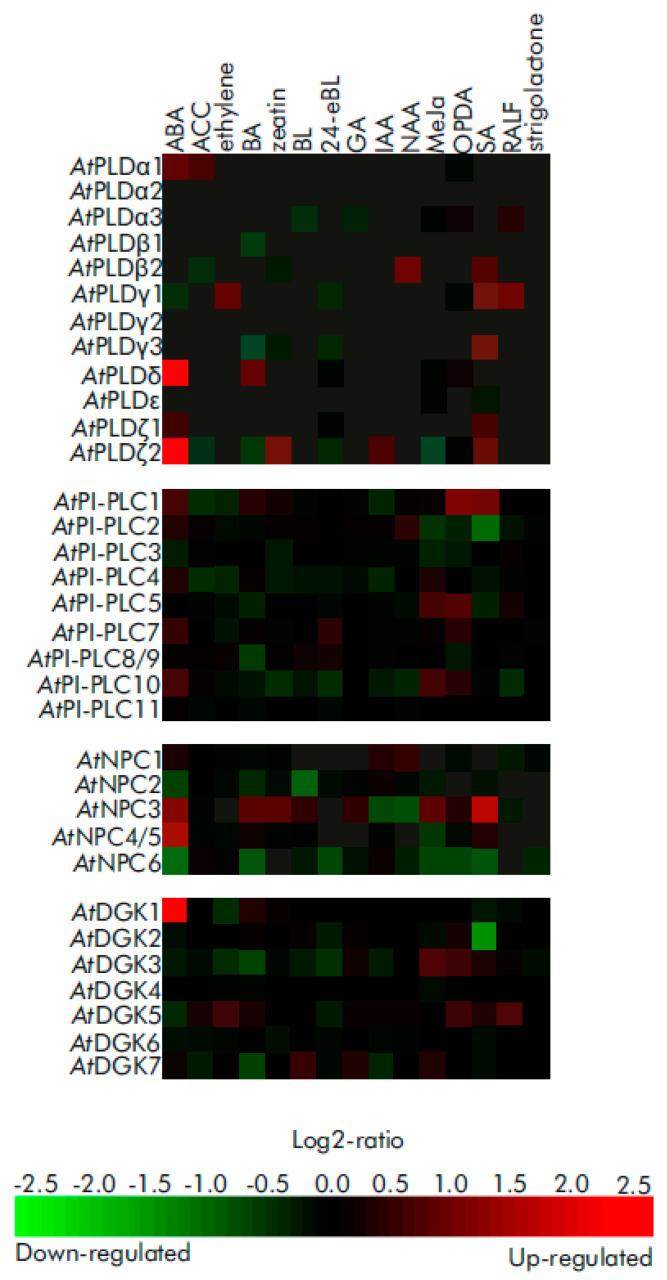
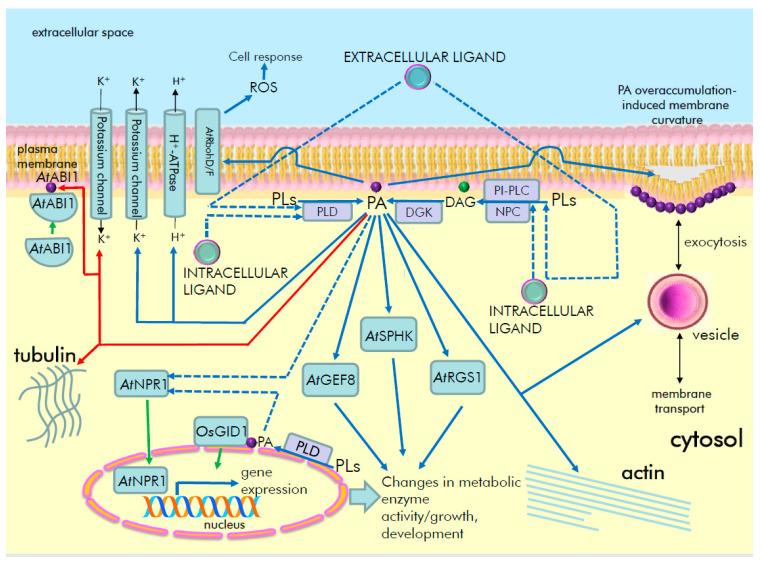
Cells sense a variety of extracellular signals balancing their metabolism and physiology according to changing growth conditions. Plasma membranes are the outermost informational barriers that render cells sensitive to regulatory inputs. Membranes are composed of different types of lipids that play not only structural but also informational roles. Hormones and other regulators are sensed by specific receptors leading to the activation of lipid metabolizing enzymes. These enzymes generate lipid second messengers. Among them, phosphatidic acid (PA) is a well-known intracellular messenger that regulates various cellular processes. This lipid affects the functional properties of cell membranes and binds to specific target proteins leading to either genomic (affecting transcriptome) or non-genomic responses. The subsequent biochemical, cellular and physiological reactions regulate plant growth, development and stress tolerance. In the present review, we focus on primary (genome-independent) signaling events triggered by rapid PA accumulation in plant cells and describe the functional role of PA in mediating response to hormones and hormone-like regulators. The contributions of individual lipid signaling enzymes to the formation of PA by specific stimuli are also discussed. We provide an overview of the current state of knowledge and future perspectives needed to decipher the mode of action of PA in the regulation of cell functions.
细胞感知各种细胞外信号,根据不断变化的生长条件来平衡其代谢和生理学。质膜是最外层的信息屏障,使细胞对外界的调节输入敏感。膜由不同类型的脂质组成,这些脂质不仅具有结构作用,而且还具有信息作用。激素和其他调节剂通过特定的受体被感知,导致脂质代谢酶的激活。这些酶产生脂质第二信使。其中,磷酸脂(PA)是一种众所周知的细胞内信使,可调节各种细胞过程。这种脂质会影响细胞膜的功能特性,并与特定的靶蛋白结合,从而导致基因组(影响转录组)或非基因组反应。随后的生化、细胞和生理反应调节植物的生长、发育和对胁迫的耐受性。在本综述中,我们重点关注植物细胞中 PA 快速积累引发的初级(非基因组独立)信号事件,并描述了 PA 在介导对激素和激素样调节剂的反应中的功能作用。还讨论了特定刺激物通过特定脂质信号酶对 PA 形成的贡献。我们提供了对 PA 在调节细胞功能方面的作用模式进行解码所需的当前知识状态和未来展望的概述。




 Zotero 插件