Xia Dong, Nie Huiwen, Sun Lei, Wang Jing, Chow Kim-Chiu, Chan Kwing-Lam, Wang Donghai
State Key Laboratory of Lunar and Planetary Science, Macau University of Science and Technology, Macau 999078, China.
Zhuhai Public Meteorological Service Center, Zhuhai 519000, China.
Int J Environ Res Public Health. 2022 Mar 8;19(6):3194. doi: 10.3390/ijerph19063194.
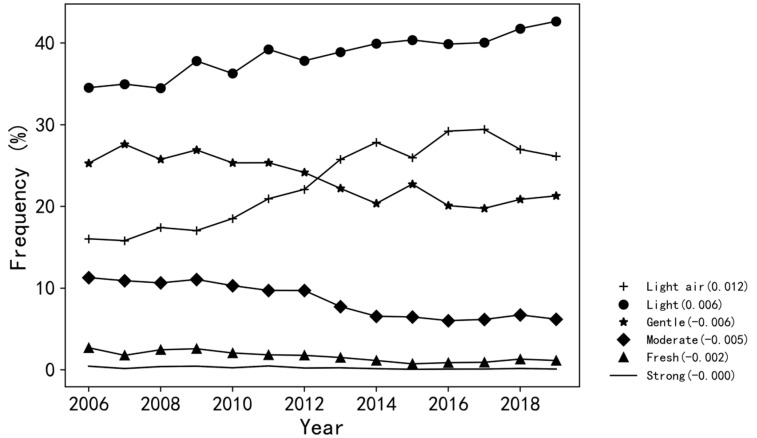
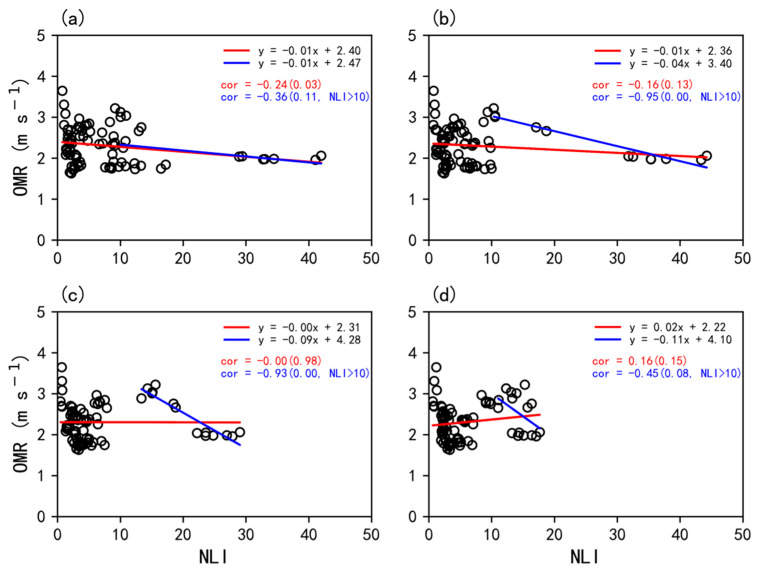
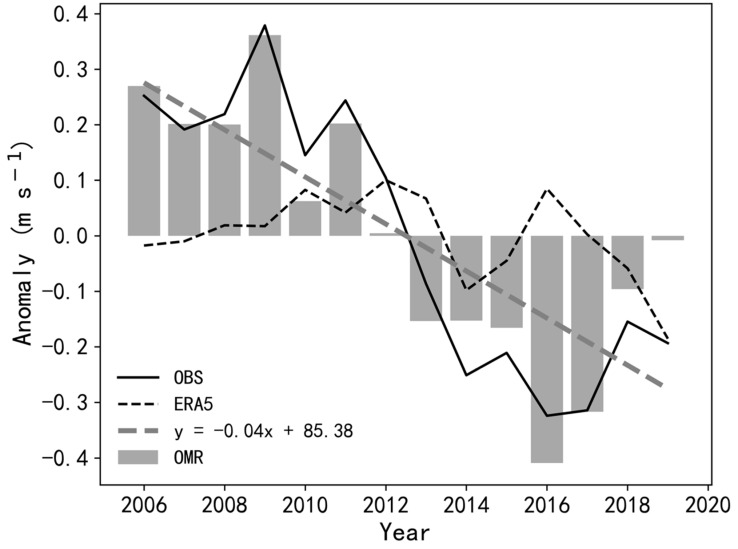
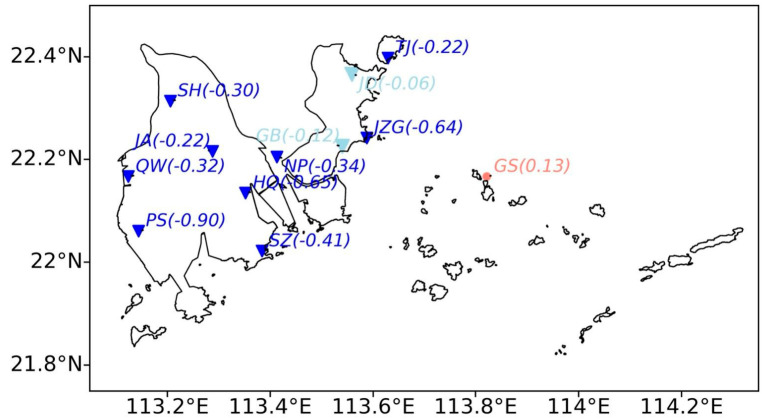
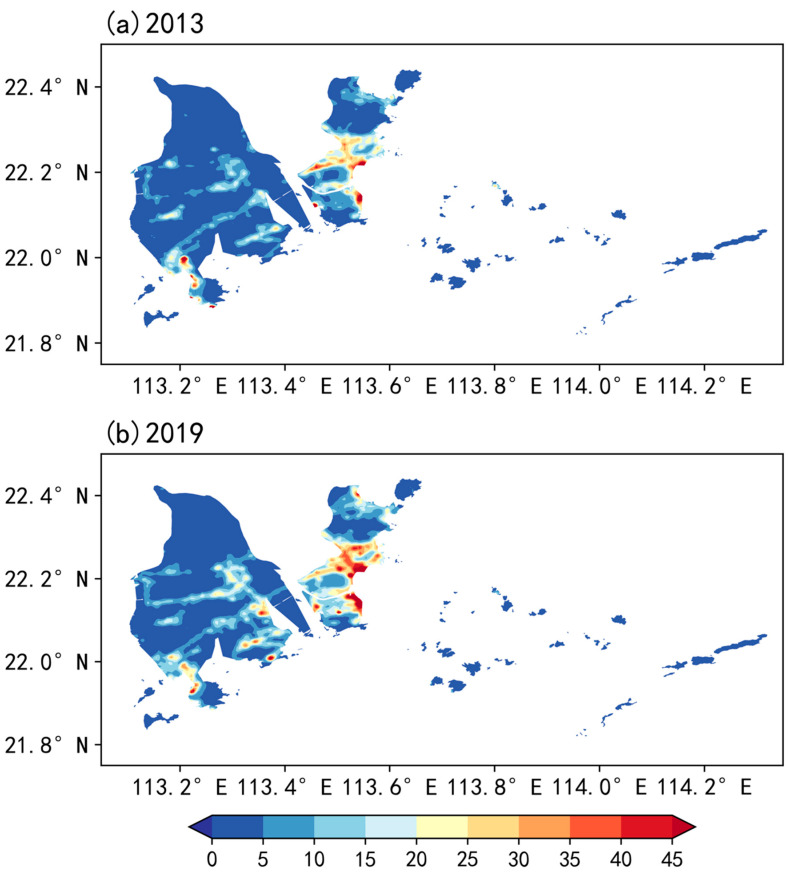
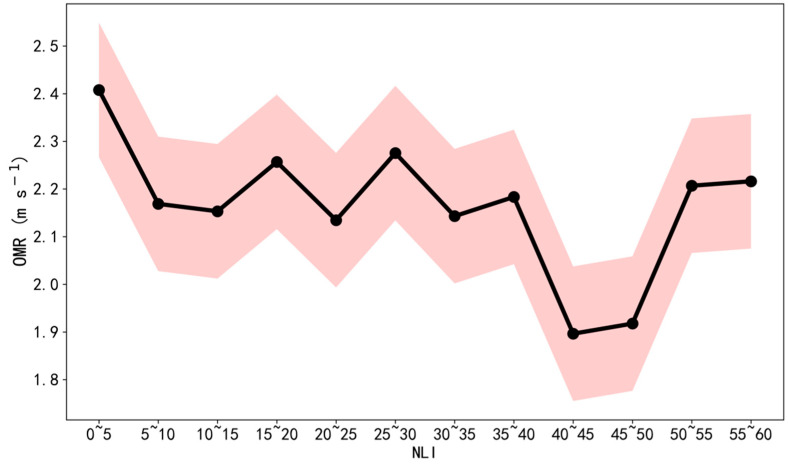
Surface wind directly affects human life, wind energy utilization, the atmospheric environment, and many other aspects. The Guangdong-Hong Kong-Macau Greater Bay Area (GBA) megalopolis is experiencing an accelerated progress of urbanization, which may result in the change in surface roughness and atmospheric characteristics. In this study, urbanization effects on surface wind speed (SWS) in the GBA megalopolis, particularly Zhuhai, is investigated by using long-term automatic meteorological measurements, ERA5 reanalysis, and nighttime light data. Results of the analysis show that the averaged SWS has decreased significantly at a rate of -0.53 m s per decade over the past decades. With the help of observation-minus-reanalysis (OMR) method, which excludes the atmospheric circulation effects, we found that the decrease in SWS is mainly contributed by the increase in surface roughness, which may account for as much as 75.5% of the decrease. In other words, it is the rapid development of urbanization, rather than the change in large-scale circulation, that could be mainly responsible for the decrease over the GBA in the context of the increasing global SWS since 2010. In addition, a fan-sector method is established to quantitatively analyze the correspondences between urbanization and roughness changes. It is shown that the decrease in wind speed due to surface roughness change is significantly related to the increase in the nighttime light index (NLI) averaged over the 3 km upstream fan-sectors. Moreover, their correlation reaches to 0.36 (negative) when only accounting for the samples of NLI greater than 10. In general, the fan-sector method offers an additional option for assessing the urbanization effects on SWS.
地面风直接影响人类生活、风能利用、大气环境等诸多方面。粤港澳大湾区正在经历加速的城市化进程,这可能导致地表粗糙度和大气特征的变化。在本研究中,利用长期自动气象观测数据、ERA5再分析数据和夜间灯光数据,研究了城市化对粤港澳大湾区,特别是珠海地面风速(SWS)的影响。分析结果表明,在过去几十年中,平均地面风速以每十年-0.53米/秒的速度显著下降。借助观测减去再分析(OMR)方法排除大气环流影响后,我们发现地面风速的下降主要是由地表粗糙度增加导致的,其贡献率高达75.5%。换句话说,自2010年以来全球地面风速上升的背景下,是城市化的快速发展而非大尺度环流的变化,可能是导致粤港澳大湾区地面风速下降的主要原因。此外,建立了扇形区域法来定量分析城市化与粗糙度变化之间的对应关系。结果表明,由于地表粗糙度变化导致的风速下降与上游3公里扇形区域内平均夜间灯光指数(NLI)的增加显著相关。而且,仅考虑NLI大于10的样本时,它们的相关性达到0.36(负相关)。总体而言,扇形区域法为评估城市化对地面风速的影响提供了另一种选择。