Aung Thin Nyein Nyein, Shirayama Yoshihisa, Moolphate Saiyud, Lorga Thaworn, Jamnongprasatporn Warunyou, Yuasa Motoyuki, Aung Myo Nyein
Department of Family Medicine, Faculty of Medicine, Chiang Mai University, Chiang Mai 50200, Thailand.
Department of Global Health Research, Graduate School of Medicine, Juntendo University, Tokyo 113-8421, Japan.
Int J Environ Res Public Health. 2022 Mar 16;19(6):3511. doi: 10.3390/ijerph19063511.
Non-communicable diseases (NCDs) are showing an increasing trend worldwide, and the COVID-19 pandemic may interrupt or delay NCD care, the leading cause of mortality in Thailand, which is hosting 2-3 million migrant workers. The transition of epidemiological risk factors, limited access to health-promoting activities, and pandemic containment measures may adversely impact NCD risks. Therefore, hypertension and associated risk factors were determined among registered Myanmar migrant workers in Thailand.
A cross-sectional survey with structured questionnaires was conducted in Thailand in 2017. Having hypertension was analyzed as a dependent variable, and the associated risk factors were explored by binary logistic regression analysis.
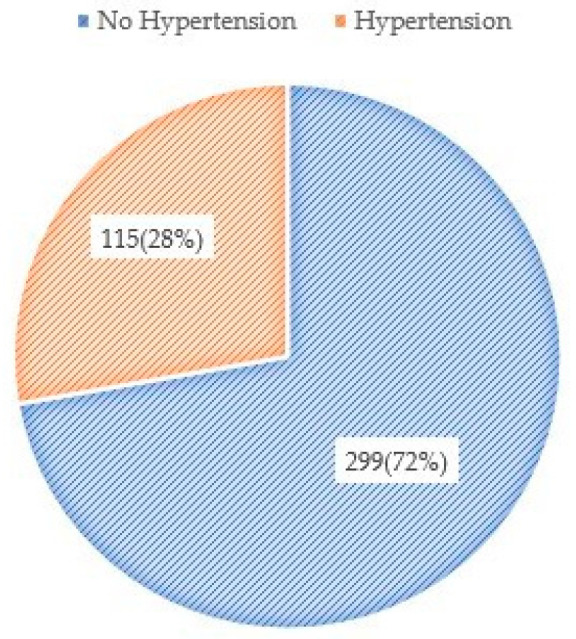
A total of 414 participants with a mean age of 29.45 ± 9.03 years were included, and 27.8 percent of the study participants were hypertensive, which was a rate higher than that in their host country (24.7%) and country of origin (26.4%). An older age, being male, current alcohol drinking, and being overweight and obese with reference to the body mass index (BMI) were significantly associated with hypertension.
Our findings reaffirmed the idea that NCDs are important public health concerns, and a simple BMI measurement would be a valuable tool with which to determine hypertension risks. Targeted surveillance and an appropriate health policy are necessary for such a vulnerable population in Thailand.
非传染性疾病在全球呈上升趋势,而新冠疫情可能会中断或推迟非传染性疾病的护理,非传染性疾病是泰国的主要死因,泰国接纳了200万至300万移民工人。流行病学风险因素的转变、获得促进健康活动的机会有限以及疫情防控措施可能会对非传染性疾病风险产生不利影响。因此,对泰国登记在册的缅甸移民工人的高血压及相关风险因素进行了测定。
2017年在泰国进行了一项采用结构化问卷的横断面调查。将患有高血压作为因变量进行分析,并通过二元逻辑回归分析探索相关风险因素。
共纳入414名平均年龄为29.45±9.03岁的参与者,27.8%的研究参与者患有高血压,这一比例高于其所在国(24.7%)和原籍国(26.4%)。年龄较大、男性、当前饮酒以及根据体重指数(BMI)判断超重和肥胖与高血压显著相关。
我们的研究结果再次证实,非传染性疾病是重要的公共卫生问题,简单的BMI测量将是确定高血压风险的一个有价值的工具。针对泰国这样的弱势群体,有必要进行有针对性的监测并制定适当的卫生政策。