Vincenzi Martina, Milella Michele Stanislaw, D'Ottavio Ginevra, Caprioli Daniele, Reverte Ingrid, Maftei Daniela
Department of Physiology and Pharmacology "Vittorio Erspamer", Sapienza University of Rome, 00185 Rome, Italy.
Toxicology and Poison Control Center Unit, Department of Emergency, Anesthesia and Critical Care, Policlinico Umberto I Hospital-Sapienza University of Rome, 00161 Rome, Italy.
Life (Basel). 2022 Mar 9;12(3):398. doi: 10.3390/life12030398.
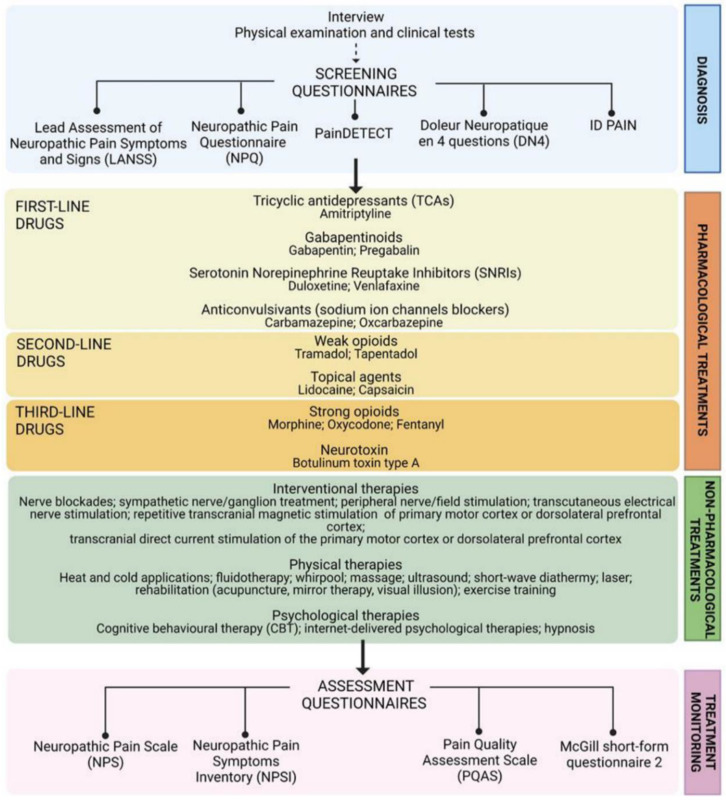
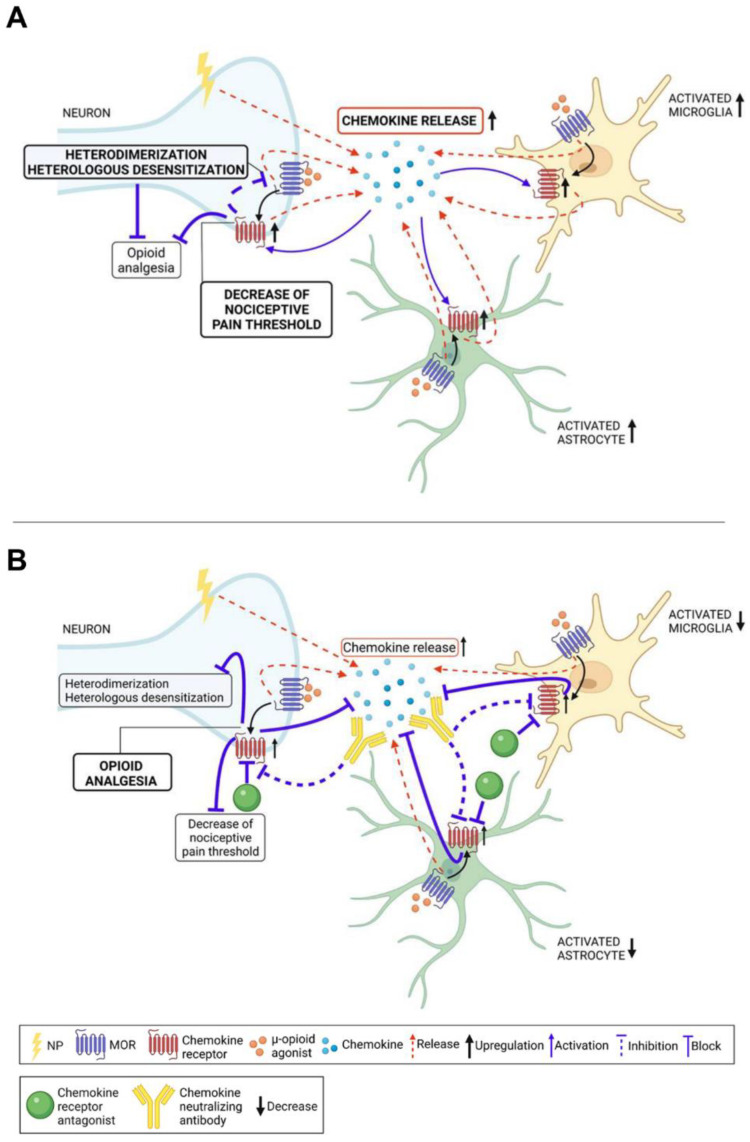
Neuropathic pain (NP) originates from an injury or disease of the somatosensory nervous system. This heterogeneous origin and the possible association with other pathologies make the management of NP a real challenge. To date, there are no satisfactory treatments for this type of chronic pain. Even strong opioids, the gold-standard analgesics for nociceptive and cancer pain, display low efficacy and the paradoxical ability to exacerbate pain sensitivity in NP patients. Mounting evidence suggests that chemokine upregulation may be a common mechanism driving NP pathophysiology and chronic opioid use-related consequences (analgesic tolerance and hyperalgesia). Here, we first review preclinical studies on the role of chemokines and chemokine receptors in the development and maintenance of NP. Second, we examine the change in chemokine expression following chronic opioid use and the crosstalk between chemokine and opioid receptors. Then, we examine the effects of inhibiting specific chemokines or chemokine receptors as a strategy to increase opioid efficacy in NP. We conclude that strong opioids, along with drugs that block specific chemokine/chemokine receptor axis, might be the right compromise for a favorable risk/benefit ratio in NP management.
神经性疼痛(NP)源于躯体感觉神经系统的损伤或疾病。这种异质性起源以及与其他病理状况的可能关联使得NP的治疗成为一项真正的挑战。迄今为止,对于这类慢性疼痛尚无令人满意的治疗方法。即使是强效阿片类药物,作为伤害性疼痛和癌痛的金标准镇痛药,在NP患者中也显示出疗效不佳,且具有加剧疼痛敏感性的矛盾作用。越来越多的证据表明,趋化因子上调可能是驱动NP病理生理学以及慢性阿片类药物使用相关后果(镇痛耐受性和痛觉过敏)的共同机制。在此,我们首先综述关于趋化因子及其受体在NP发生发展和维持中作用的临床前研究。其次,我们研究慢性阿片类药物使用后趋化因子表达的变化以及趋化因子与阿片受体之间的相互作用。然后,我们研究抑制特定趋化因子或趋化因子受体作为提高NP中阿片类药物疗效策略的效果。我们得出结论,强效阿片类药物以及阻断特定趋化因子/趋化因子受体轴的药物,可能是NP治疗中实现良好风险/效益比的正确折衷方案。